Bharat Mobility Global Expo 2024: Sustainability and growth at its core

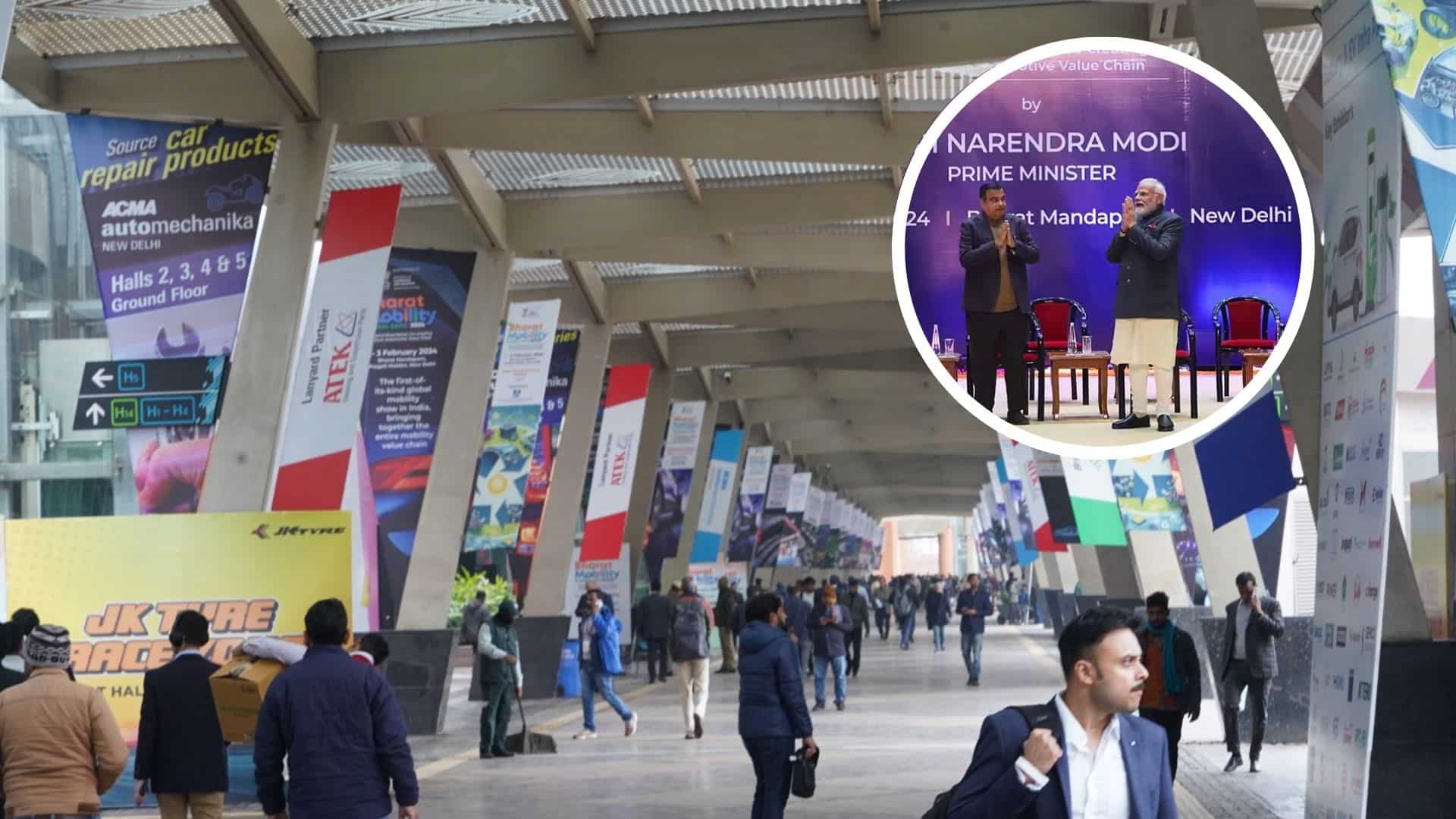
Bharat Mobility Global Expo 2024
When it comes to motor shows, the biennial Auto Expo represents India on the global stage. There are several other mobility focussed events in India but none compare to the scale, popularity and glamour of the Auto Expo. Since its inception in 1986, and becoming a biennial event in 1996, Auto Expo grew in scope and outreach with every passing edition, until the inevitable happened – the industry slowdown in 2020.
That COVID crippled global functioning is no secret and the pandemic fractured the performance and outlook of the industrial corridors. Specific to the Auto Expo, several big brands stayed away from the 15th Auto Expo with a big list of non-participants in 2023. As with many global motor shows, manufacturers cited poor ROI as the main reason for staying away.
And yet, there was another (sort of) automotive expo that recently concluded in Delhi. Held from February 1 to February 3, Bharat Mobility Global Expo 2024 was themed around sustainable mobility and transformative automotive technologies.

Government's vision: Atransformative decade
Prime Minister Narendra Modi, in his address during the Bharat Mobility Global Expo, shed light on the monumental shifts witnessed in India's automotive sector over the past decade. He emphasised that since 2014, over 210 million vehicles have been sold, a staggering increase from the 120 million in the preceding 10 years. In particular, Modi underscored the rapid growth in electric vehicles (EVs), revealing that a decade ago, a mere 2,000 electric vehicles were sold, while the present figure stands at an impressive 1.2 million.
Modi’s emphasis on the growth of electric vehicles aligns with the global trend towards sustainable and eco-friendly mobility solutions. The expo served as a testament to this commitment, with major automakers showcasing a diverse range of vehicles using various fuel technologies, including compressed natural gas (CNG), hybrids, and electric vehicles. Maruti Suzuki, Hyundai Motor India, Tata Motors, Mahindra & Mahindra, Toyota, Mercedes-Benz, and BMW were among the industry giants advocating for environmentally conscious mobility solutions.
)
IND vs JPN one-off T20I: India survive scare from Japan to win five-over a side match by 2 runs
)
Putin's United Russia party wins 355 seats in Duma election; 4 other parties cross threshold to enter parliament
)
AI models chose to harm humans to stop ‘pain,’ alarming study raises fresh safety questions
)
‘0% chance’: Nvidia CEO Jensen Huang dismisses AI extinction fears by 2030
)
Samay Raina-Mukesh Chhabra controversy explained: What happened over girlfriend joke on India's Got Latent?
)
Trump's helipad event overshadowed by audio failure as major TV networks suspend pool coverage
)
'Needs time away from the international scene': England white-ball captain Brook on pacer Brydon Carse's future
)
New Zealand farms shift to carbon forests: Carbon credits fuel a land rush reshaping rural life
)
Anti-AI activists storm summit, say 'incompetent' leaders are leading us into a disaster - 'We need a vote'
)
Samsung raises Galaxy S26 prices by Rs 20,000: Here’s what each model now costs
)
J&K Assembly Session begins amid chaos: BJP, ruling alliance clash as statehood demand dominates
)
Asian Games 2026: India women's cricket team beats Sri Lanka by 147 runs for first gold
)
Key accused in Bihar's Jamui molestation case, arrested after police shoot him in leg
)
Randeep Hooda arrives in Gujarat for his first National Film Award: ‘Very grateful’
)
US and China vie for AI dominance as calls grow for regulation | Gravitas
&im=FitAndFill=(700,400))
Anant Nag to recieve Dadasaheb Phalke Award: From Ankur to Nishant- Revisit his best films and iconic performances on OTT
)
UK banks are rethinking financial crime detection because of algorithm
)
FIFA chief Infantino wants to reform governing body with consultation from federations
)
India at UNGA81: Jaishankar warns global order under 'growing stress', pushes for ‘reformed multilateralism’
)
IND vs JPN, one-off T20I: Japan captain Kendel on pushing India to the brink - ‘It was special’
)
Raaka creates history! Allu Arjun’s film secures Guinness World Record ahead of release
)
Saudi Arabia exits China-led mBridge digital currency platform amid Saudi-Houthi conflict
)
Indonesian groups sue govt over wildfires as haze crosses borders, nearly 900,000 hectares burned
)
'Lot of things to learn from experienced players': Jayasuriya backs Rohit, Virat for 2027 ODI World Cup
)
$110 billion Warner Bros merger: Paramount reaches settlement with 12 US states
&im=FitAndFill=(700,400))
New OTT releases this week (September 21-27, 2026): Shaque: Trust No One, Hunkkaar, Don’t Be Shy- 5 new titles coming to Netflix, Prime Video and more
)
From ‘communist’ to ‘great mayor’: Trump praises Mamdani after New York meeting, discusses immigration and housing
)
Report: Zelensky meets CIA chief Ratcliffe at Shannon airport, weeks after his secret Moscow trip
)
How Zaheer Khan came to be CSK's head coach of IPL 2027
)
Pilot recreates Mona Lisa in sky over Oklahoma and Arkansas in four-hour flight: VIDEO
)
UK PM Burnham agrees to 'defensive' military support for Saudi Arabia against Houthis
)
Jailer 2: Vidya Balan joins Rajinikanth's upcoming film as Kantha | Watch
)
Microsoft executive called AI training the ‘largest theft of labour in human history’
&im=FitAndFill=(700,400))
National Film Awards 2026: Kartik Aaryan, Mammootty, Yami Gautam, Randeep Hooda and other key winners
)
40-foot waves crash into cruise ship in dangerous stretch near Antarctica. Watch
)
US-Iran war, peace deals and more: What to expect from Trump's UNGA 2026 speech
)
Explainer: Why rare-earth export licences and Board of Trade are US priorities ahead of Trump-Xi summit
)
Two infants die after fire breaks out at RIMS newborn care unit in Telangana's Adilabad
)
Rs 1.1 crore flying saucer: Chinese company selling spherical aircraft that can land on water
Infrastructure development and technological advancements
In his address, Modi highlighted the strides made in India's infrastructure sector. The construction of engineering marvels like the Atal Tunnel and Atal Setu, along with the establishment of 75 new airports and the creation of around 400,000 rural roads over the past decade, underscored and reinforced the nation's commitment to robust infrastructure development.
This focus on infrastructure is crucial as it complements the burgeoning automotive sector, ensuring a seamless and efficient transportation network. The government's investment in building roads, bridges, and airports not only facilitates the movement of vehicles but also contributes to the overall economic development of the country.
Research and development for a sustainable future
The Prime Minister urged the automotive industry to prioritize research and development (R&D), particularly in the realm of battery manufacturing using locally available raw materials. This call aligns with the global trend towards reducing dependence on imports for critical components, promoting self-sufficiency, and contributing to the Make in India initiative.
Promoting the use of locally sourced raw materials in battery manufacturing not only ensures a stable supply chain but also aligns with environmental sustainability goals. It reduces the carbon footprint associated with transporting materials over long distances and supports the circular economy principles.
The government's commitment to the third-largest economy
Amidst the announcements and industry insights, Modi expressed confidence in India becoming the world's third-largest economy during the third term of his government. While this declaration comes against the backdrop of the upcoming general elections, it also reflects the government's optimism about the trajectory of the automotive sector and its broader economic implications.
The automotive industry plays a pivotal role in a country's economic growth, contributing significantly to employment, manufacturing, and technological advancement. Modi's vision aligns with the industry's potential to be a driving force behind India's economic ascent.
The transformative Bharat Mobility Global Expo
Against the backdrop of these developments, the Bharat Mobility Global Expo emerges as a transformative event that has redefined the narrative around India's automotive future. The convergence of industry leaders, policymakers, and global players has created a dynamic ecosystem where ideas, technologies, and commitments to sustainability take centre stage.
The shift towards electric vehicles
One of the standout themes of the expo was the industry's commitment to electric vehicles. The exponential growth in electric vehicle sales over the past decade, as highlighted by Prime Minister Modi, reflects a global trend towards reducing dependence on fossil fuels and mitigating environmental impact.
Major automakers showcased a range of electric vehicles, reinforcing their commitment to a future where electric mobility plays a central role. Maruti Suzuki's concept eVX and other electric offerings from leading brands signal a paradigm shift towards cleaner and more sustainable transportation solutions.
Infrastructure development and connectivity
The emphasis on infrastructure development resonates with the need for a robust foundation to support the growing automotive sector. The creation of new airports, rural roads, and engineering marvels not only facilitates better connectivity but also opens up new markets for the automotive industry.
Efficient transportation infrastructure is a catalyst for economic development. As the automotive sector expands, the demand for well-connected roads and logistical support becomes paramount. The government's focus on this aspect aligns with the industry's requirements for seamless movement of goods and people.
Localisation and self-sufficiency
Prime Minister Modi's call for research and development in battery manufacturing using locally available raw materials aligns with the global trend of localization and self-sufficiency. As countries aim to reduce dependence on imports for critical components, ensuring a stable and secure supply chain becomes imperative.
The automotive sector's ability to manufacture essential components locally contributes not only to self-sufficiency but also to job creation and economic growth. It fosters an ecosystem where innovation and technological advancement become intrinsic to the industry's DNA.
The path to becoming the third-largest economy
Modi's vision of India becoming the world's third-largest economy reflects a recognition of the pivotal role played by the automotive industry in economic growth. The sector's contribution to employment, manufacturing, and technological innovation positions it as a key driver of India's ascent on the global economic stage.
The Bharat Mobility Global Expo, with its focus on sustainability, innovation, and connectivity, aligns with the broader vision of positioning India as a global automotive hub. The collaborative efforts of industry stakeholders, policymakers, and global players showcased at the expo create a roadmap for India's automotive future.
A glimpse into India's automotive future
The Bharat Mobility Global Expo 2024 stands as a pivotal event that provides a glimpse into India's automotive future. The convergence of industry leaders, government representatives, and global players underscores the transformative nature of the event. The commitment to sustainable mobility, electric vehicles, infrastructure development, and localisation sets the stage for an era where India emerges as a global automotive powerhouse.
Rajesh Menon, SIAM Director General emphasised the expo's significance in bringing together leading players in the automotive sector. He acknowledged the unique and innovative products presented by companies across various vehicle segments, showcasing technology from around the world.
As the automotive sector navigates the challenges and opportunities presented by evolving consumer preferences, technological advancements, and environmental considerations, events like the Bharat Mobility Global Expo serve as catalysts for change. The expo's impact extends beyond the three days of showcasing innovations; it lays the foundation for a future where India's automotive industry not only keeps pace with global trends but also shapes them.