Semi-automated offside VAR at Serie A League 2022-2023, hunt for new AIA president


Semi-automated offside VAR at Serie A League 2022-2023, hunt for new AIA president
Semi-automated offside technology which was trialled during February's FIFA Club World Cup in Abu Dhabi and last year's Arab Cup. It was also used at the World Cup in Qatar and the group stage of this season's Champions League. After a series of successful use, this VAR technology will now be used for Serie A football league competition which is set to go on from 4 January 2023 to 4 June 2023. There are overall 38 rounds which are to be played in Serie A league and this VAR technology will be used from the 20th round in the last week of January after consultation with the Italian Referees Association (AIA). The announcement was made by the Italian Football Federation (FIGC) on Monday.
New AIA President soon
The decision to utilise VAR technology in Serie A matches was announced during the FIGC board meeting on Monday. In the meeting, FIGC President Gabriel Gravina also announced that, after Alfredo Trentalange's resignation on Sunday, elections for a new head of AIA will be held within 90 days. This comes as the nation's refereeing association (AIA) searches for a new president after the resignation of former AIA President Alfredo Trentalange due to a drug controversy. When it became known that Rosario D'Onofrio, the AIA's head prosecutor, had been detained for taking part in an international drug trafficking conspiracy, Trentalange was held accountable.

When Rosario D'Onofrio applied to be promoted to prosecutor, AIA claimed that he omitted from them the fact that he had previously been placed under house arrest for drugs offences. D'Onofrio was one of several persons who were detained in November. According to the FIGC, their own inquiries showed that D'Onofrio was under house arrest when he was chosen prosecutor in early 2021 and that between September of last year and this September "he was not once authorised to leave his home."
How does this semi-automated offside VAR tech work?
The new system tracks the ball using 12 specialised tracking cameras positioned below the stadium's roof and analyses up to 29 data points for each player, 50 times per second, to determine their precise location on the field. All limbs and extremities that are important for determining offside are included in the 29 data points that were gathered, as per FIFA. The innovative system automatically alerts the VAR match officials inside the video operation room if the ball is received by an attacker who was in an offside position when the ball was played by a teammate by merging the limb-and ball-tracking data and using artificial intelligence.
)
Pentagon revives mandatory testosterone testing for male troops aged 30 and above
)
FACT CHECK: Why did PM Modi ask Xi ‘is it okay’ at BRICS Summit? New video reveals...
)
India seeks to build a full semiconductor supply chain
&im=FitAndFill=(700,400))
From Abhishek Sharma to Sahil Chauhan, 5 batters with fastest T20I hundreds
)
Pyongyang dismisses US, western pressure over nuclear programme
)
US And Denmark reach Greenland deal, Trump announces expanded military presence
)
Google’s Gemini AI hacks real systems by guessing passwords during security test
)
US hiding troop deaths in Iran war? Toll higher than Pentagon count, claims report
)
China may have gained access to US's classified F-35 jets; parts meant for repairs diverted to Hong Kong, sparking Pentagon inquiry
)
NASA research plane reaches 61,000 feet over Panama
)
Godfather of AI Geoffrey Hinton gives US lawmakers a one-year warning on AI
)
Trump signs Russia sanctions law: India faces fresh 100% tariff threat over Russian oil
)
Brigitte Bardot’s private collection set for Paris auction; key items and prices revealed
)
Why Ranveer Singh’s Dhurandhar missed India’s Oscar entry; FFI jury member reveals what happened
)
Zendaya and Tom Holland step out for a low-key date in Los Angeles
)
‘Will go to any extent’: Pakistan vows to defend Saudi Arabia amid Houthi attacks
)
The Verdict | When precision fails: US commits war crime in Minab school strike, UN finds
)
Trump signs Russia sanctions bill into law, targets Moscow’s energy sector
66 years of the Indus Waters Treaty: How India and Pakistan settled a bitter river dispute
&im=FitAndFill=(700,400))
New Friday OTT releases (September 18, 2026): Lust Stories 3, You+Me, Best of the Best- 8 new titles coming on Netflix, Prime Video and more
)
Pak: A series of counter terrorism operations in Khyber Pakhtunkhwa
)
Fast bowler Brydon Carse faces no charges over Derby nightclub incident
)
Flying cars in UAE: Ras Al Khaimah signs deal with Chinese company to test new transport
)
Africa is splitting, and a lot sooner than estimated, giving way to a new ocean
)
Trump bans CNN, MS NOW and Politico from White House over ‘FAKE NEWS’
)
Trump 2.0: Dark days ahead for America’s ‘imperial presidency’
)
Trump's Greenland dream comes true? POTUS announces 'Infinite Life' deal with Denmark, claims permanent US control
)
Tirupati Laddu ghee adulterated with chemicals, says ED, supplier arrested
)
Who is Khalilur Rahman? All you need to know about 81st UN General Assembly President
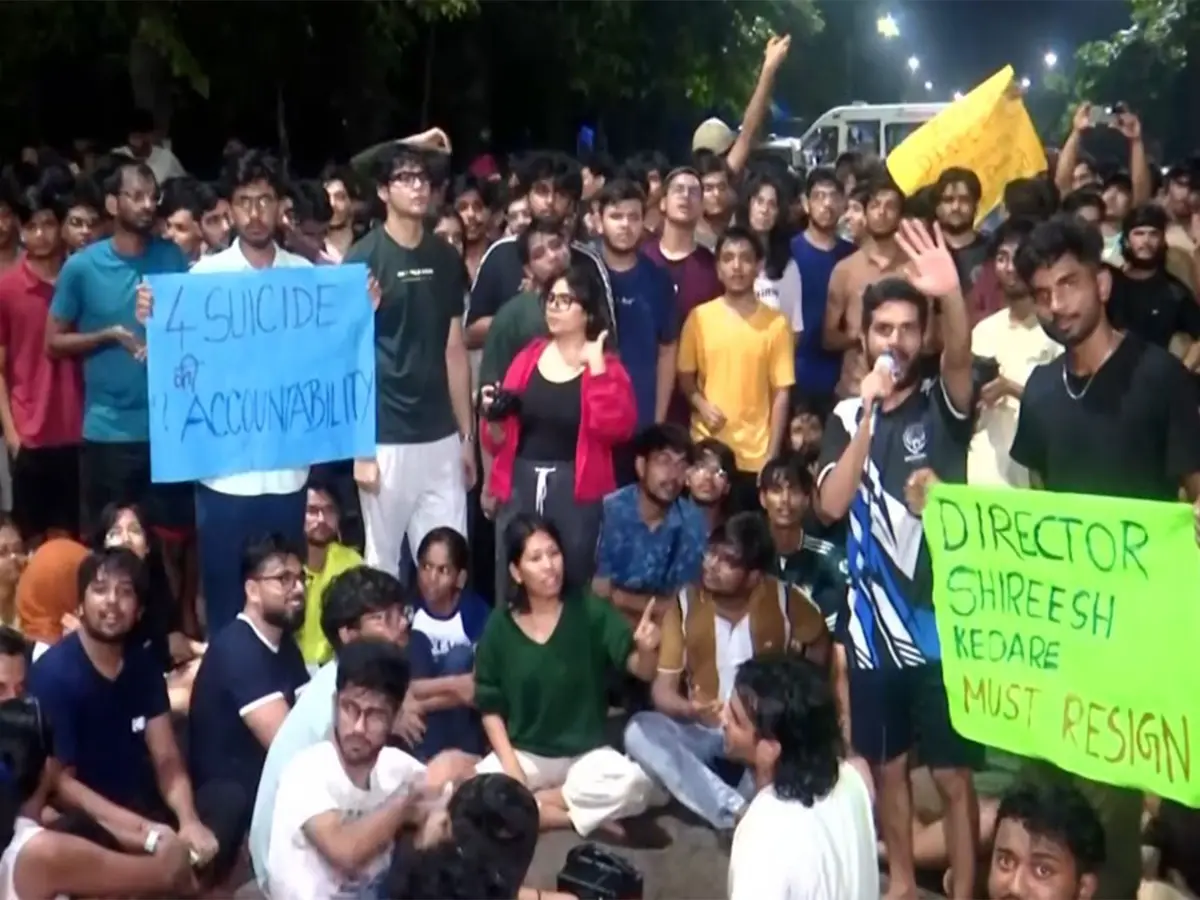)
IIT Bombay student dies by suicide, was caught seeking AI help during exams
&im=FitAndFill=(700,400))
Meet top 5 bowlers in latest ICC T20I rankings
)
Indian Cinema bets big on mythology, brings ancient stories to modern audiences
)
Ukraine plans record $109 bn defence spending, nearly two thirds of budget amid Russia war
)
Russia holds first parliamentary elections since the beginning of the Ukraine war
&im=FitAndFill=(700,400))
Meet top 5 Indian batters with fastest T20I centuries
)
The video match officials manually verify the automatically generated kick point and the automatically generated offside line, which is based on the computed locations of the players' limbs, before advising the on-field referee of the proposed decision. Offside judgements may be made more quickly and precisely thanks to this technique, which just takes a few seconds to complete.
Check the animated video of the VAR tech here
Offside Tech controversies
Offside rulings have been a contentious issue in Italy since the implementation of VAR, with one especially odd judgement penalising Juventus against Salernitana back in September. A VAR review determined that Leonardo Bonucci was offside and interfered with play, disallowing Arkadiusz Milik's header in the last seconds of stoppage time that would have given Juve a 3-2 victory. The later-released video proved that Salernitana's Antonio Candreva had kept everyone onside, but the VAR officials failed to notice him since he was standing behind the corner flag.
Incredulous at how the judgement could have gone wrong with so many cameras at the Allianz Stadium, the decision infuriated football fans and commentators around Italy in addition to Juve. At the time, AIA claimed that the VAR authorities lacked access to cameras which would have demonstrated that Milik's goal ought to have stood.