'Recovery management and no prehab': Strength and conditioning expert shares reason behind injuries in Indian cricket

&imwidth=600&imheight=450&format=webp&quality=medium "'Recovery management and no prehab': Strength and conditioning expert shares reason behind injuries in Indian cricket")
'Recovery management and no prehab': Strength and conditioning expert shares reason behind injuries in Indian cricket Photograph: (AFP)
In the recent times, it has been observed that players are suffering from injuries more often despite the fitness being focused open more than ever. The BCCI is also planning to bring more fitness standards to ensure the players remain injury free but the question remains - what is causing the injuries?
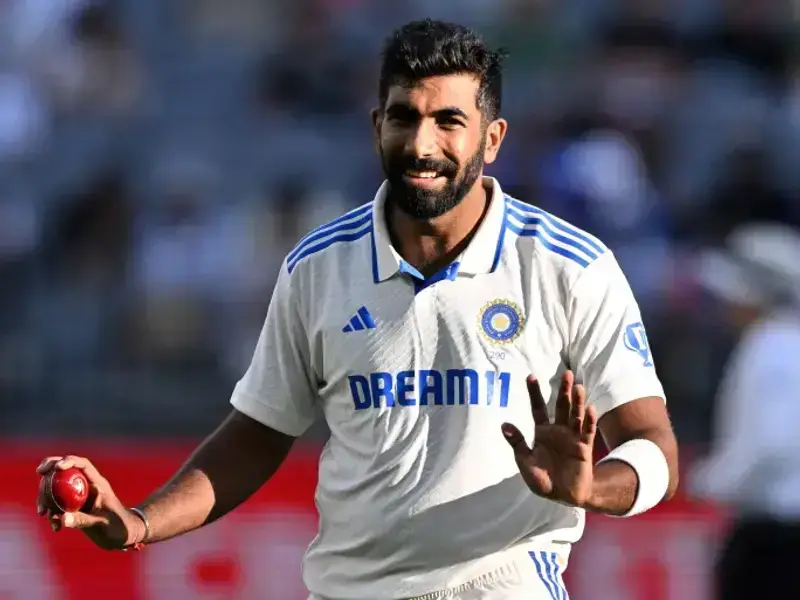
Indian cricket team is currently going through a spate of injuries with the latest one being Jasprit Bumrah, who recently withdrew from upcoming Test series against Sri Lanka. Before him, Washington Sundar and Nitish Kumar Reddy had suffered injuries with B Sai Sudharsan in the squad subject to fitness. In the recent times, it has been observed that players are suffering from injuries more often despite the fitness being focused upon more than ever. The BCCI is also planning to bring more fitness standards to ensure the players remain injury free but the question remains - what is causing the injuries?
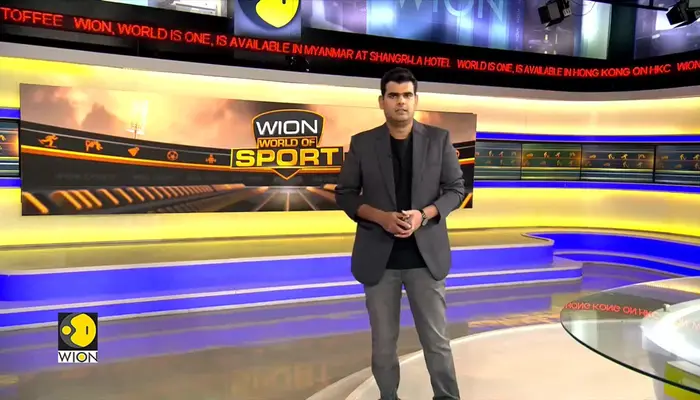
WION spoke to sports strength and conditioning coach Jivesh Bali, who also played cricket for Punjab, about the injuries plaguing the Indian cricket and he pointed out less recovery time as the main reason for the injuries. Jivesh has experience working with athletes in events like Nepal Premier League, World Legends Pro T20 League, and is a certified cricket strength and conditioning training specialist.
“If we talk about the injuries, there's nothing to talk about the fitness levels rather than it's about the recovery management. In India, the athletes are suffering from this work overload. The athletes nowadays are being over-trained by the coaches you can say or by the management or by the federation so the recovery is one thing that is the main issue in re-occurring those injuries which athletes are going through.”
Bali also spoke about Jasprit Bumrah's case in particular to explain the workload being experienced by the players and said: "Bumrah was continuously playing all three formats, i.e., Test match, ODIs, T20Is before his first injury happened. And because of his packed schedule, there is no time between all those high intensity cricket formats, leaving him no time for the recovery.
"A single player being pushed to all the three formats leaves little time for recovery and there is so much load on the muscles, joints, complete body that it needs time to recover. And, there is no time for that hence athletes are going through the injuries.
Trending Stories
)
)
)
)
)
)
)
)
)
)
)
)
)
)
)
)
)
)
)
)
)
)
)
&im=FitAndFill=(700,400))
)
)
)
)
)
)
)
)
)
&im=FitAndFill=(700,400))
)
)
&im=FitAndFill=(700,400))
)
"There is not a question about their fitness levels or the sports science because India has the world's top notch sports science setups now. The question is the recovery management - 'Are you giving them the proper duration to recover themselves from the high intensity cricket?' Whether it is 5-day, red ball cricket or the white ball cricket."
The BCCI is planning to include the 2K test and they already have the Bronco test. What is the difference if you could talk us about it?
If we talk about Bronco test, there was a drill earlier athletes used to do that was the shuttle run in which there is the distance between 40 meters and 80 meters and then you have to basically run high intensity. The athletes then change direction and have to run back to the cones and then again to the another level so basically this mimics the movements in cricket, such as running between the wicket.
The same is being mimicked in the Bronco test in which one has to run between the wickets to and fro. You have to be agile enough to quickly change the direction and then come forward, come back to that position. Basically Bronco test is targeting the high intensity aerobic thing. As for 2K, it is for enhancing cardiovascular conditioning. It helps to get a better resting heart rate, which helps during the match.
Bronco test is always a little bit a step higher than the 2k test for pacers, batters, fielders and for the spinners. I'll say both the tests, Bronco and 2K, are more or less equal.
You think that BCCI introducing these standardized Bronco test and 2K fitness test will help reduce the injuries?
These tests are working on the certain physical parameter that is the aerobic endurance and the high intensity. So to work on the injuries, they need to work on many other things like - a specific reason of why the athletes are getting injuries much more often.
I was doing that research and realized that athletes are not working on their biomechanics - Just giving you an example, in case of an injury, the athlete goes to the physiotherapist, or to the doctor to get the injury treated.
The other perspective which the athletes should be working on is - the prehab part. You know the rehab part, once the injury is done, then there is a rehab. The second perspective which is now booming nowadays is the prehab part to avoid the further more injury happening.
For prehab - first is the regular testing of the athletes which includes workload monitoring of the athletes so the management is aware of any potential injuries in future.
As for poor biomechanics, if a bowler is getting a recurring knee injuries if could be because of the wrong way of landing the front leg, hip rotation timing, or front foot striking.
These all issues need to be monitored on a regular basis to prevent, for example, the knee injury I've talked about. That's the one part you can prevent the knee injuries. Plus, the calendar, the schedule of the BCCI is very much hectic for the athletes.
If a single player is playing all the three formats and you are presenting your country at an international level, so it's always high intensity cricket. Then there is domestic cricket as well, then there is IPL as well which leaves no time of recovering.
They should be getting the pool of athletes, pool of players who are specialized in the different formats. Whether it is five-day cricket or white-ball, they should be have a different 15 altogether, different 15 for the test cricket, for T20 different 15 and for the ODI cricket different 15.
And plus one more thing, the body is not adapting to the like weather changes. The Indian team travels a lot whether it is in India or outside India as well. The body is not acclimatizing to the weather or the nutrition outside. It has to be taken in care of like the nutrition, the recovery management, the neuromuscular fatigue as well - Athletes need to be focusing on that as well and the sports science professionals also.
The BCCI has to think about this thing first that they need not to force any player or should not involve every player to play all the three formats. This is one thing which can solve the injury part to some extent.
Also, you have worked with players across the globe of all age groups. How do foreign players or foreign cricket nations assess their players' fitness and what lessons do you think BCCI can take from them?
The athletes in the foreign countries know what they are training for, the purpose for their training. In India, we can say the athletes are just in sport specific training, they are mimicking the movements, but the actual science says if you want to do the sport specific thing, you can only train the physical parameters. One has to work on the physical parameters.
If you are doing drills like mimicking the movements of the sport then it is just a waste of time. Instead of that, you should be focusing on the force development, energy transfer from lower body to upper body, your rotational skills, and your anti-rotational stability.
All these efforts need to be trained not just the movements. You have to train the physical parameters, agility, reflexes, force development, energy transfers, speed, and power. These are the physical parameters which I like feel like the players in the different countries are working on rather than focusing on any of the other fancy drills.
Also, their (foreign countries) recovery prospect is top notch. The performance is basically hard work minus your fatigue. In India, the places I have worked, I have worked with seven different including wrestlers, boxers, cyclists, track and field athletes, the cricketers as well, most of the athletes are over-training at their age.
And, the injuries are also reoccurring because the competition in India is that much high that a single player wants to play as soon as possible or as soon as he completes his fitness test. Once the fitness test is cleared, you have the green signal, but those tissues need proper recovery as well and joints, tissues need to be progressively overloaded.
It's not that you have gone through the injury, you have done the rehab part, you are back to sport and you are ready to play high intensity cricket. It takes time for these things.

