The Lady and the Hague: Myanmar leader Suu Kyi courts home audience

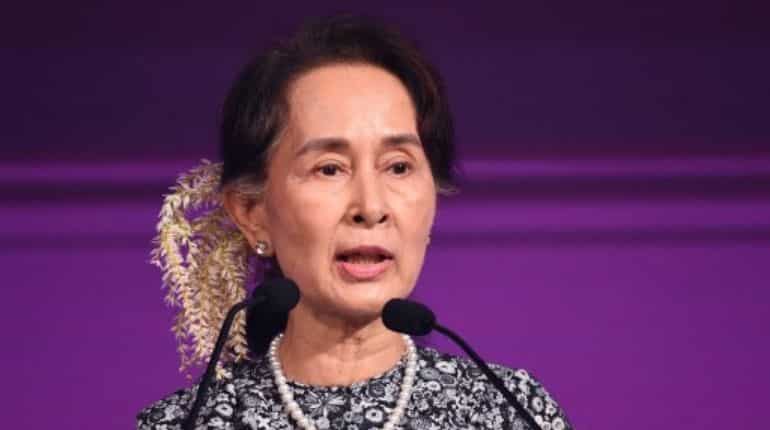
Suu Kyi
The last timeMyanmarleaderAung SanSuuKyitraveled to western Europe, she was feted as the freshly elected civilian ruler of a fledgling democracy who had brought an end to half a century of military dictatorship.
When the Nobel peace prize laureate returns next week, her first trip to the region since a 2017 military crackdown on Rohingya Muslims in westernMyanmar, it will be to face accusations of genocide, alongside the army she spent much of her life battling.
Gambia, a tiny, mainly Muslim West African state backed by the 57-nation Organisation for Islamic Cooperation (OIC), lodged a lawsuit at the International Court of Justice (ICJ) last month againstMyanmarfor genocide, including mass murder and rape.

Myanmardenies the allegations, andSuuKyi's office said she would fly to TheHaguefor the first hearings, from December 10, to "defend the national interest".
"There is a discrepancy between the opinion ofMyanmarand the international community," said Myo Nyunt, the senior spokesman for her National League for Democracy Party. "She has to explain what has really taken place in northern Rakhine."
Her decision to attend took some by surprise. People close to her with strong international connections voiced concerns it could further tarnish her image abroad, according to two people familiar with the discussions.
)
Shahzad Bhatti Network declared terrorist organisation under UAPA: Govt order
)
Trump backs PM Modi’s anti-opium push even as India remains on US illicit drug-producing list
)
Lionel Messi for 2026 Ballon d’Or over Mbappe and Yamal, says Diego Simeone
)
FBI Director Kash Patel grilled over change of hiring rules on bestiality
)
Daayra movie review: Kareena Kapoor, Prithviraj Sukumaran shine in Meghna Gulzar’s cop-versus-cop crime thriller
)
Riyadh warns of ‘red line’ after Mecca targeted; Houthis claim downing Saudi fighter jet – What’s happening?
)
Pakistan naval vessel returns to harbour with 'severe damage' after collision with Indian warship in Arabian Sea
)
US Treasury rallies global financial institutions for Op Economic Outcast to isolate Iran
)
PNS Hunain: All you need to know about Pakistani vessel that hit Indian Navy warship
&im=FitAndFill=(700,400))
Suriya and Jyothika say ‘I do’ again after 20 years! See their dreamy wedding pics
)
Fed raises rates for first time in 3 years, Kevin Warsh defies Trump as inflation mounts
)
At least 20 killed after war-damaged apartment building collapses in Gaza; rescuers search for survivors
)
Bigg Boss 20: Mahhi Vij reveals she lost Yuva role to Kareena Kapoor; 'didn’t work out in my favour'
)
Ex-CIA officer caught with gold bars worth $40 million seeks plea deal | Gravitas
)
The Early Spring season 2 is happening, but fans have one request - 'don't change the actors'
)
Who was Eliana Moreno? NBC LA aerial reporter killed in Chatsworth crash
)
Pakistan: Imran Khan's sons Kasim & Sulaiman claim their father is 'tortured' in jail
)
Abhishek Sharma rises to No. 2 in T20Is; ENG’s Robinson 3rd after record Pakistan Tests
)
Trump's Iran war faces fresh House rebuke; 7 Republicans join Democrats in push to end conflict ahead of midterms
)
Finnish president Stubb calls Trump 'good for NATO' as allies increase defense expenditure
)
Gurugram biker hit-and-run case: Accused Kalyan Bainsla, cousin sent to 2-day police custody
)
BRICS success stuns White House, Trump targets India with 100% tariff | Gravitas
)
Extreme warming in Indian Ocean added 695 billion tons of ice to Antarctica ice sheet
)
War will be ‘completely different and very short’ if Europe attacks Russia, warns Lavrov
)
Indonesia wildfires: Over 12.5 million people exposed to poison haze
)
Alex Saab, ally of Venezuela's Maduro, pleads guilty in US corruption case
)
All Indian goods to get duty-free access to New Zealand
)
‘There’s no Pak-China boundary’: India rejects ‘so-called’ boundary joint commission, tells Islamabad to stop ‘theatrics’
)
Meghan Markle's phone number leaked from children's WhatsApp group, couple switches Archie and Lilibet's school
)
What is Article 10 of the 1991 treaty at the centre of Pakistan Navy's 'unprofessional conduct'
)
No Pandya as Auqib Nabi earns maiden ODI call-up; Mayank returns for WI T20Is| check full squads
)
US, China dominate global economy: Where does India rank among the world's biggest economies?
&im=FitAndFill=(700,400))
New OTT releases this week (September 14-20, 2026): Lust Stories 3, Waiting Hai, Irumudi- 5 new titles coming on Netflix, Prime Video and more
)
Sydney Sweeney defends provocative ad choice, the internet is still not impressed
But athome, the announcement has unleashed a wave of popular support, with theleaderwho spent 15 years under house arrest for defying the army lauded as once again championing the interests of the people against a common enemy.
Richard Horsey,Myanmaradvisor to the International Crisis Group, said while her appearance carried considerable risks forSuuKyioverseas, "she likely feels that she must do all she can to defend the national interest against what most people inMyanmarsee as biased and politically-motivated charges".
SuuKyiwas still a heroine to many when she last visited western Europe and the United States months after taking office in 2016. Her star faded in office amid sluggish reform and protracted ethnic conflicts, and she faced increasingly harsh criticism from the West as the Rohingya crisis unfolded.
An offensive by security forces and local Buddhists in northern Rakhine state in August 2017 drove more than 730,000 Rohingya into neighboring Bangladesh, where they created the world's largest refugee camp.
United Nations investigators have said the exodus was the result of a military campaign executed with "genocidal intent".
Myanmarauthorities have strongly disputed that conclusion, categorizing the military operation as a legitimate response to attacks by Rohingya militants that killed 13 members of the security forces.
In September 2017,SuuKyisaid terrorists were behind an "iceberg of misinformation" about the violence.
"Myanmarpeople do not support people being driven from theirhomes. But it is different with these Bengalis leaving," spokesman Myo Nyunt said, using a term common inMyanmarbut rejected by the Rohingya because it implies they are interlopers from Bangladesh who invented an ethnic identity.
Seven soldiers were jailed for 10 years for killing 10 Rohingya men and boys in the village of Inn Din but granted early release last November after serving less than a year in prison.
Late last month, the military began a court-martial of an unspecified number of soldiers over events in another village, Gu Dar Pyin, the site of an alleged massacre of 10 Rohingya. The military said the soldiers were "weak in following the rules of engagement." No further details were given about the court-martial, which is continuing.
"As far as we know there is Inn Din massacre and Gu Dar Pyin," said Myo Nyunt. "That's all as far as [SuuKyi] knows, there is no such thing as genocide."
Recent weeks inMyanmarhave had the flavour of election season, with several pro-SuuKyirallies in major cities attended by hundreds of people carrying flags. More are planned for the first day of the hearings.
"Now there are demonstrations across the whole country. This is an attempt to make her image stronger," said Ko Ko Gyi, a longtime democracy activist and formerSuuKyially. "There is a saying everything is politics."
Myanmaris due to go to the polls again in 2020 and, while an opinion poll from the People's Alliance for Credible Elections, an independent group of election monitors, in July showedSuuKyiretains tremendous support, her government has faced criticism for failing to bring an end to worsening ethnic conflicts in the borderlands or reform the constitution.
Under the charter drafted by the former ruling junta, the military chief nominates a quarter of lawmakers, giving it a veto over constitutional change.
In the southeastern Karen state, regional authorities put up dozens of billboards showing a smilingSuuKyiflanked by three green-clad soldiers laughing heartily underlined by the words "we stand with you".