The 3.5 tumultuous years of Imran Khan's premiership: From build-up to aftermath

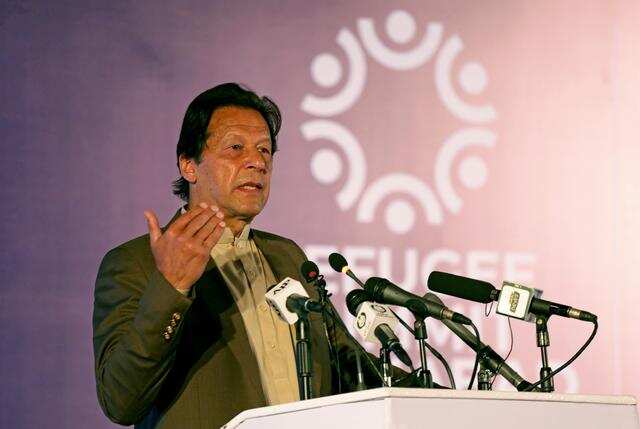
(File photo) Pak PM Imran Khan
The professional cricket career ofImran Khan, who was ousted asPakistan's prime ministerthrough a no-trust vote, came to an end in a blaze of glory.
His political career, on the other hand, has taken a very opposite path.
The no-confidence motion against PM Imran Khan was passed after 174 votes were polled in favourof it.

Khan, who had been Prime Minister of Pakistan since 2018, was set to face a no-confidence vote on April 3rd, which he was expected to lose.
Instead, he skipped the polls, petitioned the President to dissolve Parliament, and warned the public that elections were imminent.
Watch:All eyes are on Imran Khan's next move as voting on the no-confidence motion is underway
&imwidth=180&imheight=135&format=webp&quality=medium)
100,000 strikes in 3 years: How October 7 redefined Israel's war
&imwidth=180&imheight=135&format=webp&quality=medium)
Flydubai co-pilot developed extremist views while studying in Australia: UAE prosecutors
&imwidth=180&imheight=135&format=webp&quality=medium)
'Spent Rs 2,000 cr to elect Trump': Elon Musk bought US President's loyalty by writing the biggest political cheque in human history
&imwidth=180&imheight=135&format=webp&quality=medium)
Adéla gives KATSEYE’s Lara Raj and Megan Skendiel a shout-out at Fonda Theatre in LA
&imwidth=180&imheight=135&format=webp&quality=medium)
Katie Zacharia likely to succeed Karoline Leavitt as Trump's White House press secretary
&imwidth=180&imheight=135&format=webp&quality=medium)
‘Never-ending flow of cheap labour’: JD Vance hits back at Indian-origin Congresswoman over US green card curbs for major tech companies
&imwidth=180&imheight=135&format=webp&quality=medium)
Shreyas Iyer blames dew for West Indies' record run chase in 2nd T20I in Ranchi

Kamal Haasan slams Elon Musk over Starlink delay row: 'Indian people, will decide our own future - not Western'
&imwidth=180&imheight=135&format=webp&quality=medium)
Thai queen becomes first reigning monarch to fly jet solothailand #queen #wion
&im=FitAndFill=(700,400)&imwidth=180&imheight=135&format=webp&quality=medium)
New Friday OTT releases (October 9, 2026): Reporting Live, Animals, Take Charge of My Heart- 6 new titles coming on Netflix, JioHotstar and more
&imwidth=180&imheight=135&format=webp&quality=medium)
Delhi protest: Metro curbs, train cancellations, traffic diversions as protesters seek CEC Gyanesh Kumar’s resignation
&imwidth=180&imheight=135&format=webp&quality=medium)
‘Right to protest must be protected, but...’: Delhi Police reveals why it denied CJP permission for October 10 Jantar Mantar protest
&imwidth=180&imheight=135&format=webp&quality=medium)
BJP MP Ravi Shankar Prasad slams CJP protests, calls it 'shadow boxing for AAP'
&imwidth=180&imheight=135&format=webp&quality=medium)
Delhi on high alert for CJP protest: Delhi police to use body cams to 'prove whether we did anything’; Pink Force, RAF, 35,000 personnel deployed
&imwidth=180&imheight=135&format=webp&quality=medium)
'Jantar Mantar not the story of India': BJP's Sambit Patra claims 'anarchists' tried to hold Delhi captive
&imwidth=180&imheight=135&format=webp&quality=medium)
New York protests erupt as Trump administration defends ICE shooting
&imwidth=180&imheight=135&format=webp&quality=medium)
'Ouch!!! That must hurt': Kangana Ranaut hails Kamal Haasan's sharp reply to Elon Musk over Starlink row
&imwidth=180&imheight=135&format=webp&quality=medium)
UK navy hit by espionage scandal: Sailor accused of spying for Russia | Gravitas
&imwidth=180&imheight=135&format=webp&quality=medium)
‘250? Cool.’: Shai Hope takes swipe at Shubman Gill’s Instagram caption after Ranchi T20I masterclass
&imwidth=180&imheight=135&format=webp&quality=medium)
Why was CJP founder Abhijeet Dipke detained? What Delhi Police said
&imwidth=180&imheight=135&format=webp&quality=medium)
SC questions closure of 57 Delhi Metro stations, asks Centre to resume services in regulated manner
&im=FitAndFill=(700,400)&imwidth=180&imheight=135&format=webp&quality=medium)
Rakul Preet Singh birthday special: 7 times the Ramayana actress served glamorous looks
&imwidth=180&imheight=135&format=webp&quality=medium)
Trump announces Russian diesel deal as Zelensky criticises move
&imwidth=180&imheight=135&format=webp&quality=medium)
Dhurandhar: The Revenge album submitted for Grammy consideration; But what does it mean?
&imwidth=180&imheight=135&format=webp&quality=medium)
Panama president declares ‘major disaster’ after powerful 7.7-magnitude earthquake; over 80 aftershocks recorded
&imwidth=180&imheight=135&format=webp&quality=medium)
'I ended 8 wars': Trump slams Nobel Peace prize decision, claims award was his due
&imwidth=180&imheight=135&format=webp&quality=medium)
J&K Government orders major police reshuffle, transfers 100 officers across UT
&imwidth=180&imheight=135&format=webp&quality=medium)
'I am not going to be watching it': JD Vance on livestream of Nidal Hasan's firing squad execution
&imwidth=180&imheight=135&format=webp&quality=medium)
All 22 Indian seafarers safe in attack on Panama-flagged tanker off UAE coast
&imwidth=180&imheight=135&format=webp&quality=medium)
Ryan Reynolds’ private messages reveal his blunt views on Justin Baldoni from Blake Lively’s legal case
&imwidth=180&imheight=135&format=webp&quality=medium)
Powerful 7.7 magnitude earthquake strikes Panama, tsunami warning issued
&imwidth=180&imheight=135&format=webp&quality=medium)
Trump honours Microsoft CEO Satya Nadella with top technology honour amid immigration scrutiny
&im=FitAndFill=(700,400)&imwidth=180&imheight=135&format=webp&quality=medium)
Food shortages, suicide attempts and more: USS Abraham Lincoln returns to US after 321 day deployment — What happened aboard the US carrier?
&imwidth=180&imheight=135&format=webp&quality=medium)
Two-thirds of competitive GOP candidates split with trump ahead of November midterms
&imwidth=180&imheight=135&format=webp&quality=medium)
'Modi is a dictator': Abhijeet Dipke claims govt 'scared' of youth, slams stringent measures ahead of CJP Jantar Mantar protest
&imwidth=180&imheight=135&format=webp&quality=medium)
Pakistan denies reports of PAF jets being used in attacks against Iran-backed Houthis in Yemen
&imwidth=180&imheight=135&format=webp&quality=medium)
Rahul Gandhi calls Modi, Shah ‘cowards’ amid CJP protest crackdown in Delhi
&im=FitAndFill=(700,400)&imwidth=180&imheight=135&format=webp&quality=medium)
Happy Birthday Rekha: Watch these 7 evergreen Bollywood hits on Netflix, Prime Video and more
Following the Supreme Court's decision, he will face a no-confidence vote on April 9 (10:30 AM).
Since Pakistan's independence in 1947, no prime minister has served a full term in office, a situation that has been exacerbated by the military's control of the key levers of power, dominance of foreign policy, and dictation of security objectives.
So tomorrow's no-confidence vote will determine whether he stays in power and makes history, or if he succumbs to Pakistan's apparent precedent.
So, let's take a look at his time as Prime Minister of Pakistan's Islamic Republic.
2018:
Imran Khan was elected Prime Minister of Pakistan with 176 votes on August 17, 2018, and took the oath of office on August 18, 2018.
2019:
- Khan promised a substantial cabinet reshuffle in 2019 in the interior, finance, information, and planning ministries.
- Despite the death of Saudi writer Jamal Khashoggi, Khan emphasised that owing to an economic crisis, Pakistan must prioritise strong relations with Saudi Arabia.
- Khan has placed more importance on good connections with China, claiming that he "did not know" much about China's Muslim concentration camps and atrocoties against the Uyghur Muslim community.Khan said that he had mentioned the issue "privately" in talks with China.Khan was selected to Time magazine's list of the 100 Most Influential People in the World in 2019.
- Imran Khan has been named one of Time magazine's 2019 100 Most Influential People.
2020:
- Khan was chastised in the world press and from the domestic opposition on June 25, 2020, for referring to al-Qaeda founder and 9/11 mastermind Osama bin Laden as a martyr.
- Khan had previously refused to name bin Laden a terrorist during a local television interview.
- Imran Khan spoke out in October 2020 about the rise of extremism and violence against Muslims around the world.
- He requested Facebook CEO Mark Zuckerberg to remove Islamophobic propaganda on the network in a letter released on Twitter.
2021:
March 3: In Senate elections, opposition leader and former Prime Minister Yusuf Raza Gilani defeats Pakistan's Finance Minister Abdul Hafeez Shaikh.
March 6: Following the defeat of his finance minister, Imran Khan wins a trust vote in the National Assembly.
2022:
March 8: Opposition leaders in Pakistan accuse Prime Minister Imran Khan's government of uncontrolled inflation and have filed a no-confidence motion against him.
March 19: PTI has issued show-cause notices to the party's dissident legislators.
March 20: The Speaker convenes a National Assembly session on March 25 to enable for a vote on the premier's no-confidence motion.
March 23: PM Khan has stated that he will not resign because three of his allies have indicated that they will vote against his cabinet.
March 25: The National Assembly of Pakistan adjourned without a no-confidence motion against Khan being tabled.
March 27: Khan claims a 'plot' involving foreign powers to undermine his government during a large rally in Islamabad.
March 28: Shehbaz Sharif, the head of the Pakistan Muslim League (N), has filed a no-confidence motion against Khan in the National Assembly.
March 30: PM Khan loses his majority after a key ally backs the opposition in the run-up to the no-confidence vote.
March 31: The Pakistani Parliament is meeting to discuss a no-confidence resolution against Prime Minister Nawaz Sharif.
April 1: Khan alleges that his life is in jeopardy.He, on the other hand, claims that he is not afraid and that he would continue to struggle for a free and democratic Pakistan.
April 3: The no-trust motion against Khan is blocked by Deputy Speaker Qasim Suri.
April 3: Khan advises dissolving the National Assembly. Following this, President Alvi dissolves the Assembly.
April 4: President Alvi says Khan to continue as Pakistani PM until the appointment of caretaker premier.
April 4: Pakistan’s Supreme Court adjourns the hearing by a day on the rejection of a no-trust vote.
April 5: The apex court seeks a record of National Assembly proceedings on the no-trust motion.
April 7: The Supreme Court overturns the deputy speaker's decision to reject a no-confidence petition against Khan.It also calls for the National Assembly to be restored and sets April 9 as the date for the no-confidence vote.
Watch | Pakistan political crisis: Pakistan supreme court restores national assembly