Data lab | Pak economy has been in the red for decades. Can Nawaz Sharif engineer a turnaround?

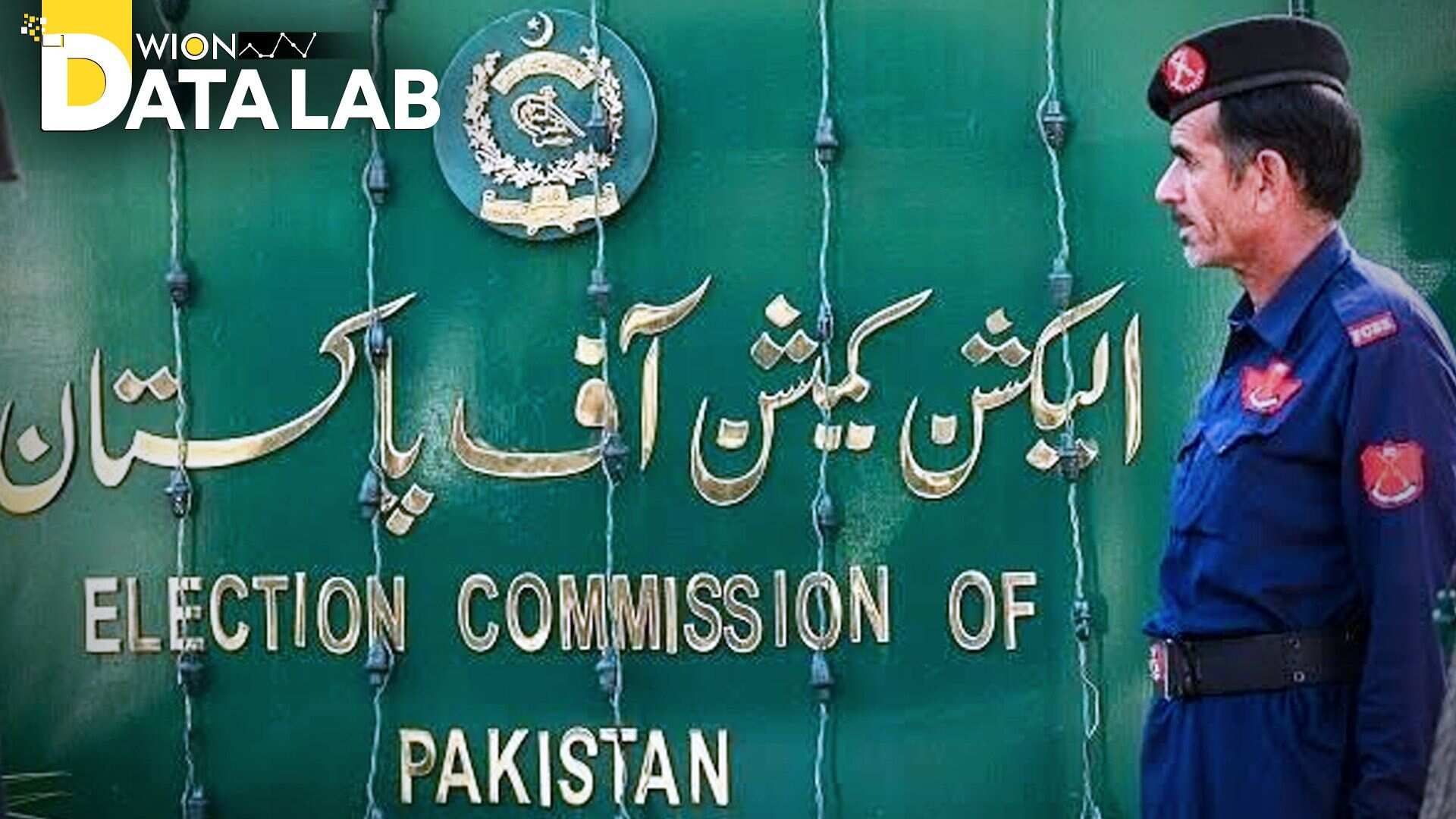
Pakistan will head to polls on Thursday (Feb 8)
Pakistan is heading to polls on Thursday (Feb 8)in the throes of an economic downturn.The South Asian nation is grappling with formidable challenges including crippling inflation, a persistently weakening currency, and critically low foreign reserves.
In January 2024, the Pakistan Bureau of Statistics reported a 28 per centyear-on-year inflation. Last week, fuel prices experienced another hike, and substantial electricity bills are anticipated for citizens this upcoming summer.
Additionally, Pakistan is confronted with a substantial debt repayment burden of $77.5 billion over the next three years, constituting nearly a quarter of its gross domestic product.

In their election manifestos, political parties vow to tackle these economic woes. The Pakistan Muslim League-Nawaz (PML-N), led by former prime minister Nawaz Sharif, aims to increase annual exports to $60 billion and raise remittances from overseas Pakistanis to $40bn.
However, the question remains: Can Nawaz Sharif truly navigate the uphill road?
&imwidth=180&imheight=135&format=webp&quality=medium)
Why Europe’s protests are about more than austerity and rising costs
&imwidth=180&imheight=135&format=webp&quality=medium)
US midterms 2026: Election workers face rising threats, vote-counting process under pressure
&imwidth=180&imheight=135&format=webp&quality=medium)
Bigg Boss 20: Rohit Shetty indirectly reacts to firing at his Mumbai home
&im=FitAndFill=(700,400)&imwidth=180&imheight=135&format=webp&quality=medium)
What is the real meaning behind Pete Hegseth's tattoos?
&imwidth=180&imheight=135&format=webp&quality=medium)
Venezuelan opposition leader María Machado returns home after over 10 months in exile
&imwidth=180&imheight=135&format=webp&quality=medium)
'Clear overkill': Putin rejects claims Russia is behind mass protests in Europe
&imwidth=180&imheight=135&format=webp&quality=medium)
Anthropic's leaked AI bill would act only at 50 deaths or $1bn in harm
&imwidth=180&imheight=135&format=webp&quality=medium)
'This is humiliation': Vijay Deverakonda under fire over controversial marriage proposal remark on Koffee With Karan 9
&imwidth=180&imheight=135&format=webp&quality=medium)
China's dancing robot turns violent bodyguard, lifts cars and fights intruders - Watch
&imwidth=180&imheight=135&format=webp&quality=medium)
Kim Kardashian, Kris Jenner turn heads with Bold looks at All’s Fair season 2 premiere in Rome
&imwidth=180&imheight=135&format=webp&quality=medium)
Javed Akhtar backs Rashmika Mandanna after Koffee With Karan 9 accent trolling, calls out ‘linguistic superiority’
&imwidth=180&imheight=135&format=webp&quality=medium)
IND-W vs ZIM-W, 2nd ODI: Harmanpreet Kaur, Vaishnavi Sharma star in India's 121-run win
&imwidth=180&imheight=135&format=webp&quality=medium)
'I promised Gautam & Kotak Sir that...': Tilak Varma opens up on match-winning mindset against NZ
&imwidth=180&imheight=135&format=webp&quality=medium)
Pakistan airline PIA unveils new crew uniforms, faces online criticism
&im=FitAndFill=(700,400)&imwidth=180&imheight=135&format=webp&quality=medium)
New Friday OTT releases (October 23, 2026): Gajab Raat, Dorothy, Chaar Yaar- Watch these 6 new movies and TV shows on Netflix, Prime Video and more
&imwidth=180&imheight=135&format=webp&quality=medium)
Pahalgam, Gulmarg record season’s first sub-zero temperatures as winter chill intensifies in Kashmir
&imwidth=180&imheight=135&format=webp&quality=medium)
Nagpur man fails to pay rent, allegedly prints fake Rs 500 notes worth Rs 37 lakh
&imwidth=180&imheight=135&format=webp&quality=medium)
Russia-Ukraine drone attacks kill 6, injure 31 across both countries
&imwidth=180&imheight=135&format=webp&quality=medium)
Saudi says debris fell in Mecca, Medina after missile interceptions; Houthis deny targeting holy cities
&imwidth=180&imheight=135&format=webp&quality=medium)
Netanyahu warns Israelis of ‘existential threat’ from Iran, posts AI image of nuclear strike
&imwidth=180&imheight=135&format=webp&quality=medium)
'Already tired of his 9-to-5': Baby born with a moustache becomes internet sensation, video goes viral | Watch
&imwidth=180&imheight=135&format=webp&quality=medium)
WATCH | Langur walks into Odisha repair shop, hugs shopkeeper; internet reacts to heartwarming video
&imwidth=180&imheight=135&format=webp&quality=medium)
Trump revives ‘shithouse countries’ slur, targets Abdul El-Sayed and Ilhan Omar at Georgia rally
&imwidth=180&imheight=135&format=webp&quality=medium)
'If it was up to me, it wouldn't have ended like this': James Anderson opens up on Lancashire exit
&imwidth=180&imheight=135&format=webp&quality=medium)
Horrific video shows the moment 18-year-old fell to her death from Mexico amusement park ride
&imwidth=180&imheight=135&format=webp&quality=medium)
Can Putin cheat death? All about his daughter’s billion-dollar quest for immortality
&imwidth=180&imheight=135&format=webp&quality=medium)
Byeon Woo Seok makes first public appearance as Sung Jin Woo for Solo Leveling at Netflix Korea’s 10th anniversary event
&imwidth=180&imheight=135&format=webp&quality=medium)
‘Modi ka baap bhi jayega,’ Kharge loses cool at party event in Patna; BJP slams him
&imwidth=180&imheight=135&format=webp&quality=medium)
Indian embassy warns nationals in Saudi Arabia against filming missile strikes
&imwidth=180&imheight=135&format=webp&quality=medium)
Govinda breaks silence on divorce rumours with Sunita Ahuja, calls her his first love
&im=FitAndFill=(700,400)&imwidth=180&imheight=135&format=webp&quality=medium)
Why do some fighter jets have two engines while others use one?
&imwidth=180&imheight=135&format=webp&quality=medium)
‘Saddam Hussein opened a cheesecake factory’: Obama mocks Trump’s White House renovations; defends Abdul El-Sayed
&imwidth=180&imheight=135&format=webp&quality=medium)
Telangana unveils AI avatar of IT minister D Sridhar Babu at Hyderabad DevFest 2026
&imwidth=180&imheight=135&format=webp&quality=medium)
Tiger Shroff’s team calls report on actor’s reaction to Mumbai attack ‘completely untrue’
&imwidth=180&imheight=135&format=webp&quality=medium)
‘Do I make a deal or finish them off’: What Trump said on resuming Iran strikes
WION spoke to Sharat Sabharwal, former Indian ambassador to Pakistan, to gain insights into the potential implications of a government led by Nawaz Sharif for Pakistan.
"The 2024 Pakistan parliamentary election is a mirror image of the 2018 poll, in the sense that Imran Khan was the spirit then and Nawaz Sharif was hated, and that has gotten reversed now. 2018 was a managed and fixed election, and 2024 is also the same," Ambassador Sabharwal told WION.
Nawaz Sharifreturned to Pakistan from his exile in London, purportedly as part of an agreement with the military, as per several reports.
This is also evident from the sudden termination of manylegal proceedings against him.
Asked about what a Sharif-led government would entail, Ambassador Sabharwal said his instincts were good on relations with India. "He realises the economic burden of Pakistan and also sees stabilising relations with India as a way ofcutting the salience of the Army in the Pakistani polity."
"But his ability to deliver will depend on the army's will," he noted.
Additionally, the PML-N has vowedto finalise a $10 billion oil refinery deal with Saudi Arabia, diversify refining sources, and advance the Main Line 1 rail project under the China-Pakistan Economic Corridor (CPEC).
Ambassador Sabharwal noted that while these initiatives may initially stimulate economic growth, they also contribute to the country's debt burden in the long run.
Meanwhile, the Pakistan People's Party (PPP), led by former foreign minister Bilawal Bhutto Zardari, has pledgedto double per capita income within five years and provide free electricity to underprivileged families for up to 300 kilowatt-hours. However, neither party has elaborated on their strategies for achieving these goals.
While observers acknowledge the necessity of forming a government in Pakistan, they are also aware of the military's influence in orchestrating elections and selecting leaders.
Analysts suggest that Pakistan will require immediate financial assistance from international allies in the near future. The country currently has an active bailout arrangement with the International Monetary Fund (IMF) valued at approximately $3bn, albeit with stringent conditions including budgetary adjustments and increased fuel prices.
"There are no short-term solutions. Pakistan will have to negotiate more loans from the IMF for debt restructuring. It will have to take some tough decisions, which will cause a lot of economic pain to the poor,"Prof Ajay Darshan Behera,Academy of International Studies, Jamia Millia Islamia, New Delhi, told WION.
In addition to concerns regarding fairness, the electoral process is also endangered by the spectreof violence.
The most recent incident occurred early on Monday (Feb 5), when militants in the northwest region of the country killed at least 10 police officers, adding to a series of attacks.
"The issue of terrorism has not received adequate media attention due to the political instability in the country since April 2022. The reality is incidents of terrorism have grown significantly in the bordering regions of Afghanistan and Balochistan since the Taliban takeover of power in August 2021. The establishment is determined to go ahead with the scheduled elections. Still, we may likely see a spurt in the incidents of terrorism in the political uncertainties of the transfer of power," noted Prof Behera.
Now, it all hinges on the military's approval and the extent to which they permit any sitting prime minister to act.