World's first: Defunct British weather satellite safely guided to assisted crash in the Atlantic

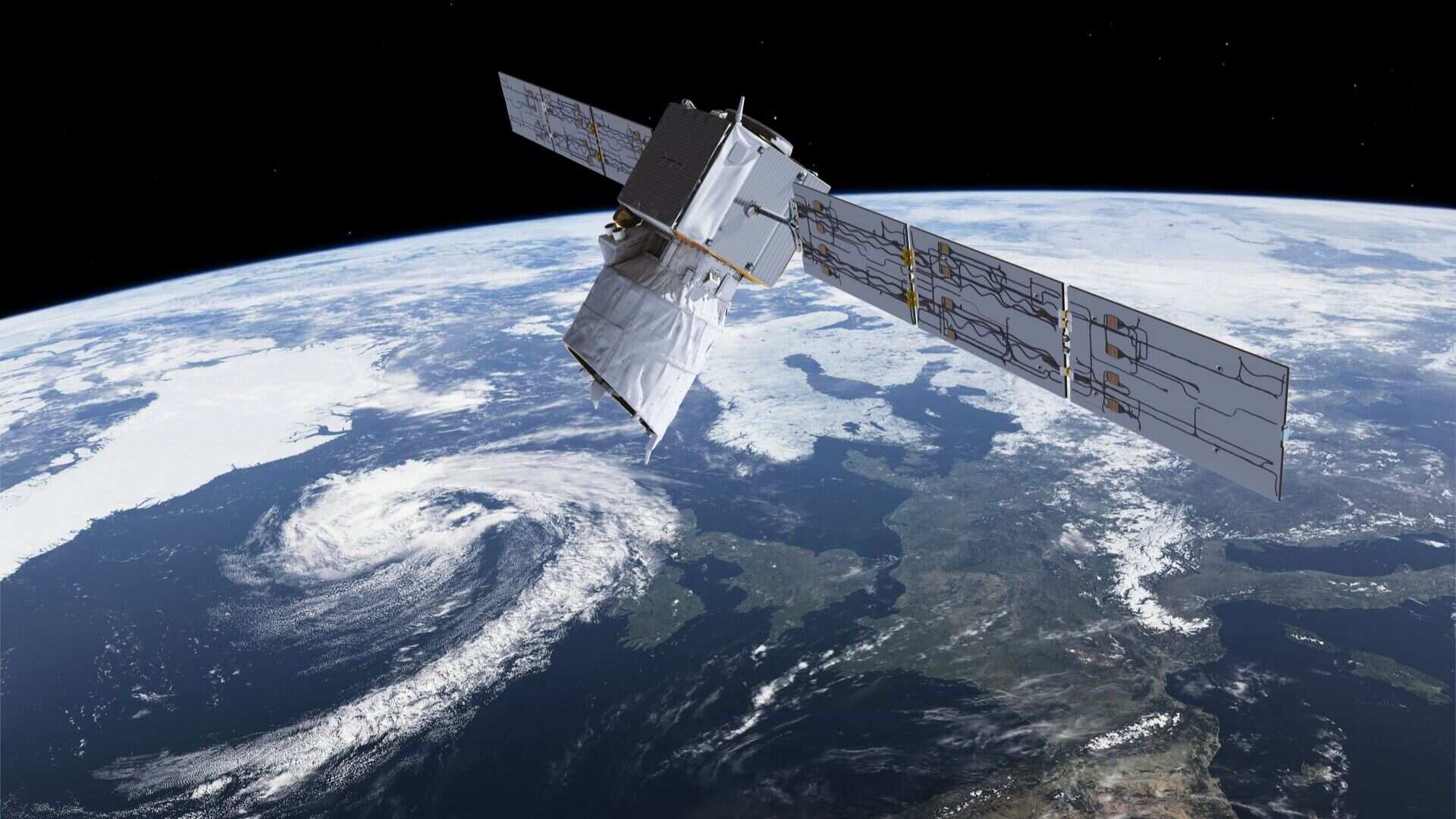
The Aeolus wind satellite
In a historic event, Aeolus, a British-built weather monitoring satellite, has been deftly guided to perform an assisted crash into the Atlantic Ocean, marking the first time a defunct satellite has undergone such a controlled re-entry on Earth.
Mission controllers at the European Space Agency (ESA) successfully directed Aeolus, which had been providing crucial weather data to European centressince 2018, to its final resting place.
This deliberate re-entry was undertaken to minimise the risk of debris striking populated areas and to set a precedent for responsible satellite disposal in the future, reported the Guardian.

ESA's pioneering effort
Aeolus, responsible for revolutionising wind profiling, was never designed for a controlled re-entry at the conclusion of its mission.
Nonetheless, ESA opted to utilise the remaining fuel onboard to steer the satellite towards a specific crash site in the ocean.
)
US vs China over South China Sea: Washington backs Philippines, Beijing hits back
)
UK police arrest several under explosives act near air base used by US forces
)
‘Anti-social elements spreading false rumours’: LPU issues statement amid massive unrest over alleged rape
)
LPU students go on rampage, vandalise campus amid widespread protest: What's happening
)
OpenAI AI Agents hacked 4 websites before Hugging Face, researchers reveal
)
US Treasury Secretary Scott Bessent hails global crackdown on Iranian banks and airlines
&im=FitAndFill=(700,400))
New Friday OTT releases (September 25, 2026): Don’t Be Shy, Hunkkaar: The Roar, Mango Pachcha- 6 movies and TV shows on Netflix, Prime Video and more
)
Asian Games 2026: India face Afghanistan in quarterfinal on Sep 28; Pakistan clash with Hong Kong
)
‘Attack on Mecca a red line for Pakistan’: Shehbaz Sharif warns Houthis at UN
)
'Countries far from conflict are penalised': Jaishankar calls for Gulf peace, seafarer safety at UN
)
Bigg Boss 20: Salman Khan schools Rhiti Tiwari over Qazi Touqeer clash, compares her to Dolly Bindra
&im=FitAndFill=(700,400))
Humanoid robots to virtual worlds! Korean sci-fi dramas to watch: Are You Human Too?, Memories of the Alhambra and more
)
IND vs WI 1st ODI: Naman Dhir debuts as India bowl first in Trivandrum; check playing XIs
)
Nations League: Spain sink England at Wembley; Modric shines for Croatia
)
Two men die of suspected chemical exposure inside public toilet in Mumbai
)
Trump-Xi summit wrap: Big pageantry, Iran talks, few major developments and more meetings planned
)
‘Could kill billions...’: Bill Gates backs calls to slow AI development amid fears of catastrophe
)
Bollywood x K-pop crossover! LE SSERAFIM’s Kazuha charms fans with Shah Rukh Khan’s ‘Chammak Challo’ steps
)
US-Iran war: Trump rejects Iran's Hormuz proposal, reports suggest talks expected next week
)
'What kind of confession is this?': Pakistan PM Shehbaz Sharif’s 'terrorists would be roaming New York' remark goes viral, raises alarm online. Watch
)
Jaishankar at UNGA: Goodwill and friendship can't coexist with terrorism
)
Sri Lankan Tamil migrant worker gets death sentence in Saudi Arabia, help sought from India
)
Avalanche strikes Nepal's Himlung Himal base camp, at least 10 missing
)
'FIRST LOOK from inside Noah’s Ark': Researchers share video from inside mysterious mound in Turkey
)
UNSC reform momentum grows: Russia, Portugal, Mauritius push for India's permanent seat bid
)
WATCH | As Shehbaz Sharif claims Pakistan’s ‘victory’ during 2025 conflict, Indian diplomat R Srinivas laughs at UN
)
Ceuta migrant crisis: Protesters take to streets as Spain grapples with migrant challenge
)
Ramayana: Yash’s Ravana gets first official poster from Nitesh Tiwari’s epic
)
'A terrorist country is asking me that question?': Jaishankar hits back at Pakistani journalist at UN; flags attacks on commercial shipping
)
Russia will achieve Ukraine war aims; Europe doing everything to block peace talks: Lavrov at UN
This groundbreaking re-entry manoeuvre marked the first-ever attempt of its kind, demonstrating ESA's commitment to responsible space debris management.
Minimising debris risks and gaining insights
Normally, a satellite like Aeolus would naturally re-enter the Earth's atmosphere and burn up during the process.
By intentionally crashing it into the ocean, ESA aimed to further reduce the already minimal risk of debris striking people or property on the ground.
Additionally, the agency sought to gather valuable data for future satellite re-entries, paving the way for best practices that other spacefaring nations and organisations can adopt.
Aeolus: A weather monitoring pioneer
Weighing 1,360kg upon launch, Aeolus was constructed by Airbus Defence and Space in Stevenage, Hertfordshire. Its launch in August 2018 marked a significant milestone as it became the first spacecraft capable of monitoring Earth's wind currents from space. Equipped with an advanced Doppler wind lidar, the satellite contributed to improving weather forecasts and climate models during its operational period.
Extended mission success
Originally planned for a three-year lifespan, Aeolus surpassed expectations by continuing its mission for nearly two additional years. However, on June 19, the spacecraft commenced its gradual descent from its operational altitude, culminating in its first major re-entry manoeuvring on Monday.
Annually, approximately 100 tonnes of space debris in the form of spent satellites, rocket bodies, and other fragments descend into Earth's atmosphere. Responsible satellite disposal, as demonstrated by the Aeolus mission, is vital to mitigate the potential risks posed by such debris to both human populations and space infrastructure.
The controlled re-entry of the Aeolus weather monitoring satellite into the Atlantic Ocean marks a historic achievement in responsible space debris management. ESA's pioneering effort sets a precedent for other spacefaring nations and organisations to follow suit, ensuring safer skies and a sustainable future for space exploration.
WATCH WION LIVE HERE: