Why we are searching for alien life all wrong, according to White House UAP Council Chair Avi Loeb

&imwidth=600&imheight=450&format=webp&quality=medium "Why we are searching for alien life all wrong, according to White House UAP Council Chair Avi Loeb")
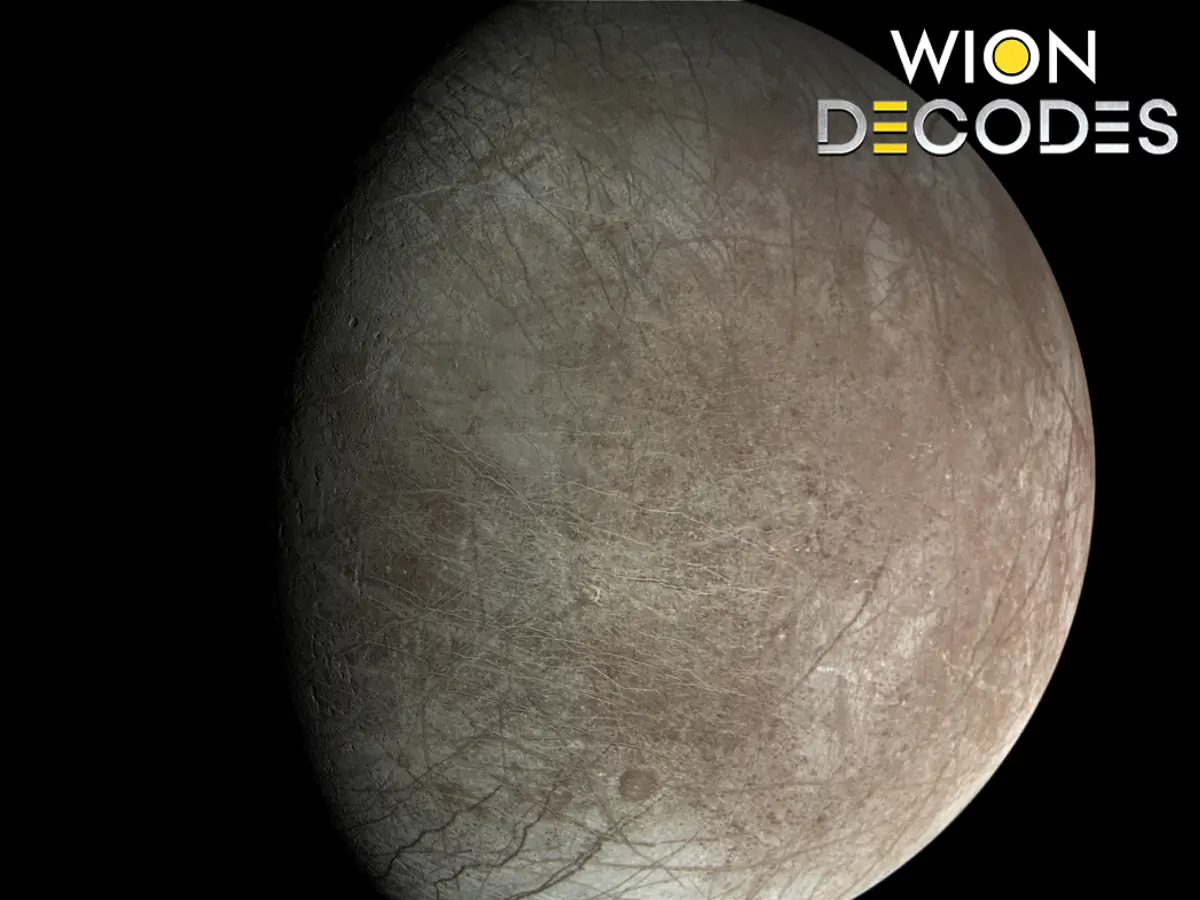
A photo of Europa provided by NASA, one of Jupiter's moons potentially hiding life under subsurface ice. Photograph: (AFP)
Humans have been searching for alien life for a long time, yet have never found any signs. Newly appointed Chair of the UAP Science Council for the White House, Avi Loeb sheds light on how to search for extraterrestrials and what humans are getting wrong.
Physicist Enrico Fermi posed the big question in 1950: "Where is everybody?" This led to the rise of the Fermi Paradox. If the observable universe is filled with hundreds of billions of galaxies, with even more stars, billions of Earth-like planets orbiting habitable zones around their stars in the Milky Way alone, there is a high statistical probability of extraterrestrial life being present in the universe. However, despite looking for signs of life for decades, humans have had no luck. Why haven't we found alien life yet?
Chair of the UAP Science Council for the White House, Avi Loeb says we just haven't looked enough. "We haven't scoured much of the universe. Even within the orbit of the Earth around the Sun, our best telescope can only detect the reflection of sunlight from interstellar objects that are bigger than our largest rocket, Starship," he told WION.
Scientists have tried to solve the Fermi Paradox with several hypotheses over the years.
Life is hard
Complex intelligent life requires a set of conditions - the planet should have plate tectonics, a magnetic field, a large moon and a gas giant like Jupiter to keep asteroids away from us. Besides, biological challenges, such as the transition from single-celled to multicellular life, are a major hurdle for life to evolve. Earth happens to be the rare exception that made it through.
Self-destruction
Second, it is possible that a technologically advanced civilisation self-destructed through either nuclear weapons, climate change, or artificial intelligence even before they reached the stage of interstellar travel. Asteroids, gamma rays, and supernovae could have also wiped out life before they could expand their footprint in the universe.
They don't want to be found
Third, aliens might not want to reach out at all. They might know about us and are probably just looking at us. There is also a theory that alien life is silent to prevent a threat from a possibly predatory civilisation. However, even if they have sent a signal to Earth, it would be light-years before they reach us. "Even if thereare residents in our cosmic neighbourhood, none of them may be calling us, or they may be using more advanced communication techniques," Loeb says.
Trending Stories
)
)
)
)
)
)
&im=FitAndFill=(700,400))
)
)
)
)
)
)
)
&im=FitAndFill=(700,400))
)
)
)
)
)
)
)
)
)
)
)
)
)
)
)
)
)
)
Then, how should we search for alien life?
Huge telescopes on Earth and in space are looking for signals that could have originated from an advanced civilisation elsewhere in the universe. But nothing has even been found. Loeb says searching for radio communication signals is like waiting for a phone call. He suggests that a better way is to look for artefacts and equipment belonging to them floating near Earth, just like we have the Voyager probes billions of kilometres away.
"Interstellar probes, like Voyager, will remain bound by gravity to the Milky Way and may arrive in our backyard," Loeb says. He has been working on this through the Galileo Project, which focuses on technosignatures in physical space.
What happens when we find proof of extraterrestrial life?
Loeb says signals are something we don't need to worry about since they take tens of thousands of years to cross the Milky Way. But if we find a “visitor to our backyard requires prompt response. The nature of this response will depend on the intent and technological capabilities of the visitor.”
Could intelligent life be present under impenetrable ice without ever developing space travel or radios?
This is another theory floated by scientists. They believe that places like Europa and Enceladus, which have subsurface oceans, could be harbouring life several kilometres deep inside ice. Loeb agrees that life in the universe might be most common under surface ice. Such life might be living without even the concept of space travel.
So what is the answer to "Where is everybody?" Loeb says the most convincing hypothesis is that everyone is right here.

