Wentian laboratory: Chinese astronauts set up new lab on space station

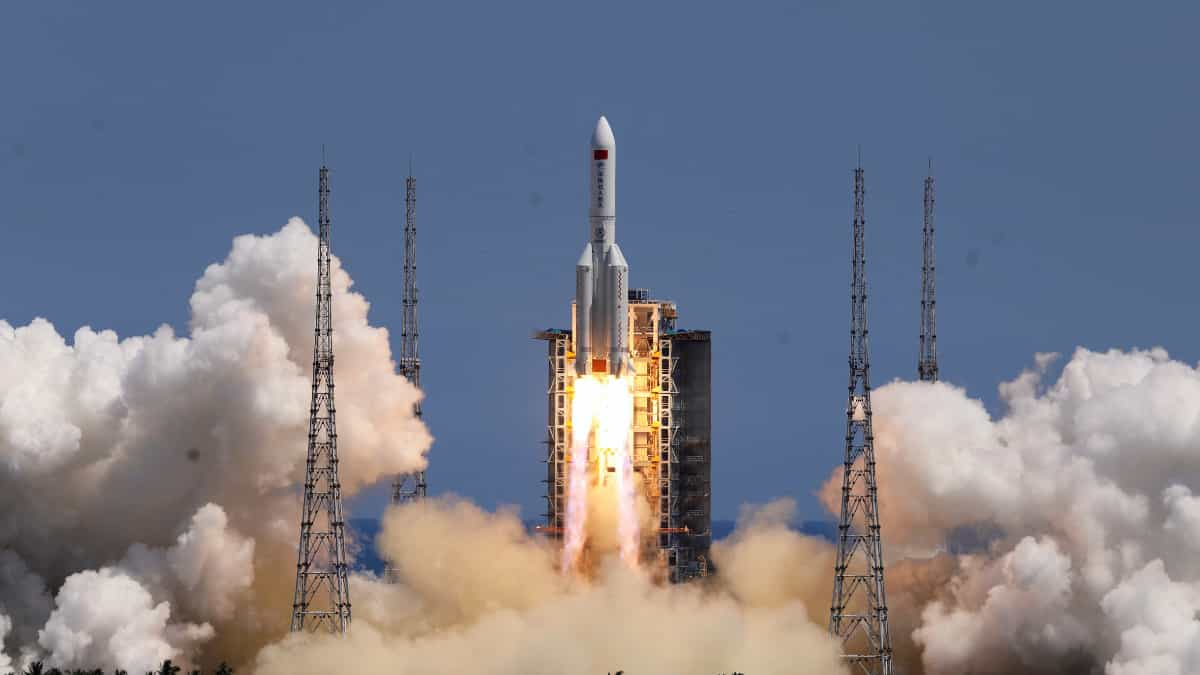
Wentian lab module
China on Monday (July 25) added a laboratory to its permanent orbiting space station as the country is working towards completing the structure, which is expected to be done by the end of the year. The China Manned Space Agency (CMSA) informed on Monday that a second laboratory module to its under-construction space station was docked successfully.
With an aim at expanding space ambitions, China launched the Wentian module atop a Long March 5B rocket from Hainan Island at 2:22pm (local time) on Sunday. Shortly after the launch, CCTV reported that the launch was "a complete success".
ALSO READ |Newly discovered rare deep-sea brine pools can help look for ‘alien’ life elsewhere in the universe

China has landed robotic rovers on Mars and the Moon, and the space station is deemed as one of the crown jewels of the nation's ambitious space programme.
Tiangong space station was launched last year in April and the Wentian module is the second of the three modules required to complete it.
Footage from state broadcaster CCTV showed that a few hours after docking, the three astronauts opened the hatch and entered Wentian. Those three astronauts have been living in the core module since June. China is only the third nation to put humans in orbit.
)
Beijing to Washington! Ivanka Trump makes a style statement in Chinese designer Guo Pei for President Xi Jinping’s White House welcome
)
New wellness trend focuses on a natural inner glow
)
Outrage erupts after 3-year-old is married to 60-year-old man in Pakistan, link to her sister's murder being probed
)
Trump gifts Xi a bald eagle sculpture at White House dinner: Here’s what it symbolises
)
‘Not just a local tragedy’: Nepal PM Shah warns UN of growing climate threat, says Nepal floods were 'a warning to the world'
)
India-New Zealand FTA is ‘an expression of trust’, NZ High Commissioner Patrick John Rata says
&im=FitAndFill=(700,400))
New Friday OTT releases (September 25, 2026): Don’t Be Shy, Hunkkaar: The Roar, Mango Pachcha- 6 movies and TV shows on Netflix, Prime Video and more
)
Watch: PM Modi joins Bhajan Clubbing event in Delhi on Deendayal Upadhyaya's birth anniversary
)
‘Attack on Mecca a red line for Pakistan’: Shehbaz Sharif warns Houthis at UN
)
Tesla is preparing something big for Optimus: new Gen 3 models surface in app
)
Bias or safety concerns? Bengaluru CEO says firm will not hire men from UP, Bihar, Rajasthan, MP. Here's why
)
Double shock for Israel: Furious Trump refuses to meet humiliated Netanyahu | Gravitas
)
Trump's welcome to Xi demonstrates 'attraction' to dictators: Chuck Schumer
)
Scientists detect first radio signals directly from faraway planet
)
A seven-day roadmap? Iran proposes plan to end war, reopen Strait of Hormuz and resume nuclear talks
)
Xi Jinping's 'special plane' vs Trump's Air Force One: What's the difference?
)
‘It is all possible’: Putin weighs next steps on Ukraine talks, rules out Europe conflict
)
Saudi Arabia, Turkey and Pakistan to hold urgent military talks amid intensifying Houthi attacks
)
Ex-Liverpool forward Mohamed Salah banned from driving in United Kingdom for six months
)
‘We’ve never gotten along better’: Trump praises Xi, jokes about White House ballroom at high-stakes state dinner
)
Meet Adrian Abraham: 9-year-old Indian-origin guitar prodigy aiming for a Guinness World Record
)
Red Sea crisis: Houthis promise not to target European ships; UNSC condemns Saudi attacks
)
'Blockbuster' nor'easter develops an eye similar to hurricanes as warnings are issued
)
'Making history': Xi Jinping praises Trump as US-China leaders dine at White House
)
'We do not wish to continue. It's America that must choose': Iran president Pezeshkian calls on US to end war
)
Exclusive | 'We always want to improve': Suruchi, Kamaljeet after winning Asian Games gold
)
Bollywood mourns Mushtaq Khan: Sunny Deol, Rajpal Yadav and others pay tribute
)
Myanmar training camp case: US national, 6 Ukrainians allowed to meet their families abroad
)
'FIRST LOOK from inside Noah’s Ark': Researchers share video from inside mysterious mound in Turkey
)
99.9% more powerful - Scientists find boy who can recall memories from just 3 months of age
)
Trump made 'final decision' to give Ukraine Patriot missile production license: Zelensky
)
WATCH | As Shehbaz Sharif claims Pakistan’s ‘victory’ during 2025 conflict, Indian diplomat R Srinivas laughs at UN
)
'Fund people, not bombs': Hundreds take to New York streets as Netanyahu delivers speech at UN; dozens arrested
)
'A terrorist country is asking me that question?': Jaishankar hits back at Pakistani journalist at UN; flags attacks on commercial shipping
)
Army chief reviews operational preparedness along LoC, visits mega eye camp in Tangdhar
&im=FitAndFill=(700,400))
‘Absolutely savage, sickening’: Zelensky slams Russia as daytime strikes kill 5 in Kyiv
)
‘Totally unacceptable’: Trump warns Xi over China’s support for Iran
ALSO READ |Ever heard about bio-weapons that use DNA to kill specific person? They are reality now
As mentioned by the official news agency Xinhua, Wentian will focus on life sciences and biotechnology research, including cell research and growth experiments on plants, fruit flies and zebrafish.
The state media also said that the module will have living space for three additional astronauts. It will be housing up to six people during crew transitions.
Another lab named Mengtian, which is the third and final module, is scheduled for launch in October. Once finalised, Tiangong is expected to remain in low orbit 400-450 kilometres above Earth for at least 10 years.
WATCH WION LIVE HERE
You can now write for wionews.com and be a part of the community. Share your stories and opinions with us here.