Using bugs as animal feed can cut down deforestation: Report

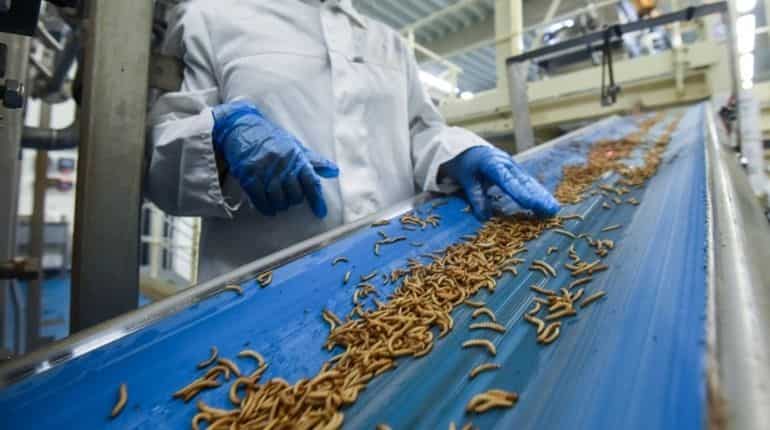
An employee checks worms before they are being turned into protein powder at an experimental insect farm in Dole, eastern France. (File Photo)
According to a World Wildlife Fund (WWF)report, insect protein could replace 20 per cent of the UK's imports of soya by 2050.
It found that just under half of the demand for insect protein can be met by British producers. The study outlines a plan for the UKto speed up the uptake of insect protein in animal feed.
Soyis increasingly being used in animal feed, however, deforestation has also been linked to its use.

According to estimates, in 2019 alone, more than 1 million tonnes of soya consumed by livestock farmers in the UK may have contributed to deforestation.
Mollie Gupta, WWF's forest commodities manager says that among the findings was the first quantification of the benefits of insect protein in the UK. She adds that her team has been exploring insect protein as an alternative to soya for 18 months and that whileit was always obvious that it had great potential, the fact that it can cut UK's soya imports by a fifth is unbelievable.
&imwidth=180&imheight=135&format=webp&quality=medium)
Viral video shows cross falling on Colombia priest, no official confirmation | WATCH
&imwidth=180&imheight=135&format=webp&quality=medium)
Rafale Marine fighter begins flight trials in Goa ahead of Indian Navy induction
&imwidth=180&imheight=135&format=webp&quality=medium)
Ranbir Kapoor apologises for Dussehra speech slip, clarifies remark at Ramayana event
&imwidth=180&imheight=135&format=webp&quality=medium)
Meta slapped with $25 billion fine in New Mexico over Facebook data practices, company plans appeal
&imwidth=180&imheight=135&format=webp&quality=medium)
WATCH: Woman IPS officer fires several rounds of AK-47, ignites debate online
&imwidth=180&imheight=135&format=webp&quality=medium)
WATCH | Mysterious haze grips Ohio city as toxic chemical leak forces mass evacuation – What is happening?
&imwidth=180&imheight=135&format=webp&quality=medium)
EU probes Booking.com under Digital Services Act
&imwidth=180&imheight=135&format=webp&quality=medium)
Pakistan signs another defence pact even as Makkah Alliance shows no teeth. This time, it's with Qatar, Indonesia, Turkey
&imwidth=180&imheight=135&format=webp&quality=medium)
Ilhan Omar breaks silence over alleged marriage to her brother; Trump thinks it's 'really good answer'
&imwidth=180&imheight=135&format=webp&quality=medium)
Kim Jong Un death rumors explode | China accused of secretly sending troops to Pyongyang
&imwidth=180&imheight=135&format=webp&quality=medium)
US-Iran war: Bibi, Trump gamble on new Iran war to save themselves in polls
&imwidth=180&imheight=135&format=webp&quality=medium)
From Agni-V to Project Kusha: How are India’s indigenous missile systems and defence shield reshaping modern warfare
&imwidth=180&imheight=135&format=webp&quality=medium)
Will Rohit and Kohli play ODI World Cup 2027? BCCI president Manhas says board 'not in a position to comment'
&imwidth=180&imheight=135&format=webp&quality=medium)
Why websites around the world are suddenly going offline? What you need to know about PHP
&imwidth=180&imheight=135&format=webp&quality=medium)
US midterms 2026: What polls and prediction markets indicate about Congress
&imwidth=180&imheight=135&format=webp&quality=medium)
'You are a dummy, you are a stupid person': Trump loses temper with CNN, ABC reporters after questions about Russia sanctions
&imwidth=180&imheight=135&format=webp&quality=medium)
China's dancing robot turns violent bodyguard, lifts cars and fights intruders - Watch
&imwidth=180&imheight=135&format=webp&quality=medium)
16-foot doomsday fish in Chile triggers fears that the next earthquake is coming
&imwidth=180&imheight=135&format=webp&quality=medium)
Are the US and Israel preparing for another major attack on Iran? Here's what report claims
&imwidth=180&imheight=135&format=webp&quality=medium)
Priyanka Chopra celebrates Dussehra 2026 with Nick Jonas and daughter Malti Marie | See pics
&im=FitAndFill=(700,400)&imwidth=180&imheight=135&format=webp&quality=medium)
New OTT releases this week (October 19-25, 2026): Gajab Raat to Chaar Yaar-8 titles to watch during Dussehra week on Netflix, Prime Video and more
&imwidth=180&imheight=135&format=webp&quality=medium)
‘I caution the president...’: Trump’s ex-press secretary warns after Zacharia’s exit
&imwidth=180&imheight=135&format=webp&quality=medium)
'Father of all bombs' vs 'mother of all bombs': Iran threatens US with new weapon as Trump hints at MOAB strike
&imwidth=180&imheight=135&format=webp&quality=medium)
Diljit Dosanjh's Oct 30 Delhi show hits roadblock, Delhi Police denies permission
&imwidth=180&imheight=135&format=webp&quality=medium)
Australia police arrest former national 100m champ Jake Doran for alleged child abuse
&imwidth=180&imheight=135&format=webp&quality=medium)
'Gyanu must go': CJP's Saurav Das, Ashutosh Ranka after release, despite Jantar Mantar protest undertaking
&imwidth=180&imheight=135&format=webp&quality=medium)
Kolkata airport: CISF detects ₹1.13 crore in US dollars hidden in bags of 2 Bangkok-bound passengers
&imwidth=180&imheight=135&format=webp&quality=medium)
Feds obtain DNA evidence that could prove Ilhan Omar married her brother: Report
&imwidth=180&imheight=135&format=webp&quality=medium)
US midterms 2026: Trump's approval rating hits record low as Democrats gain ground
Taking advantage of this potential will require major hurdles to be overcome, particularly legislation. Animal feed regulations affect what animals can be fed, and then what they can be fed to. This double legislative burden is a significant one.
Protein extracted from insects is primarily used for pet food and aquafeed, where it competes with fishmeal, another unsustainable source of protein.
The report recommends that government allow the use of insect proteins in soya-based pig and poultry feed. In addition to increasing production, this will open up markets for insect protein.
Insects will be approved for use in pig and poultry feed by the EU this summer.
Also discussed in the report is the need for legislation to broaden the range of feedstocks that can be used when farming insects, such as products containing meat and fish as well as leftover food from manufacturing processes.
In addition, Gupta stressed that it was essential for governments to support insect production in a similar manner to what they do for other farming methods or industries, such as anaerobic digestion, which directly competes with plants and food waste for feedstock.
She predicted that this would bring the price of insect protein to the level of fishmeal in the short term and to soy meal in the long term.
Retailers could also contribute to the use of insect protein in animal feed by encouraging its use in their supply chains and educating consumers about its benefits, according to the report.