Two neutron stars collided about 1 billion light years away, releasing a rare element


Kilonova
Astronomers recently came across tellurium, an elementrarer than platinum on Earth, about 1 billion light years away. The observation was done using NASA's powerful James Webb Space Telescope (JWST).
It is believed that the element was created after the violent collision of two neutron stars that were booted out of their galaxy.
The explosion unleashed a burst of gamma rays more than one million times brighter than the Milky Way. Gamma-ray bursts are short emissions of the most energetic form of light. This explosion blasted material into space that formed the rare element tellurium and others known as actinides and lanthanides.

Also read:A 390-million-year-old murder mystery has finally been solved, and the culprit still exists
The findings may contribute to a better understanding of the conditions in which precious chemical elements are created in the universe.
"Just over 150 years since Dmitri Mendeleev wrote down the periodic table of elements, we are now finally in the position to start filling in those last blanks of understanding where everything was made, thanks to Webb," study lead author Andrew Levan of Radboud University in the Netherlands and lead author of the study said in a statement.
)
FACT CHECK: Why did PM Modi ask Xi ‘is it okay’ at BRICS Summit? New video reveals...
)
Flying cars in UAE: Ras Al Khaimah signs deal with Chinese company to test new transport
)
Indian Cinema bets big on mythology, brings ancient stories to modern audiences
)
Pentagon revives mandatory testosterone testing for male troops aged 30 and above
)
Fast bowler Brydon Carse faces no charges over Derby nightclub incident
&im=FitAndFill=(700,400))
Meet top 5 bowlers in latest ICC T20I rankings
)
NASA research plane reaches 61,000 feet over Panama
)
US hiding troop deaths in Iran war? Toll higher than Pentagon count, claims report
)
Russia holds first parliamentary elections since the beginning of the Ukraine war
)
Brigitte Bardot’s private collection set for Paris auction; key items and prices revealed
66 years of the Indus Waters Treaty: How India and Pakistan settled a bitter river dispute
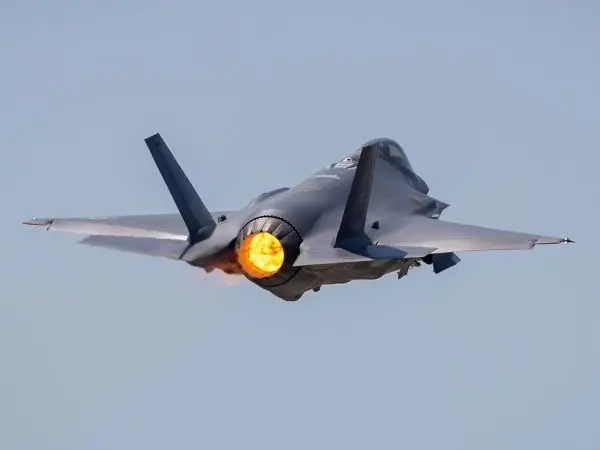)
China may have gained access to US's classified F-35 jets; parts meant for repairs diverted to Hong Kong, sparking Pentagon inquiry
)
Pyongyang dismisses US, western pressure over nuclear programme
)
Zendaya and Tom Holland step out for a low-key date in Los Angeles
)
India seeks to build a full semiconductor supply chain
)
The Verdict | When precision fails: US commits war crime in Minab school strike, UN finds
)
‘Will go to any extent’: Pakistan vows to defend Saudi Arabia amid Houthi attacks
)
Google’s Gemini AI hacks real systems by guessing passwords during security test
)
Who is Khalilur Rahman? All you need to know about 81st UN General Assembly President
)
Tirupati Laddu ghee adulterated with chemicals, says ED, supplier arrested
)
Trump bans CNN, MS NOW and Politico from White House over ‘FAKE NEWS’
)
IIT Bombay student dies by suicide, was caught seeking AI help during exams
)
Pak: A series of counter terrorism operations in Khyber Pakhtunkhwa
)
Trump signs Russia sanctions law: India faces fresh 100% tariff threat over Russian oil
)
Godfather of AI Geoffrey Hinton gives US lawmakers a one-year warning on AI
)
Ukraine plans record $109 bn defence spending, nearly two thirds of budget amid Russia war
)
Trump signs Russia sanctions bill into law, targets Moscow’s energy sector
)
Why Ranveer Singh’s Dhurandhar missed India’s Oscar entry; FFI jury member reveals what happened
&im=FitAndFill=(700,400))
Meet top 5 Indian batters with fastest T20I centuries
&im=FitAndFill=(700,400))
New Friday OTT releases (September 18, 2026): Lust Stories 3, You+Me, Best of the Best- 8 new titles coming on Netflix, Prime Video and more
)
Trump's Greenland dream comes true? POTUS announces 'Infinite Life' deal with Denmark, claims permanent US control
)
US And Denmark reach Greenland deal, Trump announces expanded military presence
)
Trump 2.0: Dark days ahead for America’s ‘imperial presidency’
)
Africa is splitting, and a lot sooner than estimated, giving way to a new ocean
&im=FitAndFill=(700,400))
From Abhishek Sharma to Sahil Chauhan, 5 batters with fastest T20I hundreds
)
Scientists suspect the merging neutron stars may have formerly been big, garden-variety stars that were gravitationally imprisoned in their native galaxy. It seems that one of the stars shot out of its galaxy and landed 120,000 light-years away when it neared the end of its existence and burst into a supernova. The second star followed suit.
Scientists suggest that despite being violently expelled from their galaxy, the neutron-star pair remained gravitationally bonded. Many hundred million years later, on March 7 of this year, to be accurate, we witnessed their merging into one body.
"Webb provides a phenomenal boost and may find even heavier elements," said study co-author Ben Gompertz, a professor at the University of Birmingham in the UK. The observatory "has certainly opened the door to do a lot more, and its abilities will be completely transformative for our understanding of the universe."
The violent cosmic merger, known to astronomers as a kilonova, sparked a gamma-ray burst (GRB) witnessed by scientists on March 7 — the second brightest GRB since the search for these phenomena began 50 years ago. NASA's Fermi satellite observatory was the first to see the glow, which lasted a record 200 seconds. In barely two seconds, similar lights from earlier star mergers dispersed
Kilonovae are extremely rare; scientists have witnessed only one other such event in sufficient detail to deduce elements potentially made in the explosion. While supernovae, or exploding stars, produce elements like iron and nickel, heavier elements seem to be best formed by more severe neutron-star collisions.
They are also difficult to observe, but astronomers look for short gamma-ray bursts, which only last about two seconds.
(With inputs from agencies)
WATCH WION LIVE HERE

