Scientists in New Zealand invent a warning system that predicts volcanic eruptions

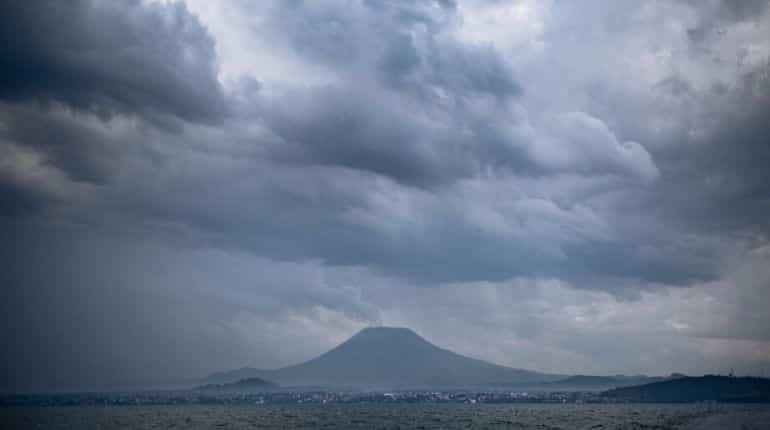
This photograph, taken from Lake Kivu on September 29, 2019, shows the city of Goma flanked by the active volcano Nyiragongo, in the northeast of the Democratic Republic of the Congo.
Scientists in New Zealand claim to have invented a warning system which will effectively predict volcanic eruptions to prevent loss of life.
A volcanic blast on White Island in 2019 killed 21 people, for there was no predictivewarning system in place.
"Early warning"

The research behind the mechanism says that it is able to track and predict seismic activity before a potential eruption takes place.
In conversation with the Guardian, the University of Auckland researchers Dempsey and Cronin claimed that had this “early warning” system been in place last year when the tragedy occurred on White Island, red flags would have been raised “16 hours before the volcano’s deadly eruption”.
The country already has a series of monitoring tools, namely the one operated by GNS Science and called “The Geonet”, which measures the movements and tremors on earth.
&im=FitAndFill=(700,400))
National Handloom Day 2026: From Alia Bhatt to Samantha Ruth Prabhu; Actresses who celebrated India's textile heritage as brides
)
The Royals enter the Doctor Who universe: King Charles and Queen Camilla beam into Commonwealth Games in TARDIS
)
Unitree Robotics targets $9 billion valuation in landmark IPO backed by DeepSeek and Tencent
)
India names 27 sites in Arunachal Pradesh
)
Bharat Bhhagya Viddhaata OTT: When will Kangana Ranaut's film stream online?
&im=FitAndFill=(700,400))
How many soldiers operate one S-400 battery?
)
Shakib Al Hasan ready to return to Bangladesh—under one condition
)
‘Fake news’: MEA rejects report claiming India sought defence pact with Israel after Pakistan, Saudi Arabia, Turkey deal
)
Rockstar to unveil GTA 6 extended look ahead of November launch
)
Russia forms Ukrainian Volunteer Spetsnaz Brigade to fight Ukraine
)
Drug-resistant fungus that hides in hair and enters bloodstream reported in 23 US states
)
Technology transfer deal boosts India's defence manufacturing ambitions
)
Border row erupts in Europe after Ceuta crossings, Spain imposes border controls on Italy
)
Morale plummets on USS Abraham Lincoln: Are US sailors reaching a breaking point? | GRAVITAS
)
'Security can't be bought with Pakistan, Turkey deal': Iran tells Saudi Arabia
)
Baba Vanga's 2026 prophecy: 2 predictions 'already came true', 3 terrifying ones remain. Details inside
)
Colombia’s new president Abelardo de la Espriella vows to ‘defeat narco-terrorists’, signals hardline shift
&im=FitAndFill=(700,400))
New Friday OTT releases (August 7, 2026): Operation Safed Sagar, Vadhandhi, Main Vaapis Aaunga- 6 movies and TV shows on Netflix, Prime Video and more
)
Squadron Leader Bhawana Kanth scripts history as Indian Air Force gets its first woman ‘Top Gun’ pilot
)
RSS says Gen Z protests reflect genuine distress
)
Trump says Iranian school bombing photos could be AI-generated - 'I don’t think...'
)
IAF officer held for sharing sensitive information in 'honey trap' case, booked under Official Secrets Act
)
Stray Kids under scrutiny? Fans react to Grammy submission silence after BTS boycott
&im=FitAndFill=(700,400))
Why the Su-30MKI doesn't need external fuel tanks to fly vast distances
)
Jugal Hansraj reunites with Shekhar Kapur after 40 years for Masoom: The Next Generation
)
New speed limits, automatic challans: Big traffic change coming to Delhi-Meerut Expressway. All you need to know
)
India officially names 27 places in Arunachal to counter China's renaming claims
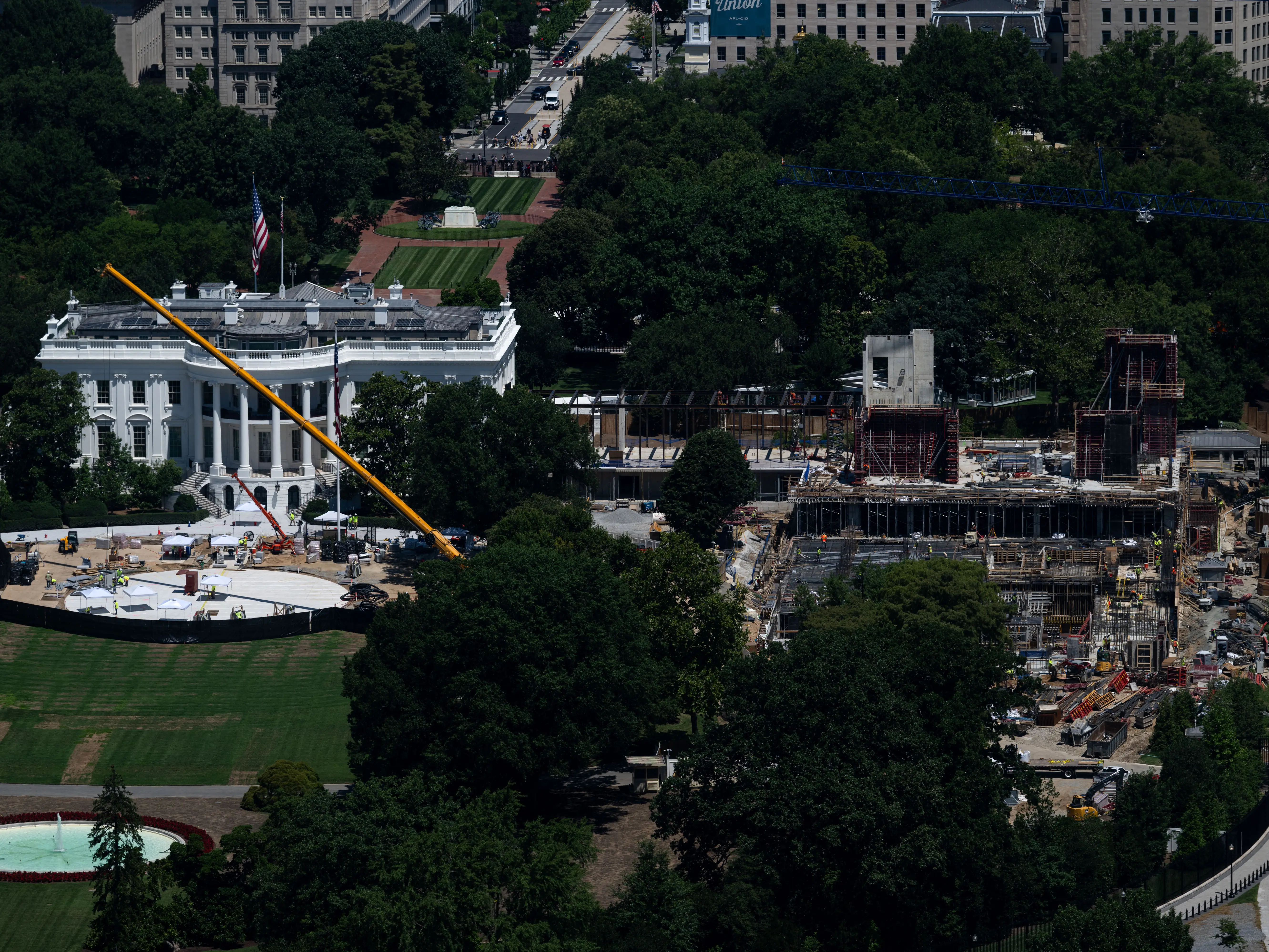)
Trump calls White House ballroom ruling a 'national disgrace' as court says Congress approval needed
)
US sanctions Iran’s crypto network after Strait of Hormuz attacks, offers $15m bounty for intel on IRGC finance
&im=FitAndFill=(700,400))
Why the Su-30MKI is one of the heaviest fighters ever built
)
Uttarakhand young innovator builds India's own flying vehicle, conducts first test flight: WATCH
)
Chilling video shows students take cover as teen opens fire at Thai school
)
Reese Witherspoon's father hospitalised after poolside incident in Nashville: Report

However, it is a log system which collects and collates data from thousands of earthquakes, without offering prediction.
Dempsey and Cronin claim to have applied data from the past to set up “machine learning algorithms”, which lets them spot patterns leading up to and after the eruptions.
For instance, they claimed that the 2019 eruption happened after 17 hours of seismic activity, and hence could have been avoided by ringing alarm bells.
A pressure cooker? Kind of!
According to them, this began with a “strong four-hour burst of seismic activity”, which caused “magmatic fluid” to rise up and to creature pressure on the gas and water which was trapped in the rock.
Comparing it to a pressure cooker lid blasting off, they said this is what led to the eruption in the end.They also claimed that a similar pattern of seismic signals and activity was recorded in August 2013, and before other two similar eruptions in 2012.
Even though the system faces its own loopholes and drawbacks, the researchers are confident that four out of five times, it will successfully contain an eruption, especially large ones along the lines of the one in 2019.
They added that the warnings would require people to avoid the area altogether and desert it for a month every year.In a bid to make the system operational and ready to save lives, the two researchers are now working with GNS Science. Additionally, the data and software is open source, offering people the chance to offer improvement updates.
In the aftermath of the White Island tragedy in December last year, tourists have stopped visiting the island altogether, clubbed with coronavirus fears.
The research is set to be published in Nature Communications this week. New Zealand and surrounding regions are highly susceptible to volcanic eruptions, putting many lives at risk.