Researchers develop VR goggles for mice to create immersive scenarios for brain research

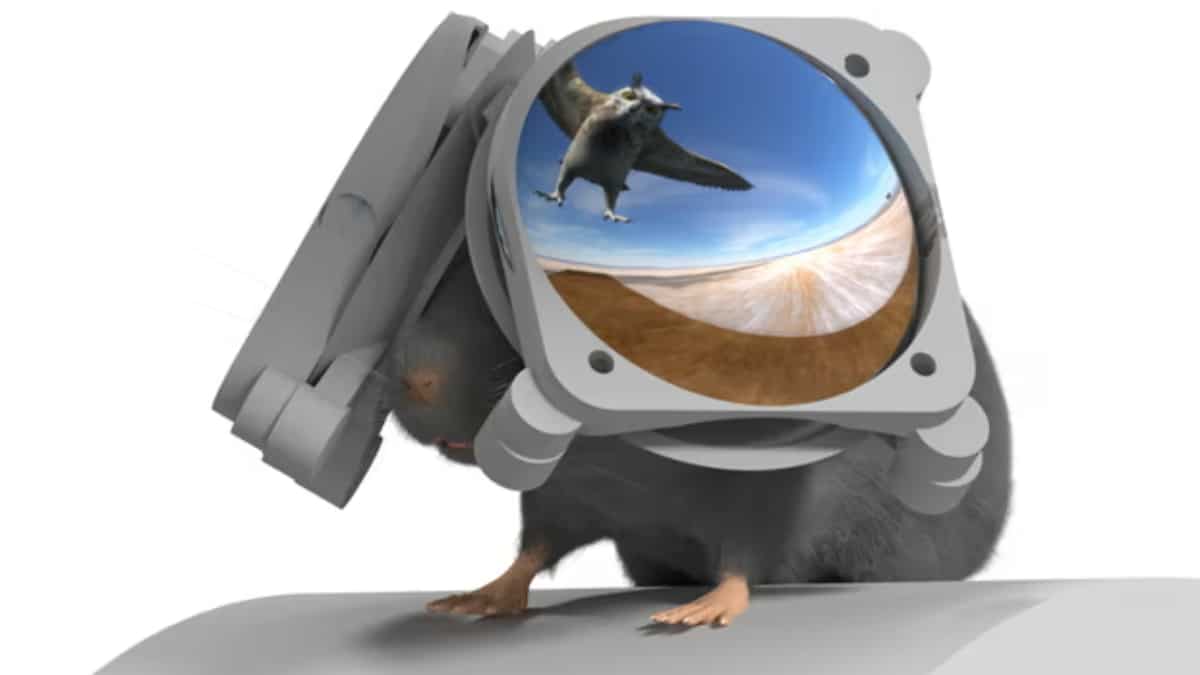
A look at the VR goggles for mice.
Researchers at the prestigious Northwestern University have developed virtual reality (VR) goggles for mice to create immersive scenarios for brain research. "By more faithfully simulating natural environments, the researchers can more accurately and precisely study the neural circuitry that underlies behaviour," the researchers said in the study published on Friday (Dec 8).
"Compared to current state-of-the-art systems, which simply surround mice with computer or projection screens, the new goggles provide a leap in advancement," the study said. The new VR goggles could help researchers glean new insights into how the human brain adapts and reacts to virtual reality exposure.

Professor Daniel Dombeck, the study's senior author said that researchers have been using VR systems for mice for the past 15 years, adding that till now, laboratories have used big computers or projection screens to surround an animal.
"For humans, this is like watching a TV in your living room. You still see your couch and your walls. There are cues around you, telling you that you aren’t inside the scene. Now think about putting on VR goggles, like Oculus Rift, that take up your full vision. You don’t see anything but the projected scene and a different scene is projected into each eye to create depth information. That’s been missing for mice,” he said.
Integrating VR into lab settings
)
From Gaddafi tearing up UN Charter to Trump’s ‘escalatorgate’: Most unforgettable UNGA moments
)
WION Iconic Tourism Summit 2026: Union Minister Shekhawat on 'experiential travel', peace diplomacy
)
WATCH | China President Xi Jinping lands in US as Trump greets him ahead of high-stakes summit
)
China to test supersonic jet that moves at Mach 2, double the speed of sound
)
NBA player Steven Adams shares hilarious GTA VI theory
)
Afghan woman cyclist who disguised herself as a boy to escape Taliban, wins Asian Games medal
)
'AI got into my speech': Prince Harry jokes after teleprompter failure at event in New York
)
Trump-Xi Summit: Trade, Taiwan and the red lines shaping US-China talks | Race To Power
)
Elephants hide behind trees, stage surprise attack on poachers targeting rhinos in South Africa
)
IND vs JPN T20I: How an overturned wide became point of difference between India's win and a tie
)
Israeli envoy to US Yechiel Leiter’s son critically injured in West Bank ramming attack
)
WION Iconic Tourism Summit and Awards 2026: Key voices to discuss India’s tourism future
)
ICC plans T20I expansion and fewer ODIs in 2027–2031 FTP cycle: Report
)
Trump-Xi state dinner 2026: Who is invited? Full guest list of tech CEOs, business leaders and officials
)
American manufacturing is reshoring faster than its factory floors can absorb
)
Scientists detect first radio signals directly from faraway planet
)
'What kind of confession is this?': Pakistan PM Shehbaz Sharif’s 'terrorists would be roaming New York' remark goes viral, raises alarm online. Watch
)
WION Iconic Tourism Summit: How local tourism MSMEs must upskill for AI integration
)
US spy satellite from Cold War shatters 775 km above Earth
)
TMC revives impeachment push against CEC Gyanesh Kumar after report of internal dissent
)
IIT Bombay CCTV footage emerges: Sahil Wakode seen looking at phone in examination hall
&im=FitAndFill=(700,400))
National Film Awards 2026: Kartik Aaryan, Mammootty, Yami Gautam, Randeep Hooda and other key winners
)
'Putin is patient zero': Zelensky slams Russian president at UNGA, accuses him of using fighters from 47 countries
)
El Niño 2026 heats up to become strongest in 1,000 years
)
Bomb scare in New York amid UNGA: Suspicious suitcase found near UN headquarters
)
Xi-Trump meeting: China’s human rights red line and past protests explained
&im=FitAndFill=(700,400))
Trump welcomes Xi Jinping in rare airport gesture: Photos from Chinese President's arrival in US
)
Open AI, Anthropic CEO urges caution over rapid AI development at UN Security Council, call for 'extreme care'
)
Trump signs Greenland security deal with Denmark, paving way for two new US military bases
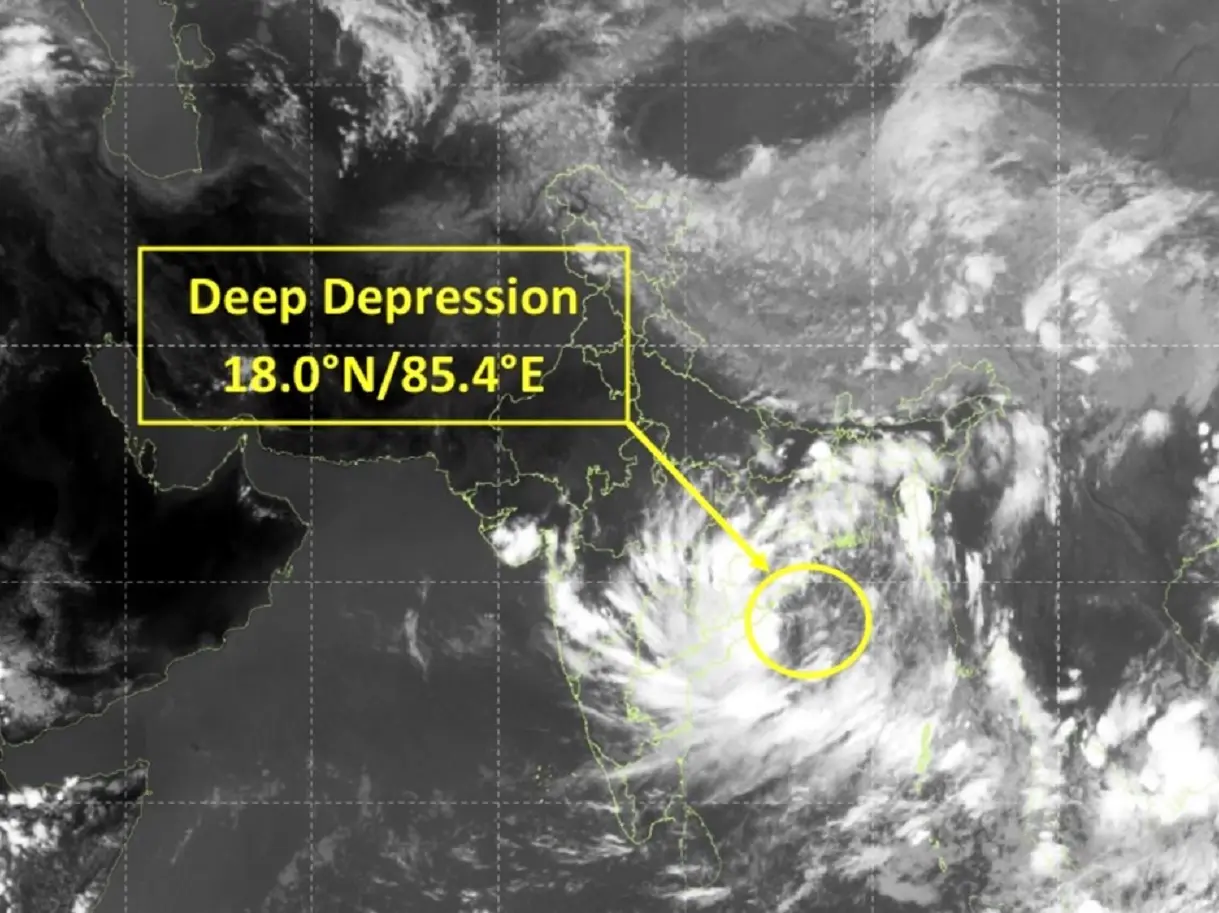)
Cyclone Arnab: Landfall expected before midnight tomorrow as IMD issues orange alerts across six states
)
WION Iconic Tourism Summit: Is India's travel boom outrunning its airports, airlines and hotels?
)
WION Iconic Tourism Summit: Minister Kapil Mishra shares Delhi tourism future, invites industry to be partners
&im=FitAndFill=(700,400))
New OTT releases this week (September 21-27, 2026): Shaque: Trust No One, Hunkkaar, Don’t Be Shy- 5 new titles coming to Netflix, Prime Video and more
)
WION Iconic Tourism Summit: Seychelles envoy says India partnership is important for Seychelles
)
Anne Hathaway to run in supporting race for Nolan's epic
The study said that although researchers observe animals in nature, it has been difficult to image patterns of real-time brain activity while animals engage with the real world. To solve this problem, researchers have integrated VR into laboratory settings.
"In these experimental setups, an animal uses a treadmill to navigate scenes, such as a virtual maze, projected onto surrounding screens," it said. Rather than allowing a mouse to run in a natural environment or physical maze, keeping the mouse in place on the treadmill allows researchers to use tools to view and map the brain as the rodent traverses a virtual space.
This would help researchers grasp the general principles of how activated neural circuits encode information during various behaviours. “VR basically reproduces real environments,” Professor Dombeck said.
"We’ve had a lot of success with this VR system, but it’s possible the animals aren’t as immersed as they would be in a real environment. It takes a lot of training just to get the mice to pay attention to the screens and ignore the lab around them,” he added.
What is iMRSIV?
Dombeck and his team createdcompact VR goggles for mice using custom-designed lenses and miniature organic light-emitting diode (OLED) displays. The goggle is called Miniature Rodent Stereo Illumination VR (iMRSIV).
The study said that iMRSIV has two lenses and two screens — one for each side of the head to separately illuminate each eye for 3D vision. This system provides each eye with a 180-degree field of view that fully immerses the mouse and excludes the surrounding environment.
Unlike the VR goggles for humans, iMRSIV does not wrap around the mouse’s head. Instead, it is closely perched directly in front of the mouse’s face.