Quake on Moon? Chandrayaan-3's Vikram Lander detects 'natural' seismic movement

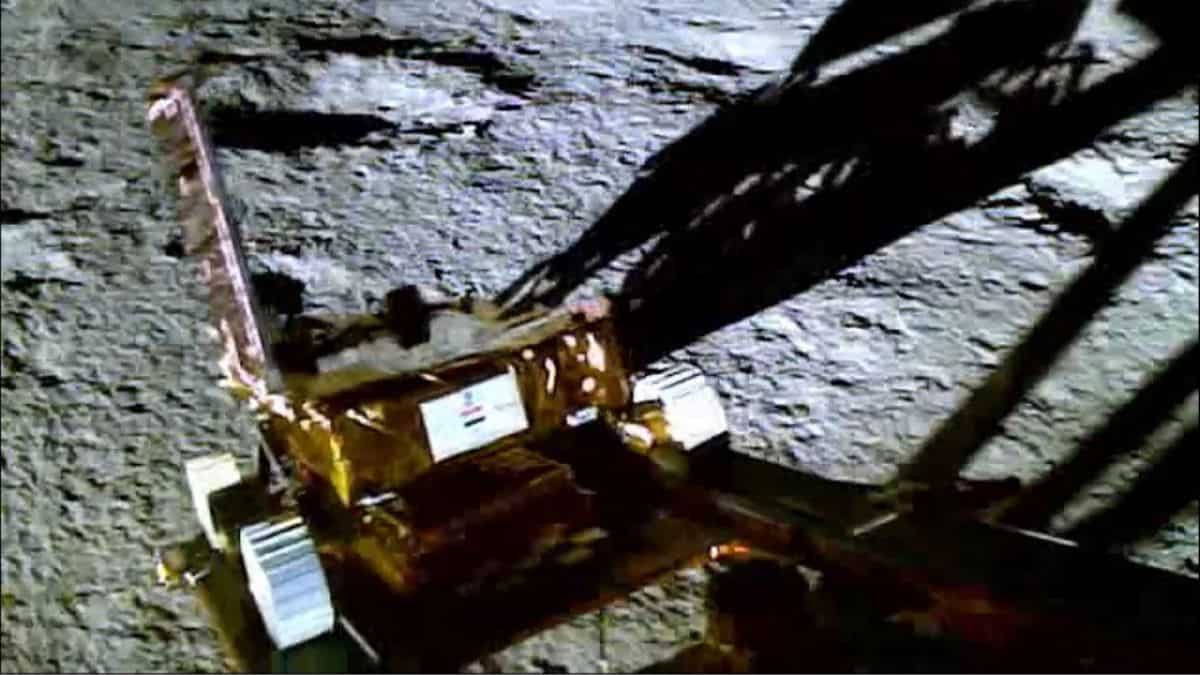
India's Chandrayaan-3 mission
The Indian Space Research Organisation (ISRO) has said that Chandrayaan-3’s Vikram Lander has recorded a “natural event”, indicating seismic activity on the Moon’s surface near the South Pole.
The seismic activity-detecting equipment — The Instrument for the Lunar Seismic Activity (ILSA) payload — on board the lander also detected vibrations taking place due to the movements of the mission's Pragyan rover and other payloads, the ISRO said on Thursday (Aug 31).
"Instrument for the Lunar Seismic Activity (ILSA) payload on Chandrayaan 3 Lander -- the first Micro Electro Mechanical Systems (MEMS) technology-based instrument on the moon -- has recorded the movements of Rover and other payloads," the Indian space agency said in a post on micro-blogging site X.

Source being probed
"It has recorded an event, appearing to be a natural one, on August 26, 2023. The source of this event is under investigation," it added.
ILSA's primary objective is to measure ground vibrations generated by natural quakes, impacts, and artificial events.
)
What’s in a name? Trump’s 'Lake America' move gets a tit-for-tat response from Canada
)
Outrage erupts after 3-year-old is married to 60-year-old man in Pakistan, link to her sister's murder being probed
)
Trump gifts Xi a bald eagle sculpture at White House dinner: Here’s what it symbolises
)
‘Not just a local tragedy’: Nepal PM Shah warns UN of growing climate threat, says Nepal floods were 'a warning to the world'
)
CNN, Politico and MS NOW back in White House after judge blocks Trump’s media ban
)
Farhan, who went viral for AK47 celebration vs India in Asia Cup, hopes to lead Pakistan beyond Asian Games
)
'We would all be dead': Netanyahu defends decision to strike Iran's nuclear facilities in his UN speech
Don't Be Shy movie review: A frothy coming-of-age tale that is too shy to experiment
)
IIT Bombay CCTV footage emerges: Sahil Wakode seen looking at phone in examination hall
)
Welcome actor Mushtaq Khan dies at 56 after battling cancer
)
Trump's welcome to Xi demonstrates 'attraction' to dictators: Chuck Schumer
)
Nations League: Germany draw on Klopp debut; Portugal, Norway win
)
WION Iconic Tourism Summit 2026: Union Minister Shekhawat on 'experiential travel', peace diplomacy
)
Scientists detect first radio signals directly from faraway planet
)
A seven-day roadmap? Iran proposes plan to end war, reopen Strait of Hormuz and resume nuclear talks
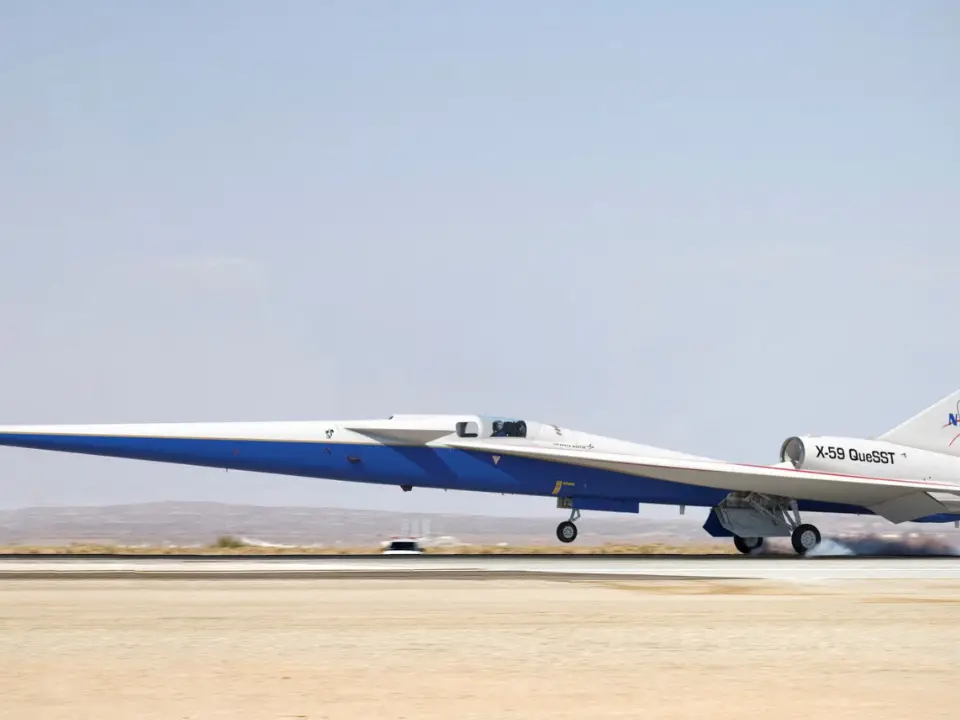)
China to test supersonic jet that moves at Mach 2, double the speed of sound
)
Xi Jinping's 'special plane' vs Trump's Air Force One: What's the difference?
)
UNGA 2026: Israeli PM attacks Britain, France for past colonialism
)
West Indies coach Sammy looking at India series as opportunity to finetune ahead of ODI World Cup 2027 qualifiers
)
‘We’ve never gotten along better’: Trump praises Xi, jokes about White House ballroom at high-stakes state dinner
)
Nearly half of young people trust AI over humans to check facts, major study finds
)
'Partners rather than rivals': Xi Jinping's first message after landing in US for Trump summit
)
Yemen called Trump for US military support in fight against Houthis: Official
)
2,000-foot tube, laser tests and more: China builds towns to expand nuclear arsenal, satellite images show
)
Meet Adrian Abraham: 9-year-old Indian-origin guitar prodigy aiming for a Guinness World Record
)
US faces fresh cost crunch as mortgage rates hit 7%, oil tops $107 and gas prices surge
)
Trump-Xi state dinner 2026: Who is invited? Full guest list of tech CEOs, business leaders and officials
)
'Blockbuster' nor'easter develops an eye similar to hurricanes as warnings are issued
)
Alarming video emerges as landslide damages houses in Sikkim’s Rimbi village. Watch
)
'Making history': Xi Jinping praises Trump as US-China leaders dine at White House
)
'What kind of confession is this?': Pakistan PM Shehbaz Sharif’s 'terrorists would be roaming New York' remark goes viral, raises alarm online. Watch
&im=FitAndFill=(700,400))
Netanyahu at UN: Mass walkout, attack on Mamdani and Iran threats | In Pics
)
'We do not wish to continue. It's America that must choose': Iran president Pezeshkian calls on US to end war
)
WION Iconic Tourism Summit: How local tourism MSMEs must upskill for AI integration
)
Bollywood mourns Mushtaq Khan: Sunny Deol, Rajpal Yadav and others pay tribute
)
'FIRST LOOK from inside Noah’s Ark': Researchers share video from inside mysterious mound in Turkey
)
Who is Lt-Gen Nauman Mahmood, Pakistan's first secretary general of Makkah Defence Alliance?
)
Israeli envoy to US Yechiel Leiter’s son critically injured in West Bank ramming attack
)
'Fund people, not bombs': Hundreds take to New York streets as Netanyahu delivers speech at UN; dozens arrested
)
Earlier in the day, ISRO reported that the radio anatomy of the Moon-bound hypersensitive ionosphere and atmosphere-Langmuir probe (RAMBHA-LP) payload, also onboard the Chandrayaan-3 lander, has achieved a groundbreaking feat.
RAMBHA-LP conducted the first-ever measurements of the near-surface lunar plasma environment over the south polar region, indicating that the plasma density near the lunar surface is relatively sparse.
The measurements garnered by RAMBHA-LP hold promising implications for various aspects of lunar exploration.
This means that there are not many electrons in this region of space, ISRO posted on X.
Also read |Chandrayaan-3: ‘Pragyan’ completes 7 days on moon, ISRO chief says ‘everything is working fine’
The data has ground-breaking implications as the thinness of lunar plasma affects the way radio waves travel through space.
Radio waves are affected by the presence of plasma—the denser the plasma, the more the radio waves are scattered.
Also read |Smile, please! Chandrayaan-3's Pragyan Rover shares first image of Vikram Lander on lunar surface
The sparseness of lunar plasma means that radio waves can propagate through space with less attenuation, which is important for communication between lunar missions, ISRO said.
Chandrayaan-3 mission
Chandrayaan-3 mission has made Indiathe first nation to land a spacecraft on the unexplored South Pole of the moon and just the fourth nation to land on Earth's lunar satellite. The Wednesday (August 23)landing came just days after Russia's Luna-25 failed in a similar mission.
The rover and Vikram, the lander that transported Pragyan to the Moon, are rushing to complete their experiments before the upcoming lunar night, which spans 14 Earth days and is expected to commence next week.Over the period of its two-week lifespan, rover Pragyan will amble around the relatively unmapped South Pole and transmit images and scientific data to Earth.
(With inputs from agencies)
WATCH WION LIVE HERE