Rare 2027 solar eclipse to last over 6 minutes, longest in a century: Will India see it?

&imwidth=600&imheight=450&format=webp&quality=medium "Rare 2027 solar eclipse to last over 6 minutes, longest in a century: Will India see it?")
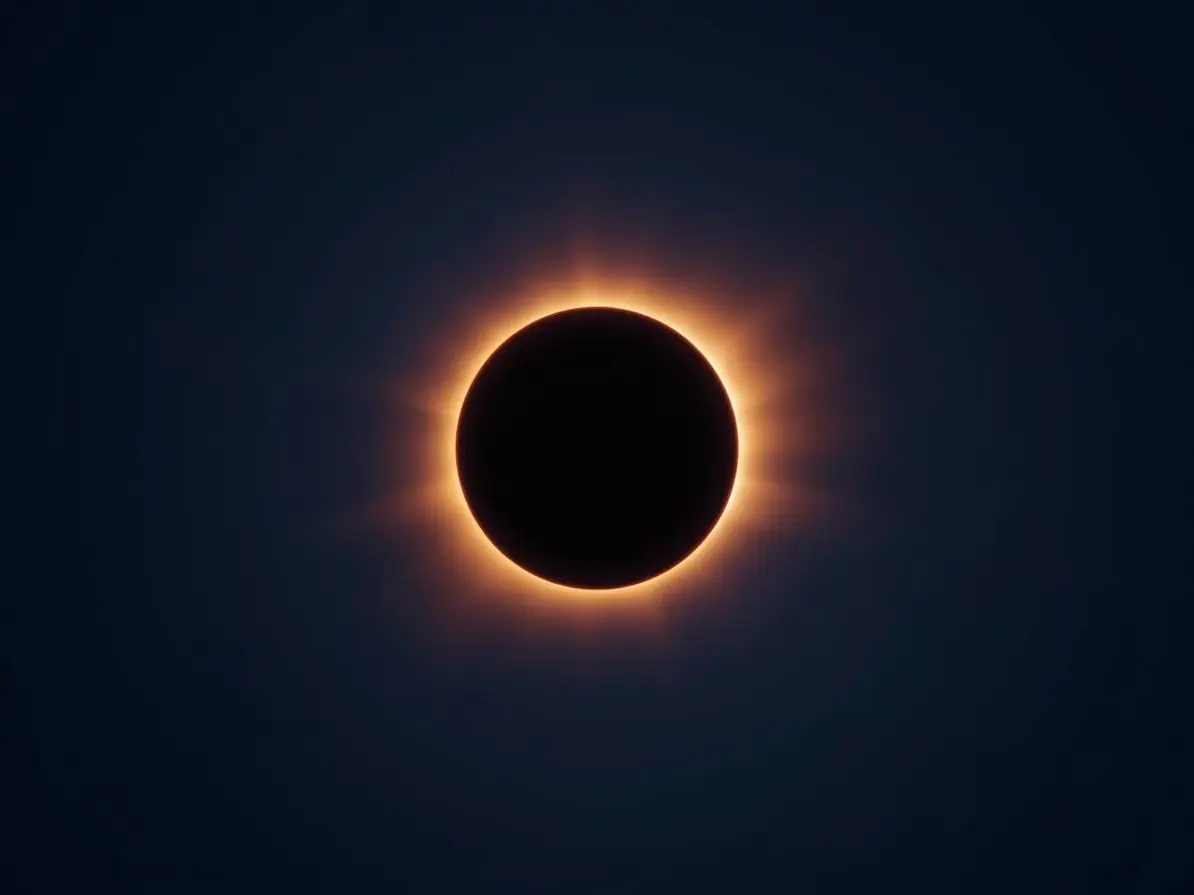
Representational Image Photograph: (Solar Eclipse)
The longest solar eclipse in a century will occur in 2027, lasting over 6 minutes. Know the date, where it will be visible and whether India can see it.
In a rare celestial event, the skywatcher will observe the longest Solar eclipse of the last century in August, 2027. The solar eclipse will last for 6 minutes and 23 seconds, and at its peak, the moon will completely cover the sun, daylight will fade, temperatures will drop, stars or planets will become visible as if in twilight, and the whole world will plunge into darkness. This eclipse is a once-in-a-lifetime occurrence for this generation. It is rarer because the distance between the Earth will be closest to the moon, making it possible for the moon to cover the sun for the longest time.
When and where will it be visible?
During the solar eclipse, the moon will cast a dark shadow on the Earth, which is called the umbra. This Umbra is a narrow strip of land that rapidly moves across the Earth's surface as it rotates. The path along which the umbra moves is called the path of totality. It is usually 100-200 km long. Within the area of the path of totality, day becomes completely dark, and planets and stars can be seen. For this solar eclipse on August 2, 2027, the path of totality will pass through parts of Southern Europe, such as Spain, Portugal, parts of North Africa, Egypt, Morocco, Algeria, Libya and parts of the Middle East like Saudi Arabia, before reaching Sanaa, Yemen. After crossing the Gulf of Aden, totality passes Somalia and then the northern reefs of the Chagos Archipelago in the Indian Ocean. To the rest of the world, it will be partially visible.
Will it be visible in India?
No, the path of totality will not move through India, hence the Solar eclipse will not be completely visible. It will be visible partially across the Western region, such as Gujarat, Maharashtra, between 15:34 IST and 17:53 IST.
Viewing tips
Trending Stories
)
)
)
)
)
)
)
)
)
&im=FitAndFill=(700,400))
&im=FitAndFill=(700,400))
)
)
)
)
)
&im=FitAndFill=(700,400))
&im=FitAndFill=(700,400))
)
)
)
)
)
)
)
)
)
)
)
)
&im=FitAndFill=(700,400))
)
)
)
Viewers should use proper safety equipment, like UV glasses, because the rare phenomenon might be dangerous for the naked eye and might cause irreversible damage.

