Japanese scientists develop technique to connect brain cells grown in lab

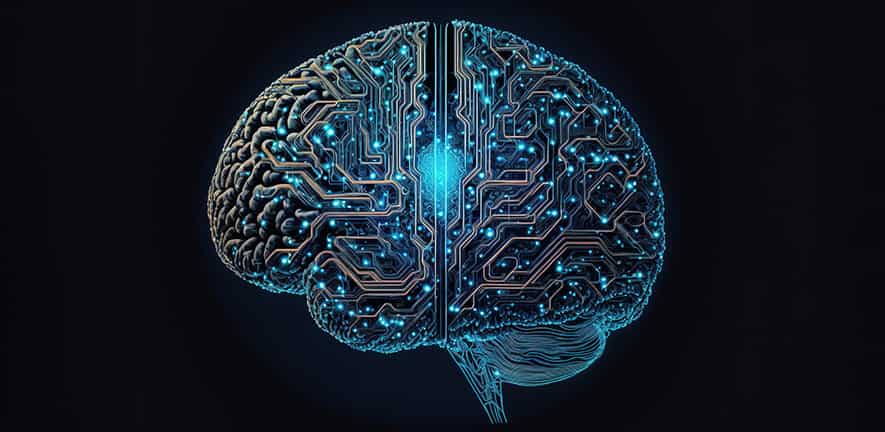
Artificial brain (Representative image)
Japanese scientists have reportedly developed a technique to connect lab-grown brain-mimicking tissue in a way that functions like circuits in our brain. Researchers at the University of Tokyo published a study in the journal Nature Communications, exploring materialising an idea always considered pretty far-fetched. The authors revealed that they found a new way to create physiological connections between lab-grown neural organoids. These organoids are experimental model tissue in which human stem cells are grown into 3D developmental brain-mimicking structures. The physiological connections were built via axonal bundles, which is similar to how regions are connected in the living human brain.
“Animal studies are limited by differences between species in brain structure and function, and brain cells grown in the lab tend to lack the characteristic connections of cells in the human brain,” said University of Tokyo’s Dr Yoshiho Ikeuchi and colleagues.
“What’s more, we are increasingly realizing that these interregional connections, and the circuits that they create, are important for many of the brain functions that define us as humans,” they added.

The researchers stimulated the axonal bundles using a technique known as optogenetics. It was observed that the organoids were affected by these changes for some time as the organoid activity was altered.
“These findings suggest that axonal bundle connections are important for developing complex networks,” said Dr Ikeuchi.
)
No Pandya as Auqib Nabi earns maiden ODI call-up; Mayank returns for WI T20Is| check full squads
)
FBI Director Kash Patel grilled over change of hiring rules on bestiality
)
Sydney Sweeney defends provocative ad choice, the internet is still not impressed
)
War will be ‘completely different and very short’ if Europe attacks Russia, warns Lavrov
)
Shahzad Bhatti Network declared terrorist organisation under UAPA: Govt order
)
US, China dominate global economy: Where does India rank among the world's biggest economies?
)
Finnish president Stubb calls Trump 'good for NATO' as allies increase defense expenditure
)
Bigg Boss 20: Mahhi Vij reveals she lost Yuva role to Kareena Kapoor; 'didn’t work out in my favour'
)
Alex Saab, ally of Venezuela's Maduro, pleads guilty in US corruption case
)
Lionel Messi for 2026 Ballon d’Or over Mbappe and Yamal, says Diego Simeone
)
Indonesia wildfires: Over 12.5 million people exposed to poison haze
)
Who was Eliana Moreno? NBC LA aerial reporter killed in Chatsworth crash
)
Trump backs PM Modi’s anti-opium push even as India remains on US illicit drug-producing list
)
At least 20 killed after war-damaged apartment building collapses in Gaza; rescuers search for survivors
)
Pakistan naval vessel returns to harbour with 'severe damage' after collision with Indian warship in Arabian Sea
)
Fed raises rates for first time in 3 years, Kevin Warsh defies Trump as inflation mounts
)
What is Article 10 of the 1991 treaty at the centre of Pakistan Navy's 'unprofessional conduct'
)
Ex-CIA officer caught with gold bars worth $40 million seeks plea deal | Gravitas
)
Daayra movie review: Kareena Kapoor, Prithviraj Sukumaran shine in Meghna Gulzar’s cop-versus-cop crime thriller
)
Gurugram biker hit-and-run case: Accused Kalyan Bainsla, cousin sent to 2-day police custody
)
Pakistan: Imran Khan's sons Kasim & Sulaiman claim their father is 'tortured' in jail
)
Trump's Iran war faces fresh House rebuke; 7 Republicans join Democrats in push to end conflict ahead of midterms
)
PNS Hunain: All you need to know about Pakistani vessel that hit Indian Navy warship
&im=FitAndFill=(700,400))
New OTT releases this week (September 14-20, 2026): Lust Stories 3, Waiting Hai, Irumudi- 5 new titles coming on Netflix, Prime Video and more
)
‘There’s no Pak-China boundary’: India rejects ‘so-called’ boundary joint commission, tells Islamabad to stop ‘theatrics’
)
Riyadh warns of ‘red line’ after Mecca targeted; Houthis claim downing Saudi fighter jet – What’s happening?
&im=FitAndFill=(700,400))
Suriya and Jyothika say ‘I do’ again after 20 years! See their dreamy wedding pics
)
Abhishek Sharma rises to No. 2 in T20Is; ENG’s Robinson 3rd after record Pakistan Tests
)
Extreme warming in Indian Ocean added 695 billion tons of ice to Antarctica ice sheet
)
BRICS success stuns White House, Trump targets India with 100% tariff | Gravitas
)
Meghan Markle's phone number leaked from children's WhatsApp group, couple switches Archie and Lilibet's school
)
The Early Spring season 2 is happening, but fans have one request - 'don't change the actors'
He added that the complex brain networks command various actions of bodies, including speaking, hearing and emotions.
“Given that alterations in brain networks have been associated with various neurological and psychiatric conditions, a better understanding of brain networks is important,” the researcher said.
The study about lab-grown human neural circuits is slated to expand the scope of our understanding in the long run and add to previous studies on the concept.
“Previous studies have tried to create brain circuits under laboratory conditions, which have been advancing the field,” the researchers said.
(With inputs from agencies)