ISRO successfully launches XPoSat on first day of New Year 2024

ISRO
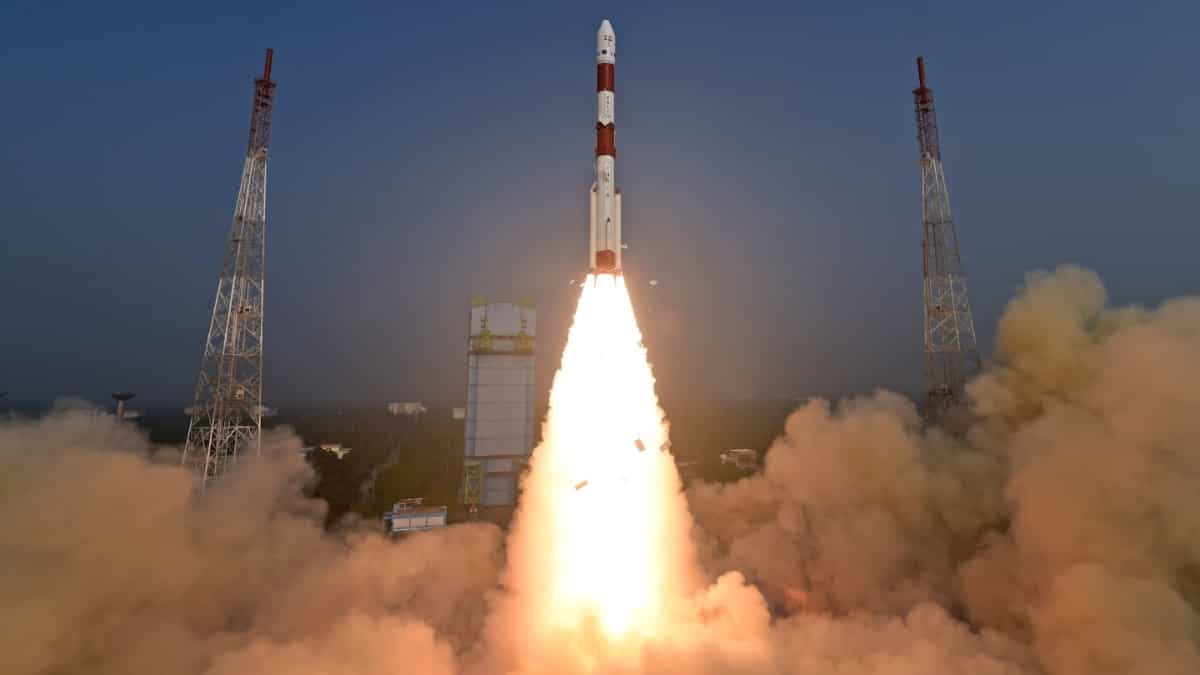
ISRO (Indian Space Research Organisation) successfully launched XPoSat (X-ray Polarimeter Satellite) on Monday (January 1, 2024), first day of the new year. The lift-off took place from Satish Dhawan Space Centre in Sriharikota in southern Indian state of Andhra Pradesh. With XpoSat's successful launch, India has become second country after the United States to send an observatory in space to study black holes and neutron stars.
With XPoSat, ISRO has taken another historic step following launches of Chandrayaan-3 and Aditya L1 missions.

"XPoSat (X-ray Polarimeter Satellite) is the first dedicated scientific satellite from ISRO to carry out research in space-based polarisation measurements of X-ray emission from celestial sources. The Satellite configuration is modified from the IMS-2 bus platform. The Configuration of the mainframe systems are derived based on the heritage of IRS satellites. It carries two payloads namely POLIX (Polarimeter Instrument in X-rays) and XSPECT (X-ray Spectroscopy and Timing). POLIX is realized by Raman Research Institute and XSPECT is by Space Astronomy Group of URSC," saidISRO.
As per ISRO, these are the XPoSat mission objectives
XPoSat will measure the polarisation of X-rays coming from about 50 cosmic sources. Thomson Scattering in the energy band 8-30keV will be measured by POLIX payload.
XPoSat will carry out long term spectral as well as temporal studies of cosmic X-ray sources. The XSPECT payload will make these measurements in the energy band 8-15keV
It will also undertake polarisation and spectroscopic measurements of X-ray emissions from sources in space using POLIX and XSPECT.
"The emission mechanism from various astronomical sources such as blackhole, neutron stars, active galactic nuclei, pulsar wind nebulae etc. originates from complex physical processes and are challenging to understand. While the spectroscopic and timing information by various space-based observatories provide a wealth of information, the exact nature of the emission from such sources still poses deeper challenges to astronomers," saidISRO.
(With inputs from agencies)