Gulf stream in peril: Study suggests collapse possible as early as 2025

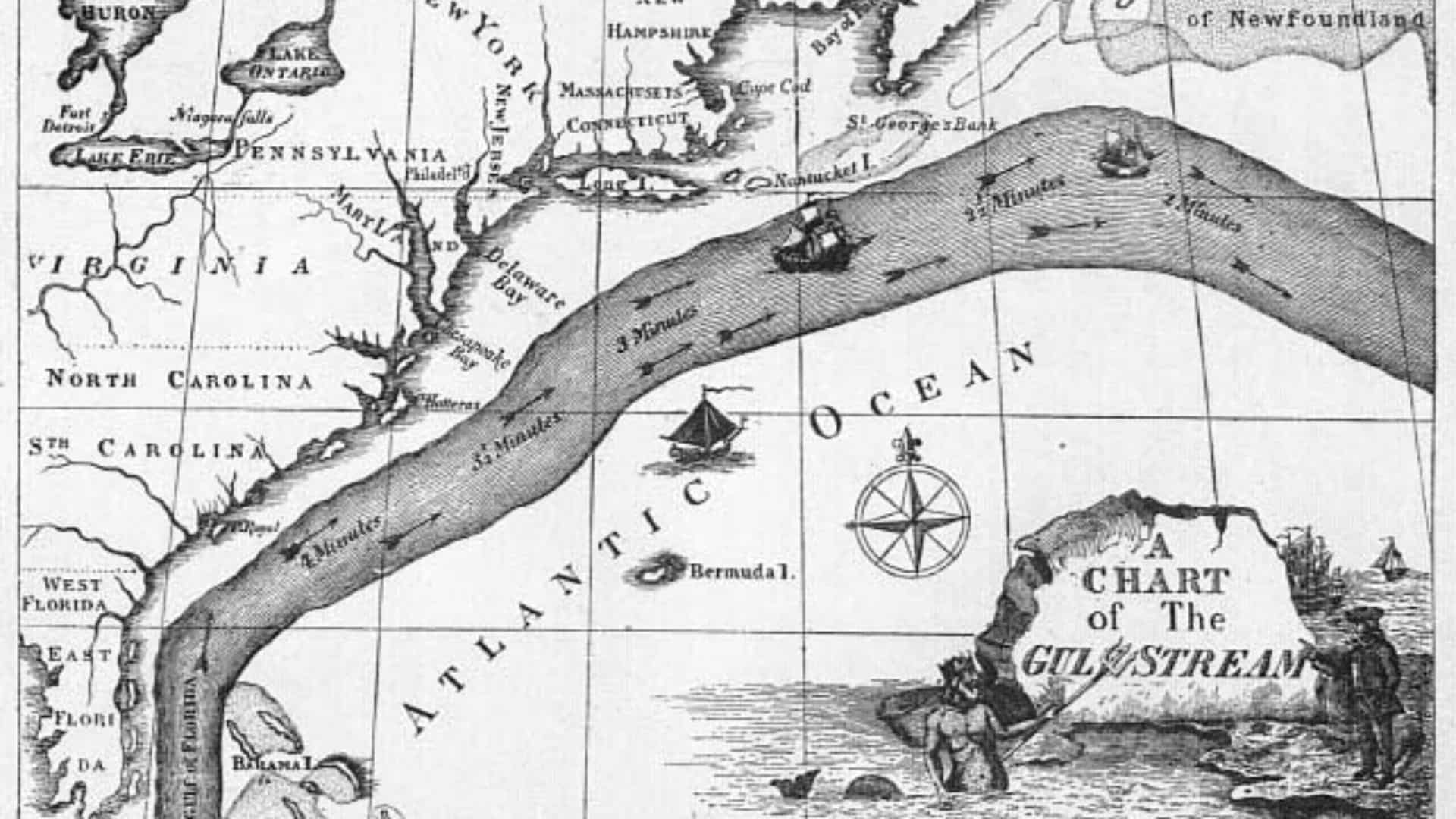
Chart of the Gulf stream
A recent study suggests that the Gulf Stream system, known as the Atlantic Meridional Overturning Circulation (Amoc), could collapse as early as 2025, posing catastrophic climate impacts.
Researchers had previously identified Amoc as being at its weakest point in 1,600 years due to global heating.
In 2021, warning signs of a tipping point were observed. The new analysis estimates a potential collapse between 2025 and 2095, with the central estimate being 2050 if global carbon emissions continue unabated, reported the Guardian.

Past collapses have resulted in temperature changes of up to 10 degreeCelsiuswithin a few decades, although those instances occurred during ice ages, reported the Guardian.
While some scientists believe the assumptions and uncertainties surrounding the tipping point's timing are too significant for a precise estimate, all agree that the prospect of an Amoc collapse is deeply concerning and should drive immediate reductions in carbon emissions.
)
BRICS Summit 2026: Global leaders of BRICS nations attend main open session
)
Houthis launch cross-border strike on Saudi Arabia as Yemen war escalates
)
Why asking questions could be more important than memorising answers
)
BRICS Summit 2026: PM Modi addresses Day 2 of 18th BRICS summit
)
IND vs AFG, 1st T20I: When and where to watch live streaming in India?
)
Why going digital does not always mean becoming more efficient
)
Migration protests return to Portsmouth as rival demonstrations face off
)
PM Modi and China's Xi offered to help resolve Russia-Ukraine war: Kremlin
)
War is making Russia stronger? How Ukraine is shaping Moscow’s next generation of weapons
)
Could staying indoors all day affect your health?
)
Humans may lose control of AI: Anthropic CEO calls for slowdown, Altman, Musk back him
)
BRICS Summit 2026: PM Modi, Xi reach key consensus on ties, China to assume BRICS chairmanship in 2027
)
Bigg Boss 20: Qazi Touqeer gets a special ‘rockstar’ moment from Salman Khan
)
800 million years old - Scientists discover 'fingerprints' of supercontinent Gondwana in ancient rocks
)
Top 5 places to visit in Goa beyond its famous beaches
)
Osama Bin Laden ‘planned’ to target India, CIA reveals dozens of declassified documents
)
BRICS Summit 2026: PM Modi to hold bilateral with leaders of seven countries
)
BRICS Summit 2026: Consensus on joint declaration, diplomatic win for India
)
BRICS Summit 2026: Chinese president Xi Jinping departs from New Delhi after attending BRICS summit
)
'He is popular...': Malaysian PM Anwar Ibrahim's praise for PM Modi during bilateral meeting | WATCH
)
How does the loss of forests affect the way wildlife lives and moves?
)
Trump says Canada eager to reach a deal, it could come ‘fairly soon’ if Ottawa treats US farmers better
)
Who is the smiling man beside Modi, Putin and Xi at BRICS Summit 2026?
)
Why does your skin need protection from UV rays?
)
'Iran won't surrender': Pezeshkian sends blunt message to US while attending BRICS Summit in India
&im=FitAndFill=(700,400))
Why do air defence missiles explode near their target instead of hitting it?
&im=FitAndFill=(700,400))
Why Chinese PL-15 air-to-air missiles use dual-pulse motors compared to European interceptors
)
Ramanathaswamy temple takes centre stage as PM Modi welcomes world leaders at BRICS
)
BRICS Summit day 1: New Delhi declaration adopted with full consensus, big diplomatic win for India
)
Why dehydration is the hidden cause of travel fatigue on long flights
)
Did Iran President Pezeshkian touch feet of Hindu spiritual leader at Delhi event as shown in viral video?
)
Celine Dion makes emotional stage comeback after six years: 'I'm so delighted to see you'
&im=FitAndFill=(700,400))
Meet top 5 batters fastest to 3000 runs in T20Is
)
9-year-old Chennai prodigy clears Cambridge IGCSE grade 10 exams
)
Why do wild animals need quiet places to survive?
)
‘Partners, not rivals’: Xi outlines four point plan for stronger India-China ties
)
Why does your body need time to adjust after a long journey?
)
From severe mobility problems to recovery: Madhuri the elephant’s journey of wildlife care
Tipping point warning: Amoc's weakening and past collapses
Amoc plays a crucial role by carrying warm ocean water northwards, cooling, and sinking it, which drives the Atlantic's currents. However, the influx of freshwater from melting Greenland's ice cap and other sources is increasingly stifling these currents.
A potential Amoc collapse would have disastrous consequences globally, severely disrupting rainfall patterns in regions like India, South America, and West Africa, upon which billions of people depend for food.
It would lead to more storms and colder temperatures in Europe, cause rising sea levels on the eastern coast of North America, and further endanger the Amazon rainforest and Antarctic ice sheets.
Professor Peter Ditlevsen from the University of Copenhagen, who led the study and spoke to The Guardian, expressed significant concern about the potential impact, noting that Amoc has not experienced a shutdown in the last 12,000 years.
Amoc has historically collapsed and restarted during ice age cycles from 115,000 to 12,000 years ago. Today, it remains one of the most concerning climate tipping points as global temperatures continue to rise.
Recent research suggests that five dangerous tipping points may have already been crossed due to the 1.1 degreeCelsius of global heating experienced so far.
The study, published in Nature Communications, utilised sea surface temperature data since 1870 as a proxy for Amoc strength changes over time. Researchers mapped this data onto the path of systems approaching a specific type of tipping point, known as a "saddle-node bifurcation." The analysis showed a close fit between the data and the tipping point path, allowing for an extrapolation to estimate the likely timing of the tipping point.
Also watch |Italy: Global warming hurting crops
Urgent need for reduction in carbon emissionsto mitigate Amoc collapse
The scenario assumed a continuation of greenhouse gas emissions at their current rate. If emissions begin to decline as intended by climate policies, the world would have more time to prevent global temperatures from surpassing the Amoc tipping point.
While uncertainties persist among scientists regarding the tipping point's precise location and timing, the findings have prompted an urgent call for further research and immediate action to reduce carbon emissions. Multiple approaches have led to similar conclusions, emphasising the gravity of the risk that we must strive to avoid.
WATCH WION LIVE HERE: