&imwidth=800&imheight=600&format=webp&quality=medium "How the Great Pyramids of Giza survived 4,500 years of earthquakes, study reveals")
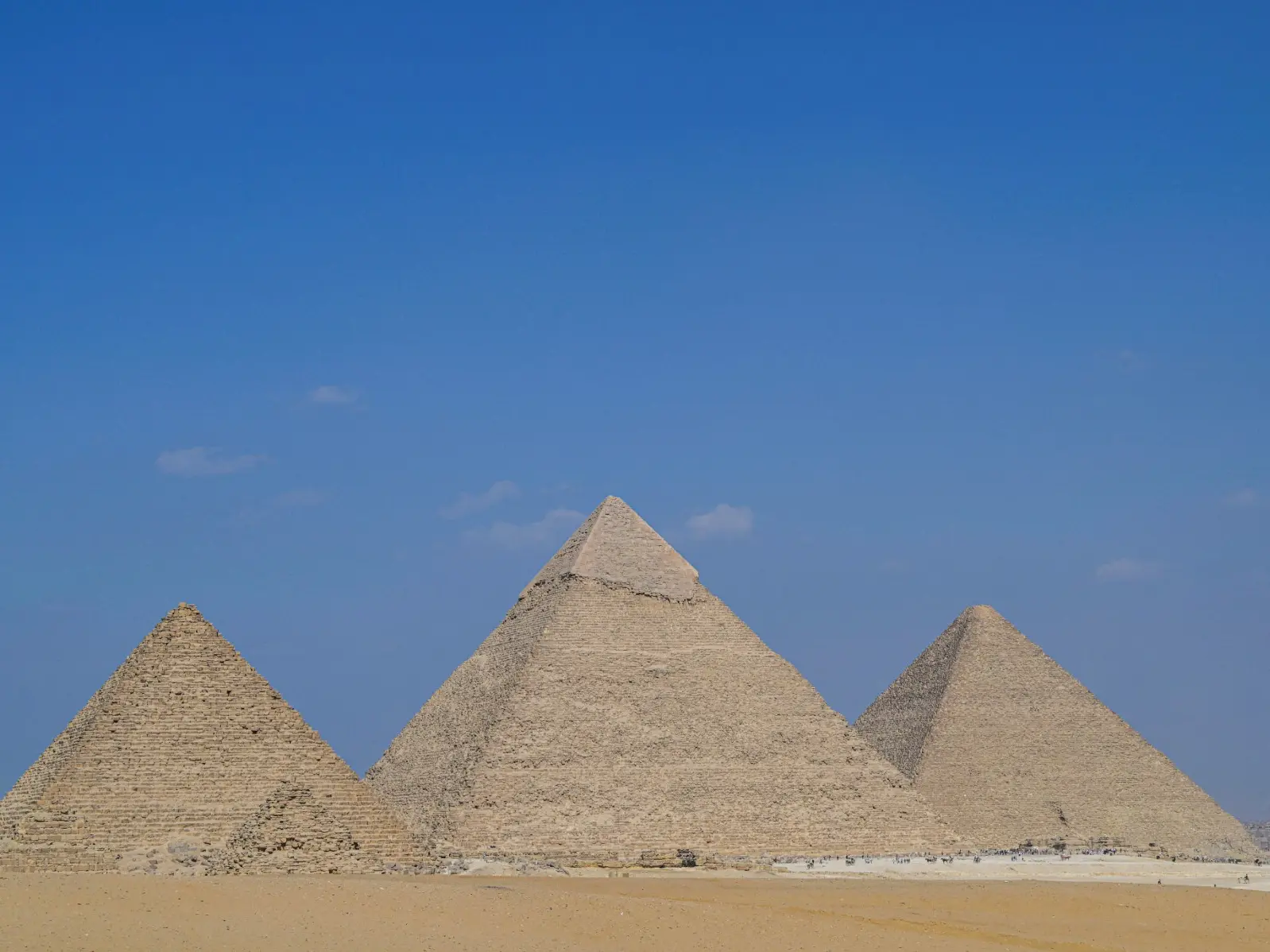
The Great Pyramid of Giza has been around for more than 4500 years. It had survived many earthquakes, including the 5.8 high-magnitude earthquake of 1992, which had shaken some of the outer casing of the pyramid, but the core remained intact. For years, it has been a baffling question for researchers how these architectural monuments stood the test of time. A study published in the Scientific Reports, by Egyptian geophysicist Asem Salama and his colleagues, provides insights into its performance during earthquakes and identifies some interesting features.
Seismic frequency mismatch
Researchers found a seismic frequency mismatch. Researchers measured ambient vibrations at 37 internal and external locations. They found that its natural frequencies, the frequency at which it likes to vibrate, range between 2.0 and 2.6 hertz. At the same time, the surrounding soil has a dominant frequency of around 0.6 hertz. The study used a method called horizontal-to-vertical spectral ratio analysis, or HVSR, which records tiny background motion from wind, traffic, human activity and natural ground vibrations.

Internal shock absorbers
The study showed that the Pyramid's internal structures actively manage vibration to dampen the energy before it can compromise the internal structure. Just above the King's chamber in the pyramid, there are relieving chambers which reported reduced vibrations and act as major shock absorbers. Beyond Seismic activity, the granite formation of the structure reflects waves instead of absorbing them. Because of the dense nature of the granites due to high concentration of quartz crystal and their dense molecular structure, they also create acoustic effects.
Trending Stories
)
No Pandya as Auqib Nabi earns maiden ODI call-up; Mayank returns for WI T20Is| check full squads
)
Trump praises India’s Opium crackdown, hails anti-drug efforts
)
FBI Director Kash Patel grilled over change of hiring rules on bestiality
)
Sydney Sweeney defends provocative ad choice, the internet is still not impressed
)
Trump calls Canada-EU associate membership plan ‘laughable’ and threatens 'very serious tariffs'
)
Shahzad Bhatti Network declared terrorist organisation under UAPA: Govt order
)
US, China dominate global economy: Where does India rank among the world's biggest economies?
)
Finnish president Stubb calls Trump 'good for NATO' as allies increase defense expenditure
)
Hockey: Pakistan urges AHF to move Asian Champions Trophy out of India over security concerns
)
Bigg Boss 20: Mahhi Vij reveals she lost Yuva role to Kareena Kapoor; 'didn’t work out in my favour'
)
All Indian goods to get duty-free access to New Zealand
)
Alex Saab, ally of Venezuela's Maduro, pleads guilty in US corruption case
)
Lionel Messi for 2026 Ballon d’Or over Mbappe and Yamal, says Diego Simeone
)
Veteran actor Anant Nag honoured with Indian cinema’s highest award
)
Trump backs PM Modi’s anti-opium push even as India remains on US illicit drug-producing list
)
Pakistan naval vessel returns to harbour with 'severe damage' after collision with Indian warship in Arabian Sea
)
Fed raises rates for first time in 3 years, Kevin Warsh defies Trump as inflation mounts
)
What is Article 10 of the 1991 treaty at the centre of Pakistan Navy's 'unprofessional conduct'
)
Katrina Kaif’s postpartum weight is not the problem; your gaze is
)
Ex-CIA officer caught with gold bars worth $40 million seeks plea deal | Gravitas
)
Daayra movie review: Kareena Kapoor, Prithviraj Sukumaran shine in Meghna Gulzar’s cop-versus-cop crime thriller
)
US trade tariff: 100% tariff targets Russian buyers amid trade tensions
)
Pakistan: Imran Khan's sons Kasim & Sulaiman claim their father is 'tortured' in jail
&im=FitAndFill=(700,400))
New OTT releases this week (September 14-20, 2026): Lust Stories 3, Waiting Hai, Irumudi- 5 new titles coming on Netflix, Prime Video and more
)
Trump's Iran war faces fresh House rebuke; 7 Republicans join Democrats in push to end conflict ahead of midterms
)
Trump gets new power to hit India, China with up to 100% tariffs as US Senate clears Russia sanctions bill
)
US Treasury rallies global financial institutions for Op Economic Outcast to isolate Iran
)
Saudi vs Houthis: Riyadh claims to have shot Houthi drone targeting Mecca
)
Riyadh warns of ‘red line’ after Mecca targeted; Houthis claim downing Saudi fighter jet – What’s happening?
&im=FitAndFill=(700,400))
Suriya and Jyothika say ‘I do’ again after 20 years! See their dreamy wedding pics
)
Abhishek Sharma rises to No. 2 in T20Is; ENG’s Robinson 3rd after record Pakistan Tests
)
Extreme warming in Indian Ocean added 695 billion tons of ice to Antarctica ice sheet
)
BRICS success stuns White House, Trump targets India with 100% tariff | Gravitas
)
Meghan Markle's phone number leaked from children's WhatsApp group, couple switches Archie and Lilibet's school
)
The Early Spring season 2 is happening, but fans have one request - 'don't change the actors'
What does it imply?
Every structure has its natural frequency. If the surrounding frequency during the earthquake matches the frequency, then it could amplify the motion, and this is called resonance, which would be catastrophic. Because the frequencies of the ground and the monument are completely mismatched, earthquake energy cannot efficiently transfer into or be amplified within the structure, thereby protecting it from collapse. But it's also to be noted that modern earthquake design relies on much more than just frequency comparison. Like the intensity of the shaking, the weight and flexibility of the structure, and the centre of mass of the structure. The Pyramid does have a favourable structure, like a broad base, a low centre of mass, a tapering form and a symmetrical plan. It is fair to conclude that the makers of the pyramid made some efficient design and engineering choices.