
&imwidth=800&imheight=600&format=webp&quality=medium "Bizarre new material discovered in Hiroshima nuclear bombing debris | Gravitas")
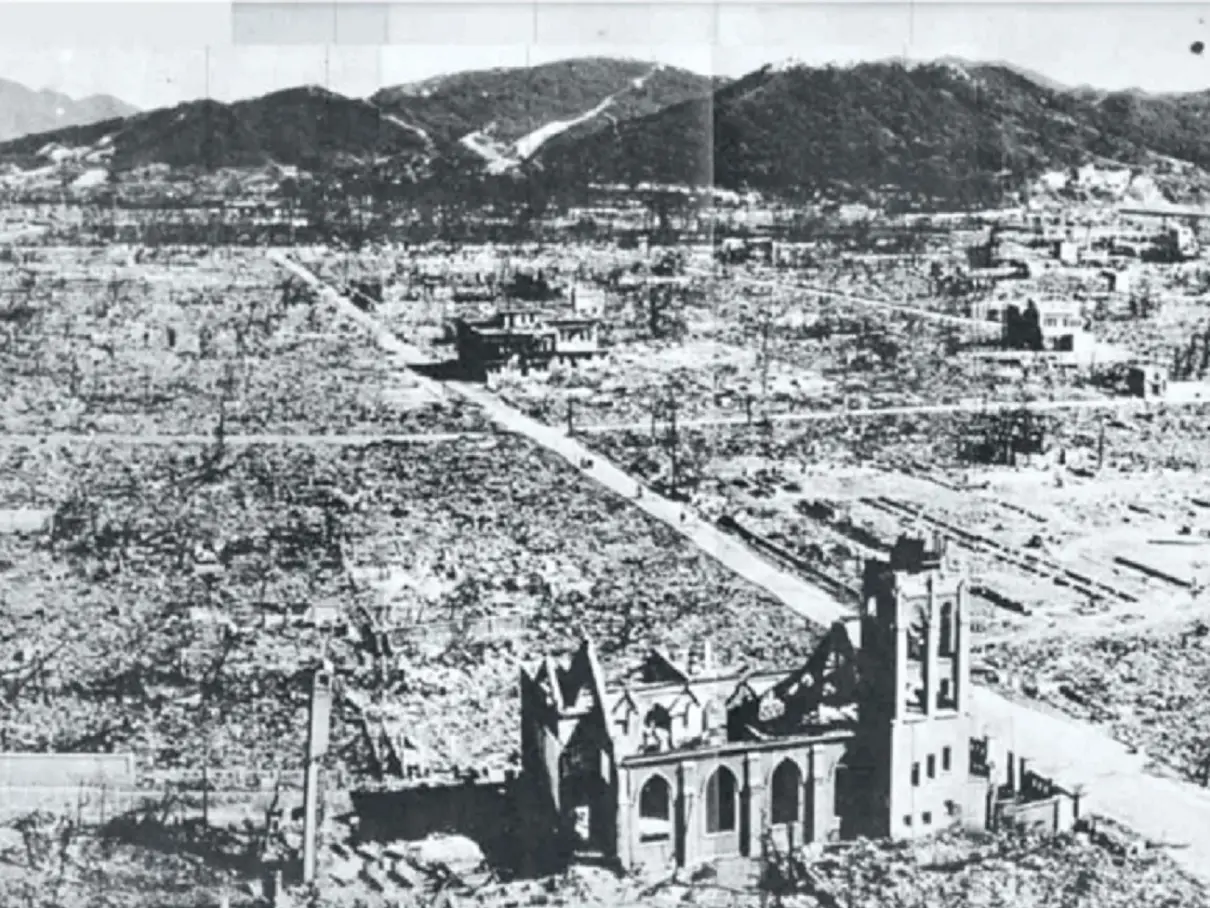
Eighty years after the Hiroshima atomic bombing, one of history’s darkest moments is revealing a startling scientific secret.
Researchers say the devastating blast has created a completely new kind of metal, something never seen before.
A new study published in Science Advances has identified a previously unknown silicon-rich alloy that appears to have formed during the Hiroshima explosion.

Scientists say the alloy contains a unique mix of iron, nickel, silicon, aluminum, and several other metallic elements, making it a rare multi-component crystalline material.
Here’s how it happened.
When the atomic bomb exploded on August 6, 1945, it generated a fireball hotter than 7,000 degrees Celsius.
The intense heat vaporised buildings, soil, glass, metal and water, turning the city into a massive cloud of plasma.
According to scientists, as the fireball cooled, tiny molten metal droplets known as ‘Hiroshimaites’ fell across the city.
Inside one of these microscopic particles, researchers discovered the extraordinary alloy.
Instead of simply melting existing materials, the nuclear blast actually forged an entirely new, highly ordered crystal structure.
Scientists say such alloys could possess exceptional strength, heat resistance and durability, offering valuable
Trending Stories
and rare insights into advanced materials science.
The researchers say that studying these rare remnants could deepen our understanding of both the Hiroshima tragedy and the extreme chemical processes that only the most powerful events on earth can create.