British astronomers unveil the most detailed map of Milky Way galaxy

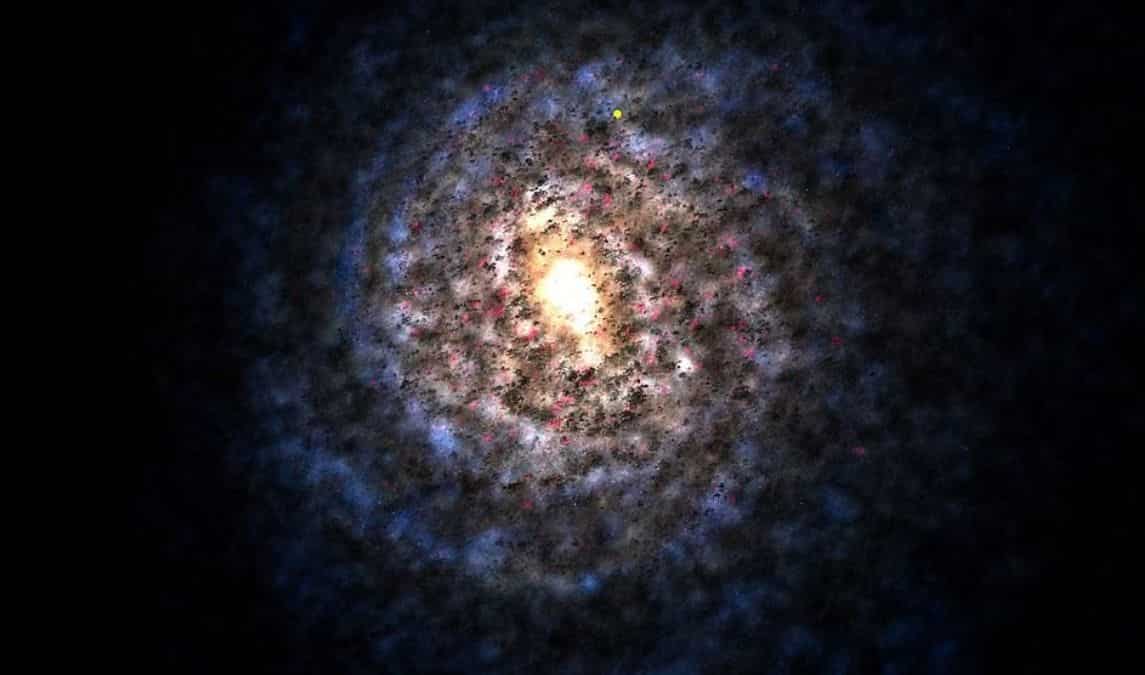
British astronomers have created the most detailed 3D map of the Milky Way
British astrologists have made another guide of the Milky Way comprised of almost two billion stars utilizing information assembled by the European Space Agency (ESA) Gaia space observatory.
College of Cambridge specialists drove the production of the infinite chartbook of two billion stars, that they accept could reveal insight into how our system appeared and what may befall it in the inaccessible future.
The detailed map of the Milky Way galaxy is based on the most recent data released by the ESA Gaia mission - which has two satellites 930,000 miles from Earth measuring the distance to and between stellar objects throughout the galaxy

The guide and going with information will permit stargazers to increase a more profound comprehension of our own cosmic system, how stars are spread out, and even distinguish stars that are like our own Sun for additional, more detailed study.
The most recent delivery from the Gaia observatory is the most point by point actually inventory of the stars in the Milky Way - the last arrangement of distributed information remembered subtleties for 1.6 billion stars, this brings that up to two billion and in more detail.
)
Trump-Xi Summit: Trade, Taiwan and the red lines shaping US-China talks | Race To Power
)
US citizen injured in Illinois after ICE agents mistook him for fugitive, hospitalised
)
US judge questions Trump’s decision to ban CNN, MS NOW and Politico from White House
)
Afghan woman cyclist who disguised herself as a boy to escape Taliban, wins Asian Games medal
)
'There will be elections': Venezuela's interim leader Delcy Rodriguez makes big announcement at UN
)
IIT Bombay CCTV footage emerges: Sahil Wakode seen looking at phone in examination hall
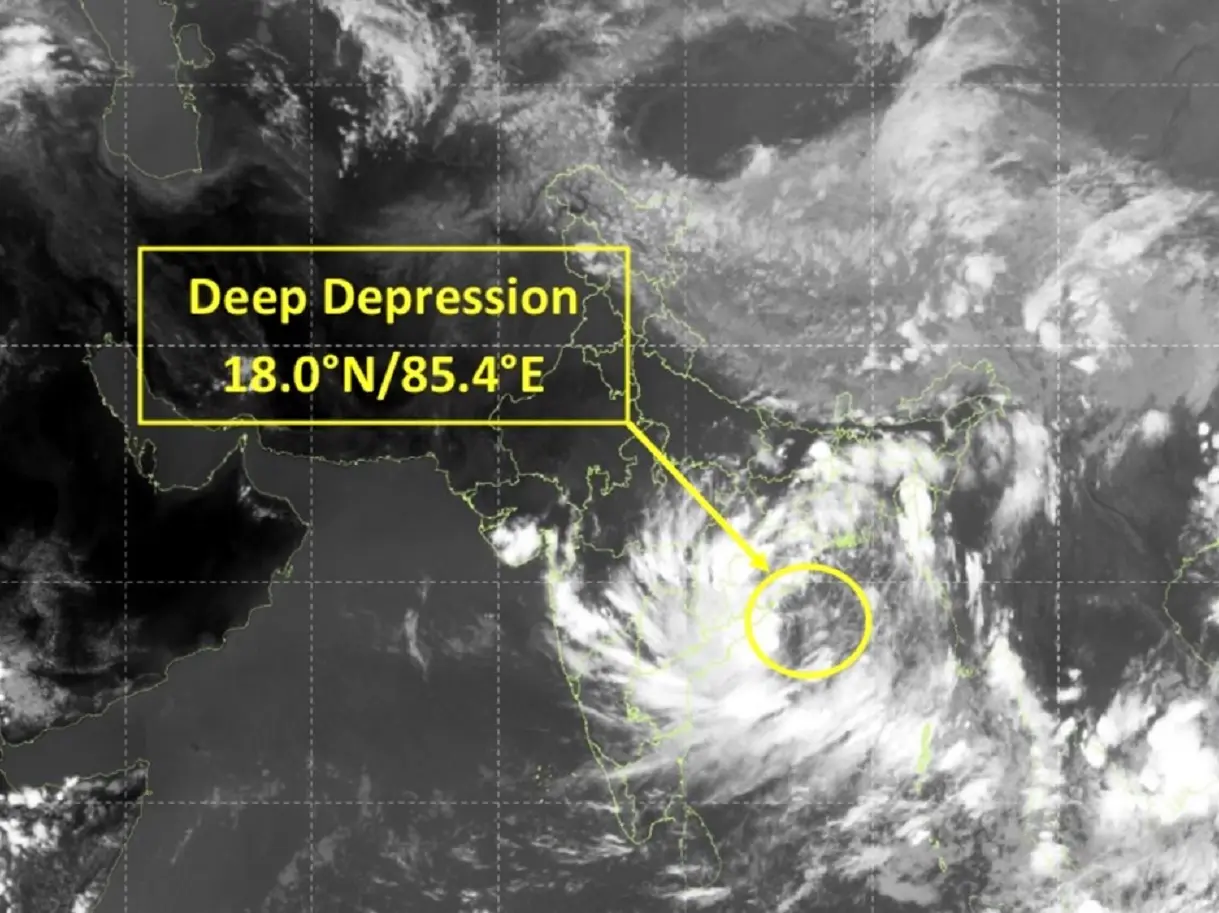)
Cyclone Arnab: Landfall expected before midnight tomorrow as IMD issues orange alerts across six states
)
9 killed, several injured as tourist bus catches fire on Yamuna Expressway
)
NBA player Steven Adams shares hilarious GTA VI theory
)
WION Iconic Tourism Summit 2026: Union Minister Shekhawat on 'experiential travel', peace diplomacy
)
ICC plans T20I expansion and fewer ODIs in 2027–2031 FTP cycle: Report
)
'AI got into my speech': Prince Harry jokes after teleprompter failure at event in New York
)
Scientists detect first radio signals directly from faraway planet
)
China to test supersonic jet that moves at Mach 2, double the speed of sound
)
WION Iconic Tourism Summit: 'Hanuman Ansh' Director on blockbuster success
)
Open AI, Anthropic CEO urges caution over rapid AI development at UN Security Council, call for 'extreme care'
)
Bomb scare in New York amid UNGA: Suspicious suitcase found near UN headquarters
)
Hours before Xi-Trump meeting, US announces visa curbs targeting birth tourism: What is it?
)
'Partners rather than rivals': Xi Jinping's first message after landing in US for Trump summit
)
WION Iconic Tourism Summit: Is India's travel boom outrunning its airports, airlines and hotels?
)
WION Iconic Tourism Summit and Awards 2026: Key voices to discuss India’s tourism future
&im=FitAndFill=(700,400))
New OTT releases this week (September 21-27, 2026): Shaque: Trust No One, Hunkkaar, Don’t Be Shy- 5 new titles coming to Netflix, Prime Video and more
)
WATCH | China President Xi Jinping lands in US as Trump greets him ahead of high-stakes summit
)
Australian PM Anthony Albanese calls OpenAI AI incident 'unacceptable' after restricted data access
)
'What kind of confession is this?': Pakistan PM Shehbaz Sharif’s 'terrorists would be roaming New York' remark goes viral, raises alarm online. Watch
)
WION Iconic Tourism Summit: How local tourism MSMEs must upskill for AI integration
)
Eight USS Abraham Lincoln sailors attempted suicide, Acting Navy Secretary says
)
Pilot recreates Mona Lisa in sky over Oklahoma and Arkansas in four-hour flight: VIDEO
)
Elephants hide behind trees, stage surprise attack on poachers targeting rhinos in South Africa
)
'Putin is patient zero': Zelensky slams Russian president at UNGA, accuses him of using fighters from 47 countries
&im=FitAndFill=(700,400))
National Film Awards 2026: Kartik Aaryan, Mammootty, Yami Gautam, Randeep Hooda and other key winners
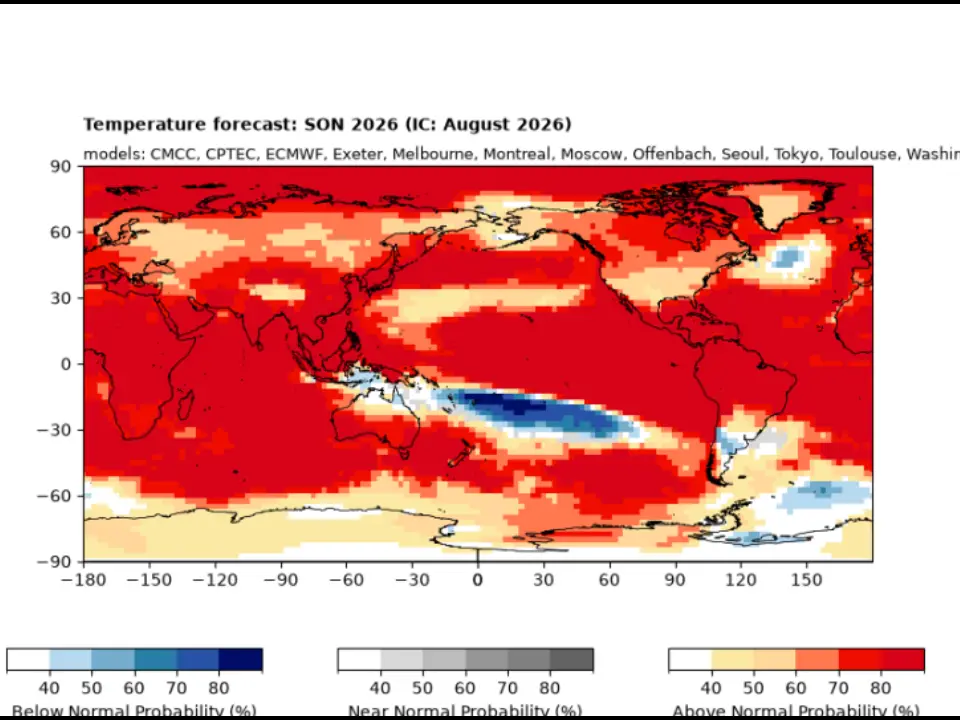)
El Niño 2026 heats up to become strongest in 1,000 years
)
Israeli envoy to US Yechiel Leiter’s son critically injured in West Bank ramming attack
&im=FitAndFill=(700,400))
Trump welcomes Xi Jinping in rare airport gesture: Photos from Chinese President's arrival in US
)
Xi-Trump meeting: China’s human rights red line and past protests explained
It additionally remembers data for our satellite cosmic systems - the Large and Small Magellanic mists and the extension of stars that interface the two assortments of heavenly bodies.

In picture:Artist's impression of Gaia mapping the stars of the Milky Way
Floor van Leeuwen, who drove the 3D guide venture at Cambridge, said this device will get one of the significant spines of current astronomy, furnishing researchers with better approaches to consider our system in detail.
This was one of various papers distributed utilising an early arrival of the new information, made accessible to a determination of specialists before the more extensive public delivery on December 3.
These specialists utilized the Gaia information to give a colossal expansion to the statistics of close by stars, infer the state of the Solar System's circle around the focal point of the world, and test structures in two close-by universes.
Dispatched in 2013, the Gaia satellite works at the purported Lagrange 2 (L2) point - a gravitationally steady spot in the Sun-Earth framework and measures the position and brilliance of stars, alongside their sizes and shading.
The essential goal of Gaia is to gauge heavenly distances utilizing the parallax strategy. For this situation cosmologists utilize the observatory to persistently filter the sky, estimating the obvious change in the places of stars over the long run, coming about because of the Earth's development around the Sun.
The Gaia information will likewise permit stargazers to quantify the mass of the Milky Way by examining the 'delicate' speeding up of the close planetary system as it circles around the universe, as per the European Space Agency.
Two past deliveries incorporated the places of 1.6 billion stars. This delivery carries the complete to just shy of 2 billion stars, whose positions are altogether more exact than in the previous information.
Gaia additionally tracks the changing brilliance and places of the stars after some time over the view (their alleged legitimate movement), and by parting their light into spectra, quantifies how quickly they are moving towards or away from the Sun and surveys their synthetic organization.
It is believed that, longer than a year, the Sun quickens towards the focal point of the cosmic system by 7mm every second, while circling at a speed of around 124 miles (200 km) a second.
One investigation utilizing the information watched out, away from the focal point of the Milky Way to follow the different populaces of more established and more youthful stars towards the very edge of our universe - the anticentre.
PC models anticipated that the plate of the Milky Way will become bigger with time as new stars are conceived.
'The new information permits us to see the relics of the 10 billion-year-old plate thus decide its more modest degree contrasted with the Milky Way's present circle size,' ESA composed.
Stargazers will likewise have the option to deconstruct the two biggest partner worlds to the Milky Way - the Small and Large Magellanic Clouds - utilizing the information from Gaia.
The two systems are associated with a scaffold of stars thought to be 75,000 light-years long, as indicated by analysts inspecting the new information.
Having estimated the development of the Large Magellanic Cloud's stars to more noteworthy exactness than previously, Gaia's most recent information plainly shows that the world has a twisting structure - simply like the Milky Way.
The information likewise uncovered a weak stream of stars that is being pulled out of the Small Magellanic Cloud and indicates already concealed structures in the edges of the two systems.
Caroline Harper, head of room science at the UK Space Agency, which gave the financing to the exploration, said Gaia has taken into account the making of the most itemized billion-star 3D map book ever amassed.
'For a great many years, we have been engrossed with noticing and enumerating the stars and their exact areas as they extended humankind's comprehension of our universe,' Harper said.
'Gaia has been gazing at the sky for as long as seven years, planning the positions and speeds of stars.'
The information will likewise incorporate 'outstandingly precise' estimations of the 300,000 stars that are generally near the Sun, inside a distance of 326 light years.
The scientists plan to utilize the data to get familiar with the destiny of the Milky Way by anticipating how the world will change in the following 1.6 million years.