A moon fragment or something else? Tianwen-2 is closing in on Kamoʻoalewa, but its true origins remain uncertain

&imwidth=600&imheight=450&format=webp&quality=medium "A moon fragment or something else? Tianwen-2 is closing in on Kamoʻoalewa, but its true origins remain uncertain")
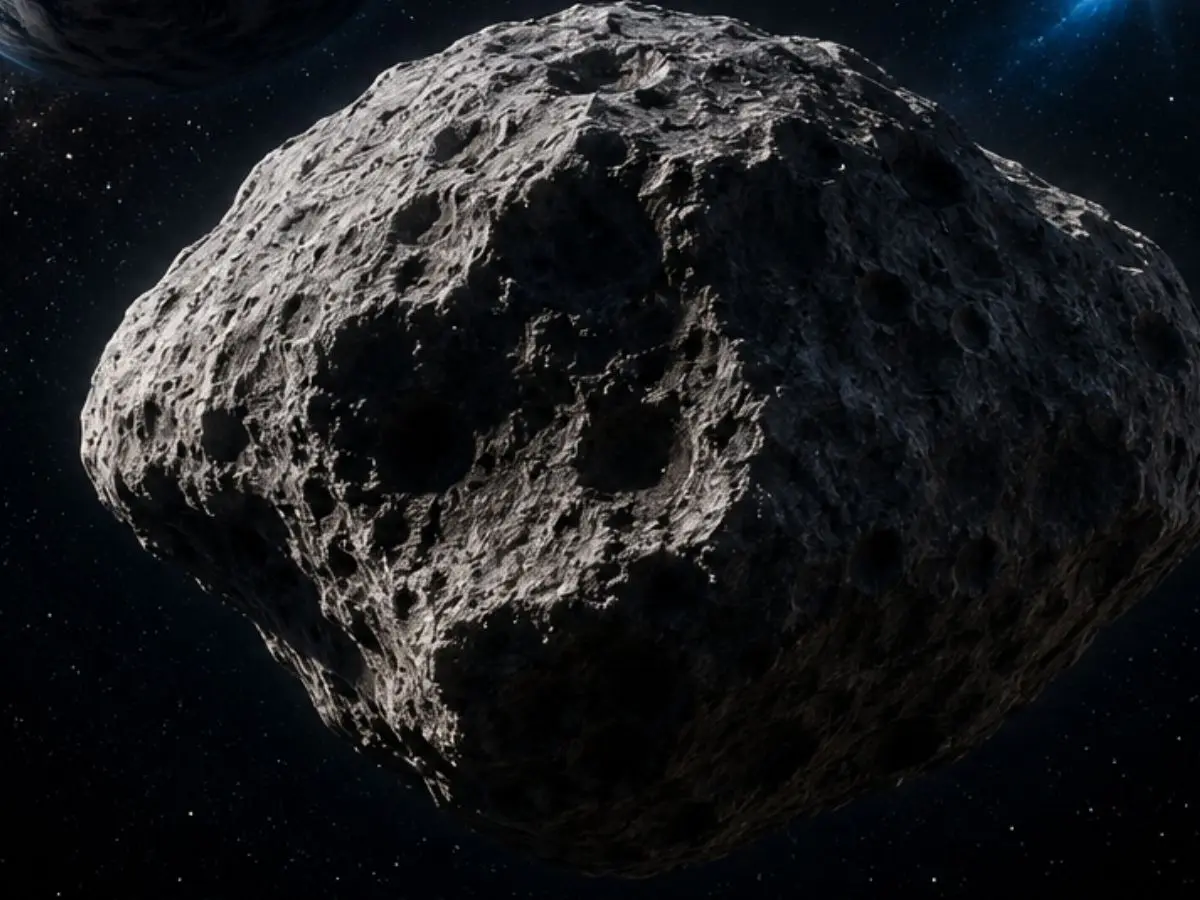
A cosmic mystery awaits China's asteroid mission Photograph: (AI Generated)
Discovered in 2016, Kamoʻoalewa is an Earth quasi-satellite, a rare class of objects that orbit the Sun while remaining gravitationally linked to Earth.
As China's Tianwen-2 spacecraft closes in on asteroid Kamoʻoalewa, scientists are increasingly divided over a question that could reshape understanding of near-Earth objects: is the asteroid a fragment blasted from the Moon, or did it originate in the main asteroid belt? The answer may come sooner than expected. Tianwen-2, launched in 2025, is scheduled to rendezvous with Kamoʻoalewa in 2026 and return samples to Earth, offering researchers their first direct opportunity to examine the object's composition. The mission is widely seen as the most important test yet of competing theories surrounding one of the Solar System's most unusual asteroids.
Discovered in 2016, Kamoʻoalewa is an Earth quasi-satellite, a rare class of objects that orbit the Sun while remaining gravitationally linked to Earth. Measuring roughly 40 to 100 metres across, it completes a rotation every 28 minutes and follows a path remarkably similar to Earth's, making it one of the planet's most stable known co-orbitals.
Spectral clues point to an asteroid origin
According to Phys.org, the lunar-origin theory was largely based on the asteroid's unusually red spectrum, which resembles heavily weathered lunar soil. But a team led by planetary scientist Yang Li of the Chinese Academy of Sciences found evidence that challenges that interpretation. Researchers reanalysed the asteroid's reflected light and identified a spectral feature more commonly associated with LL chondrites, a class of stony meteorites, than with lunar material.
To test their hypothesis, the team ground an LL chondrite meteorite into powder and subjected it to laser pulses designed to mimic millions of years of space weathering caused by micrometeoroid impacts and solar wind. The altered material gradually developed a colour remarkably similar to that observed on Kamoʻoalewa. The findings suggest that asteroid surfaces can become as red as lunar soil after prolonged exposure to the space environment, weakening a key argument for a lunar origin.
Trending Stories
&imwidth=280&imheight=210&format=webp&quality=medium)
&imwidth=280&imheight=210&format=webp&quality=medium)
&imwidth=280&imheight=210&format=webp&quality=medium)
&imwidth=280&imheight=210&format=webp&quality=medium)
&imwidth=280&imheight=210&format=webp&quality=medium)
&imwidth=280&imheight=210&format=webp&quality=medium)
&imwidth=280&imheight=210&format=webp&quality=medium)
&imwidth=280&imheight=210&format=webp&quality=medium)
&imwidth=280&imheight=210&format=webp&quality=medium)
&imwidth=280&imheight=210&format=webp&quality=medium)
&imwidth=280&imheight=210&format=webp&quality=medium)
&imwidth=280&imheight=210&format=webp&quality=medium)
&imwidth=280&imheight=210&format=webp&quality=medium)
&imwidth=280&imheight=210&format=webp&quality=medium)
&imwidth=280&imheight=210&format=webp&quality=medium)
&imwidth=280&imheight=210&format=webp&quality=medium)
&imwidth=280&imheight=210&format=webp&quality=medium)
&imwidth=280&imheight=210&format=webp&quality=medium)
&imwidth=280&imheight=210&format=webp&quality=medium)
&imwidth=280&imheight=210&format=webp&quality=medium)
&imwidth=280&imheight=210&format=webp&quality=medium)
&imwidth=280&imheight=210&format=webp&quality=medium)
&imwidth=280&imheight=210&format=webp&quality=medium)
&imwidth=280&imheight=210&format=webp&quality=medium)
&imwidth=280&imheight=210&format=webp&quality=medium)
&imwidth=280&imheight=210&format=webp&quality=medium)
&im=FitAndFill=(700,400)&imwidth=280&imheight=210&format=webp&quality=medium)
&imwidth=280&imheight=210&format=webp&quality=medium)
&imwidth=280&imheight=210&format=webp&quality=medium)
&imwidth=280&imheight=210&format=webp&quality=medium)
&imwidth=280&imheight=210&format=webp&quality=medium)
&imwidth=280&imheight=210&format=webp&quality=medium)
&imwidth=280&imheight=210&format=webp&quality=medium)
&imwidth=280&imheight=210&format=webp&quality=medium)
&imwidth=280&imheight=210&format=webp&quality=medium)
ALSO READ:India eyes largest-ever drone order! $2 billion military purchase to boost domestic industry
Tianwen-2 may finally settle the debate
The researchers also searched asteroid catalogues and identified several silicate-rich asteroids with similarly red spectral signatures, indicating that Kamoʻoalewa may not be unique. Using orbital simulations, the team proposed that the asteroid may have originated from the Flora asteroid family before evolving into its current orbit. They suggested it could possess a surface composition similar to asteroid Itokawa, which was sampled by Japan's Hayabusa mission in 2010.
However, the scientists stopped short of ruling out a lunar origin entirely. In the study, they wrote that while they support the view that Kamoʻoalewa's surface is dominated by highly space-weathered LL chondrite material, they "do not completely close the door of lunar composition". That uncertainty is precisely why Tianwen-2 is attracting global attention. By returning samples directly from Kamoʻoalewa, the mission could finally determine whether the asteroid is a long-lost piece of the Moon or an unusually weathered visitor from the asteroid belt.