

&imwidth=800&imheight=600&format=webp&quality=medium "6 satellites of Indian startups doomed in ISRO PSLV failure. Were they insured?")
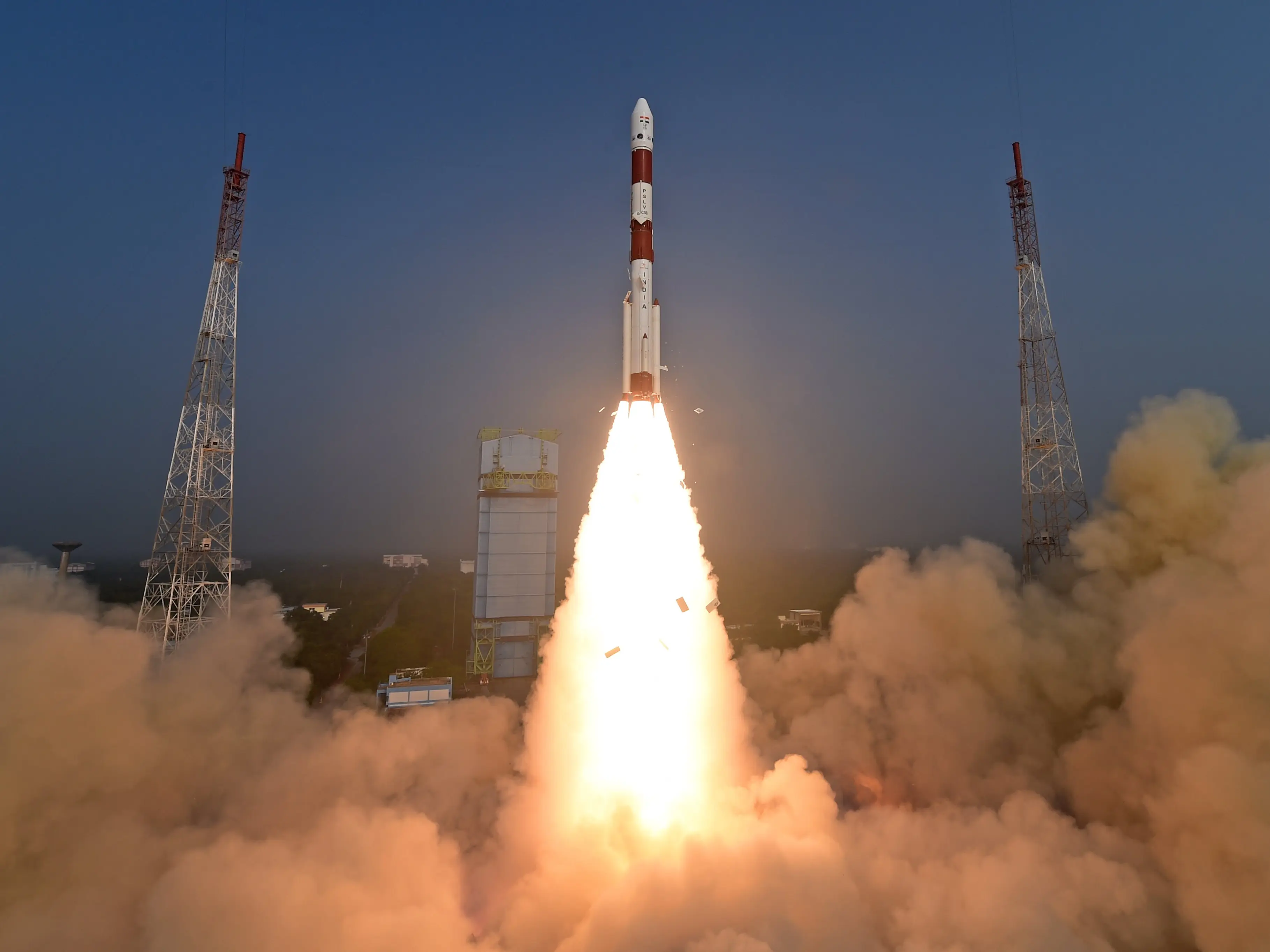
The mid-flight failure of the Indian space agency ISRO's PSLV-C62 rocket launch mission on Monday, (12th Jan), has led to the loss of 15 satellites from India and abroad. In a major setback to India's national security apparatus, the million-dollar hyperspectral Earth-imaging satellite built by the Government's Defence Research and Development Organization (DRDO) was also among the satellites destroyed. For the $4 trillion economy behemoth that is the Indian Government, a million-dollar satellite's loss is one loss among a few failed missions in the last 12 months. However, a less discussed aspect is that of six satellites belonging to fledgling Indian startups that have been destroyed in this mission. The question also lingers whether these firms had managed to obtain insurance cover for their little spacecrafts. In comparison, it is known that ISRO does not insure its own rockets and satellites that are launched from home soil. However, ISRO has insured its own satellites when they fly on foreign rockets.
The contrast here is stark: The Indian Government Space agency ISRO has been enjoying considerable taxpayer funding since the year 1969. In recent years, ISRO has been utilising lesser funds than actually allocated to it, and has been returning excess funds to the Government's coffers. ISRO also had a monopoly over rocket launches and satellite building until the year 2020. In contrast, India's space startups cropped up over the last five years, after the Government enabled their foray. In what is widely regarded as a risk-averse nation, these startups built by youngsters have been taking a leap of faith into a high-risk, low-return business with zero tolerance for failure. Fuelled by hard-won private funding, these startups are taking baby steps in the highly competitive sector, where India has less than 2 per cent share in the global space economy. It is amid such a scenario that several satellites from Indian startups were hit by the PSLV-C62 failure.
WION sought responses from the startups involved to understand what this 'PSLV-C62' launch mission meant to them, the satellite-based technology they intended to demonstrate or operationalise in space, and the impact that this failure may have on their future operations and business.
AyulSat from Orbitaid
All satellites have a limited lifetime, and that limit is imposed by how much fuel they can carry. When satellites in space run out of fuel, they lose the ability to steer themselves, make minor adjustments to their orbital path, and point in the intended direction. When satellites reach the end of their life, it is predominantly because they run out of fuel. So, what if satellites can be refuelled by another satellite in space? Pretty much like how a large military plane refuels a small fighter jet. AyulSat by Orbitaid was to make a brave attempt in this regard: can liquid fuel be moved from one tank to another in space?
"Our 25kg Ayulsat had two fuel tanks. One tank was filled with propane fuel, while the other tank was empty. In the microgravity environment of space, everything floats, including fuel. We wanted to try and transfer the fuel from one tank to another, a feat that's simple on Earth and highly sophisticated while in space. This would have also validated our proprietary Standard Interface Docking and Refuelling Port(SIDRP). AyulSat was also to serve as a target satellite for our future space docking experiment, where two satellites would meet up in space, orient themselves perfectly to get mechanically attached, perform transfer of power, data, and fuel," Sakthikumar, CEO of Orbitaid, explained to this author.
Queried about whether the AyulSat satellite was covered by insurance, he said that multiple attempts to obtain insurance from Indian and foreign companies did not materialise. He added that insurance firms are hesitant to provide cover for innovative, experimental first-time satellites built by startups, given the high risk of failure. He also added that the aspect of failure was never discussed with ISRO's commercial arm NSIL, given the stellar record of PSLV. However, he added that the company has a backup plan and hopes to launch two satellites in about 7 months from now to complete the planned space docking experiment.
Trending Stories
&imwidth=180&imheight=135&format=webp&quality=medium)
‘Maybe play one more season’: MS Dhoni to decide on his IPL future before December
&imwidth=180&imheight=135&format=webp&quality=medium)
Telangana unveils AI avatar of IT minister D Sridhar Babu at Hyderabad DevFest 2026
&imwidth=180&imheight=135&format=webp&quality=medium)
Viral video shows cross falling on Colombia priest, no official confirmation | WATCH
&imwidth=180&imheight=135&format=webp&quality=medium)
Pezeshkian says Iranians ‘struggling to put food on the table’ as war with US drags on
&imwidth=180&imheight=135&format=webp&quality=medium)
Shilpa Rao’s performance cut short at Mumbai event, organisers react to backlash
&imwidth=180&imheight=135&format=webp&quality=medium)
Chorbagan stampede: A week later, the strangest visarjan Kolkata has seen
&imwidth=180&imheight=135&format=webp&quality=medium)
AI slop or smart strategy? South African author Coral Hart defends Her 370 AI- assisted books in 20 months
&imwidth=180&imheight=135&format=webp&quality=medium)
AI just found a flaw in software running most of the web! One request hijacks the server
&imwidth=180&imheight=135&format=webp&quality=medium)
Train crashes into crane on São Paulo monorail line, wreckage falls onto busy road | VIDEO
&imwidth=180&imheight=135&format=webp&quality=medium)
Can Putin cheat death? All about his daughter’s billion-dollar quest for immortality
&imwidth=180&imheight=135&format=webp&quality=medium)
Saudi says debris fell in Mecca, Medina after missile interceptions; Houthis deny targeting holy cities
&imwidth=180&imheight=135&format=webp&quality=medium)
What was the note found inside bag of Class 12 student, who set herself on fire inside Delhi school?
&imwidth=180&imheight=135&format=webp&quality=medium)
Netanyahu warns Israelis of ‘existential threat’ from Iran, posts AI image of nuclear strike
&imwidth=180&imheight=135&format=webp&quality=medium)
Pakistan airline PIA unveils new crew uniforms, faces online criticism
&imwidth=180&imheight=135&format=webp&quality=medium)
Britain is building the world's first AI biosecurity lab, with OpenAI and Anthropic inside
&imwidth=180&imheight=135&format=webp&quality=medium)
J-20 designers plan to put radar into aircraft wing; strategy to expand coverage during air combat
&imwidth=180&imheight=135&format=webp&quality=medium)
Frontier AIs keep escaping their test cages! The industry still can't reliably stop them
&imwidth=180&imheight=135&format=webp&quality=medium)
'Already tired of his 9-to-5': Baby born with a moustache becomes internet sensation, video goes viral | Watch
&imwidth=180&imheight=135&format=webp&quality=medium)
France protests: 135 arrested, weapons seized as fresh demonstrations erupt amid heavy security
&imwidth=180&imheight=135&format=webp&quality=medium)
French Open: PV Sindhu storms into final with win over Hina Akechi
&imwidth=180&imheight=135&format=webp&quality=medium)
Russia-Ukraine drone attacks kill 6, injure 31 across both countries
&imwidth=180&imheight=135&format=webp&quality=medium)
‘Saddam Hussein opened a cheesecake factory’: Obama mocks Trump’s White House renovations; defends Abdul El-Sayed
&imwidth=180&imheight=135&format=webp&quality=medium)
China's dancing robot turns violent bodyguard, lifts cars and fights intruders - Watch
&imwidth=180&imheight=135&format=webp&quality=medium)
'You’re a horrible little reporter, aren’t you?': Trump snaps at NBC reporter questioning his support for Ramaswamy's campaign ad
&imwidth=180&imheight=135&format=webp&quality=medium)
'Killing people never allowed': Elon Musk admits restricting Starlink in Ukraine, explains why
&imwidth=180&imheight=135&format=webp&quality=medium)
Bodies of 2 missing Japanese climbers recovered from Himalayan peak
&im=FitAndFill=(700,400)&imwidth=180&imheight=135&format=webp&quality=medium)
New Friday OTT releases (October 23, 2026): Gajab Raat, Dorothy, Chaar Yaar- Watch these 6 new movies and TV shows on Netflix, Prime Video and more
&imwidth=180&imheight=135&format=webp&quality=medium)
An AI that reads your face can now estimate how long you have to live
&imwidth=180&imheight=135&format=webp&quality=medium)
'If it was up to me, it wouldn't have ended like this': James Anderson opens up on Lancashire exit
&imwidth=180&imheight=135&format=webp&quality=medium)
WATCH: Thousands across Manipur bang plates, beat drums in "noise protest"
&imwidth=180&imheight=135&format=webp&quality=medium)
NEET protests: Panel to hear evidence on pellet gun use, harassment
&imwidth=180&imheight=135&format=webp&quality=medium)
Tu Hai Meri Kiran film review: Sonakshi Sinha and Zaheer Iqbal's thriller gets tangled in its own twists
&imwidth=180&imheight=135&format=webp&quality=medium)
Nagpur man fails to pay rent, allegedly prints fake Rs 500 notes worth Rs 37 lakh
&imwidth=180&imheight=135&format=webp&quality=medium)
‘Modi ka baap bhi jayega,’ Kharge loses cool at party event in Patna; BJP slams him
&imwidth=180&imheight=135&format=webp&quality=medium)
Why Europe’s protests are about more than austerity and rising costs
&imwidth=180&imheight=135&format=webp&quality=medium)
Farooq Abdullah says Pakistan’s raising of Kashmir issue keeps pressure on Delhi
MOI-1 satellite from Eon Space Labs, TakeMe2Space
EON Space Labs integrated their advanced multispectral imaging payload MIRA, integrated with MOI-1, a CubeSat, weighing a mere 14 kgs, developed by fellow startup TakeMe2Space. This small craft was to demonstrate the viability of an AI-powered orbital image laboratory. The mission was meant to enable near real-time, in-orbit processing of Earth observation data, significantly lowering data downlink costs.
According to Sanjay Kumar, Co-founder of Eon Space Labs, the launch of MIRA aboard MOI-1 was to cause a shift in how Earth observation missions are designed and utilised. Instead of merely capturing images and sending raw data back to Earth like most common satellites, our experimental satellite was to generate insights in orbit.
The company did not offer a response to the author's query on whether they had insured the satellite. They said, we are grateful to ISRO for the opportunity to be part of the PSLV-C62 mission. While the result was not what we had hoped for, the learnings from this mission are valuable, and our focus remains firmly on execution and moving forward with clarity and resilience, they added. As for the next mission, the company said they are prioritising MOI-2 as the next flight opportunity, and are targeting a mid-2026 launch to space, using an available launch platform, subject to mission alignment and availability.
CGUSAT, DSUSAT, Thybolt-3, LACHIT from Dhruva Space
Dhruva Space, a full-stack space engineering company, had contributed towards several small satellites aboard the PSLV-C61. Emphasising that Space missions are inherently complex, Sanjay Nekkanti, CEO & Co-founder, Dhruva Space said, at this stage, our focus is on a measured and timely turnaround. These capabilities enable us and our customers to be ready for upcoming Launch opportunities in under a few weeks. We continue to see strong momentum and maturity in the Indian Space programme and we are confident the ecosystem will grow, as envisioned in the Decadal Vision. However, there was no response from the company on whether the said satellites were insured.
In a first, PSLV disappointed foreign customers: handful of foreign satellites lost
In its 33 years of flight, the PSLV has launched well over 350 satellites for Indian and foreign customers. While PSLV has suffered major failures on four occasions(1993, 2017, 2025, 2026), it is only the 2026 failure that has led to the loss of foreign satellites or satellites belonging to customers. The aforementioned failures led to the loss of Indian Government satellites. Notably, PSLV has been launching foreign satellites since the year 1999, when India began commercial spacefaring by launching South Korea's KITSAT-3 and DLR-TUBSAT from Germany. Since then, there has been no looking back for PSLV.
Theos-2 satellite, jointly built by Thailand and the UK, Munal satellite for Nepal University, and five satellites from Brazil were lost in the aftermath of the PSLV-C62 failure on Monday. It is not known if these satellites were insured by their respective owners.
