

&imwidth=800&imheight=600&format=webp&quality=medium "NASA targets March 6 launch for Artemis II mission: After 52 years, NASA to send humans around the Moon")
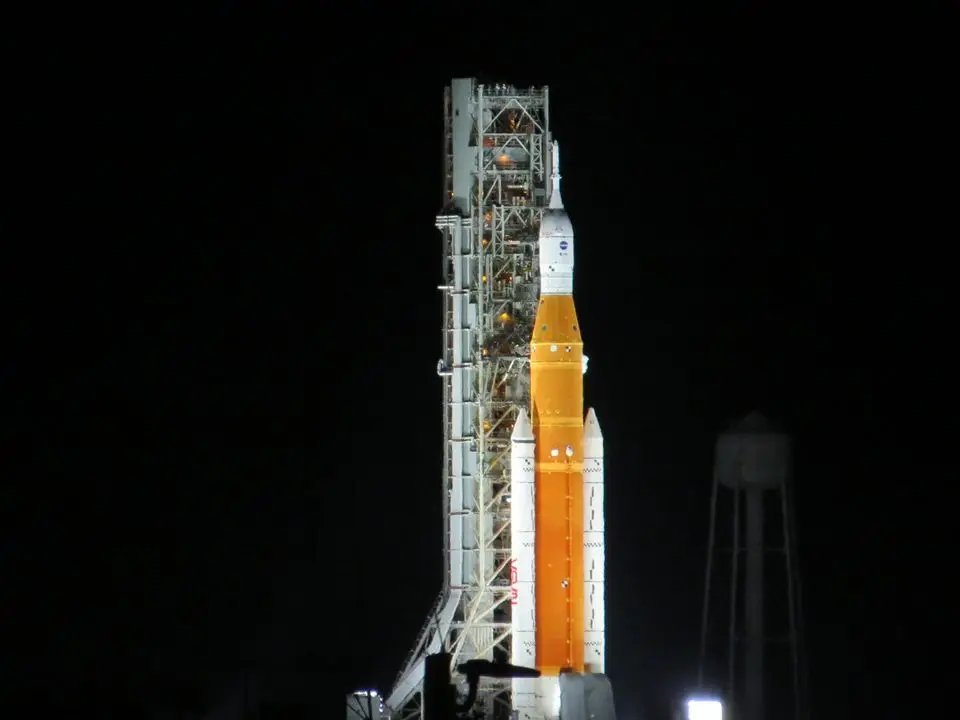
NASA is targeting March 6 for the launch of Artemis II, a historic mission that will send astronauts around the Moon for the first time in more than 50 years.
According to NASA officials, the earliest launch opportunity is March 6. The date follows a successful “wet dress rehearsal” at the Kennedy Space Center in Florida, where engineers fuelled the rocket and ran a full countdown test without liftoff.
If successful, Artemis II will mark humanity’s furthest crewed journey into space since the Apollo era.
What is Artemis II and why it matters
Artemis II is the second mission under NASA’s Artemis programme. It will carry four astronauts on a 10-day journey around the far side of the Moon and back to Earth.
The crew includes three Americans Reid Wiseman, Victor Glover and Christina Koch and one Canadian, Jeremy Hansen.
Trending Stories
&imwidth=180&imheight=135&format=webp&quality=medium)
'I am not going to be watching it': JD Vance on livestream of Nidal Hasan's firing squad execution
&imwidth=180&imheight=135&format=webp&quality=medium)
UK navy hit by espionage scandal: Sailor accused of spying for Russia | Gravitas
&imwidth=180&imheight=135&format=webp&quality=medium)
Katie Zacharia likely to succeed Karoline Leavitt as Trump's White House press secretary
&imwidth=180&imheight=135&format=webp&quality=medium)
Delhi on high alert for CJP protest: Delhi police to use body cams to 'prove whether we did anything’; Pink Force, RAF, 35,000 personnel deployed
&imwidth=180&imheight=135&format=webp&quality=medium)
‘Never-ending flow of cheap labour’: JD Vance hits back at Indian-origin Congresswoman over US green card curbs for major tech companies
&imwidth=180&imheight=135&format=webp&quality=medium)
Trump's naked 23-karat gold statue unveiled near European Parliament
&imwidth=180&imheight=135&format=webp&quality=medium)
‘Ruh Roh’: Top US official mocks ‘Indian market collapse’ claim after Trump’s IT curbs. But did it? | FACT CHECK
&imwidth=180&imheight=135&format=webp&quality=medium)
Can you be mean to AI? Anthropic’s new rules explicitly ban cruelty to Claude
&im=FitAndFill=(700,400)&imwidth=180&imheight=135&format=webp&quality=medium)
Fastest-growing Asian economies in 2026: Who tops the chart? Where does India rank?
&imwidth=180&imheight=135&format=webp&quality=medium)
'I ended 8 wars': Trump slams Nobel Peace prize decision, claims award was his due
&imwidth=180&imheight=135&format=webp&quality=medium)
Houthis continue direct hits on Saudi targets, Türkiye and Pakistan missing in action | Gravitas
&imwidth=180&imheight=135&format=webp&quality=medium)
New York protests erupt as Trump administration defends ICE shooting
&imwidth=180&imheight=135&format=webp&quality=medium)
Delhi protest: Metro curbs, train cancellations, traffic diversions as protesters seek CEC Gyanesh Kumar’s resignation
&imwidth=180&imheight=135&format=webp&quality=medium)
Russia president Putin promises to 'do everything' to help settle Middle East conflict as US-Iran negotiations stall
&imwidth=180&imheight=135&format=webp&quality=medium)
Powerful 7.7 magnitude earthquake strikes Panama, tsunami warning issued
&imwidth=180&imheight=135&format=webp&quality=medium)
BTS agency HYBE announces first-ever Weverse Con Festival in India
&imwidth=180&imheight=135&format=webp&quality=medium)
Hurricane Isaias makes landfall in Florida as Category 2 storm with winds of 105mph, threatens Gulf Coast with life-threatening surge
&imwidth=180&imheight=135&format=webp&quality=medium)
Trump has a new 'enemy': Anyone who calls it 'artificial intelligence'. Here's what we wants instead
&im=FitAndFill=(700,400)&imwidth=180&imheight=135&format=webp&quality=medium)
New Friday OTT releases (October 9, 2026): Reporting Live, Animals, Take Charge of My Heart- 6 new titles coming on Netflix, JioHotstar and more
&imwidth=180&imheight=135&format=webp&quality=medium)
BTS' RM urges Peru fans not to gather outside hotel: 'We can't sleep', It's becoming a nuisance'
&imwidth=180&imheight=135&format=webp&quality=medium)
Trump announces Russian diesel deal as Zelensky criticises move
&imwidth=180&imheight=135&format=webp&quality=medium)
‘Right to protest must be protected, but...’: Delhi Police reveals why it denied CJP permission for October 10 Jantar Mantar protest
&imwidth=180&imheight=135&format=webp&quality=medium)
Pakistan denies reports of PAF jets being used in attacks against Iran-backed Houthis in Yemen
&imwidth=180&imheight=135&format=webp&quality=medium)
New York ICE shooting sparks protests as Mamdani to call on Trump to halt ICE operations
&imwidth=180&imheight=135&format=webp&quality=medium)
IND vs WI: West Indies set record for highest successful run chase in T20Is against India
&imwidth=180&imheight=135&format=webp&quality=medium)
Ryan Reynolds’ private messages reveal his blunt views on Justin Baldoni from Blake Lively’s legal case
&im=FitAndFill=(700,400)&imwidth=180&imheight=135&format=webp&quality=medium)
Rakul Preet Singh birthday special: 7 times the Ramayana actress served glamorous looks
&im=FitAndFill=(700,400)&imwidth=180&imheight=135&format=webp&quality=medium)
Food shortages, suicide attempts and more: USS Abraham Lincoln returns to US after 321 day deployment — What happened aboard the US carrier?
&imwidth=180&imheight=135&format=webp&quality=medium)
OpenAI shuts down Russian, Iranian influence operations using ChatGPT to spread propaganda
&imwidth=180&imheight=135&format=webp&quality=medium)
SC questions closure of 57 Delhi Metro stations, asks Centre to resume services in regulated manner
&imwidth=180&imheight=135&format=webp&quality=medium)
‘We will end ICC’: US sanctions International court, threatens to cripple hours after Navi Pillay wins Nobel Peace Prize
&imwidth=180&imheight=135&format=webp&quality=medium)
US midterm elections 2026: What a blue wave or blue tsunami could mean for Trump
&imwidth=180&imheight=135&format=webp&quality=medium)
Trump honours Microsoft CEO Satya Nadella with top technology honour amid immigration scrutiny
&imwidth=180&imheight=135&format=webp&quality=medium)
Sri Lankan Tamil worker gets death sentence in Saudi Arabia over blasphemy, calls for pardon intensify
&imwidth=180&imheight=135&format=webp&quality=medium)
‘Real boss of India’: Elon Musk escalates attack over Starlink’s India entry
The last time humans travelled to the Moon was in 1972 during Apollo 17. Artemis II will not land on the lunar surface but will pave the way for Artemis III, which aims to return astronauts to the Moon by 2028, according to NASA’s current timeline.
Rocket, spacecraft and mission plan
The astronauts will launch aboard NASA’s 98-metre-tall Space Launch System (SLS) rocket. The SLS has flown only once before, in November 2022, during the uncrewed Artemis I mission.
At the top of the rocket sits the Orion spacecraft. The capsule, roughly the size of a minibus inside, will serve as the crew’s home for the 10-day mission.
The mission plan includes:
One day in orbit around Earth
Around four days travelling to the Moon
Flying 6,500 to 9,500 km above the lunar surface
Passing around the Moon’s far side
Four days returning to Earth
Splashdown in the Pacific Ocean
NASA officials said the astronauts will spend several hours observing and photographing the Moon’s surface during the flyby.
Wet dress rehearsal clears key hurdle
NASA confirmed that the latest wet dress rehearsal was completed successfully after an earlier attempt in February was stopped due to a liquid hydrogen leak.
Officials said seals and filters linked to the fuel system were replaced and tested. According to NASA’s Lori Glaze, engineers were able to fully fuel the SLS rocket within the planned timeline and complete the countdown sequence.
The successful test allowed NASA to set March 6 as the earliest launch window.
Artemis III, SpaceX and global competition
If Artemis II is successful, Artemis III will attempt to land astronauts near the Moon’s south pole. NASA has contracted SpaceX, led by Elon Musk, to build the lunar lander using its Starship rocket system.
However, delays in Starship development have prompted NASA to request updated plans from SpaceX. The agency has also asked Blue Origin, owned by Jeff Bezos, to accelerate its own lunar lander plans.
The US faces competition from China, which aims to land astronauts on the Moon by 2030. Both countries are targeting the Moon’s south pole due to the presence of water ice and scientific interest.
