Forget India. Pakistan is already at war—with itself

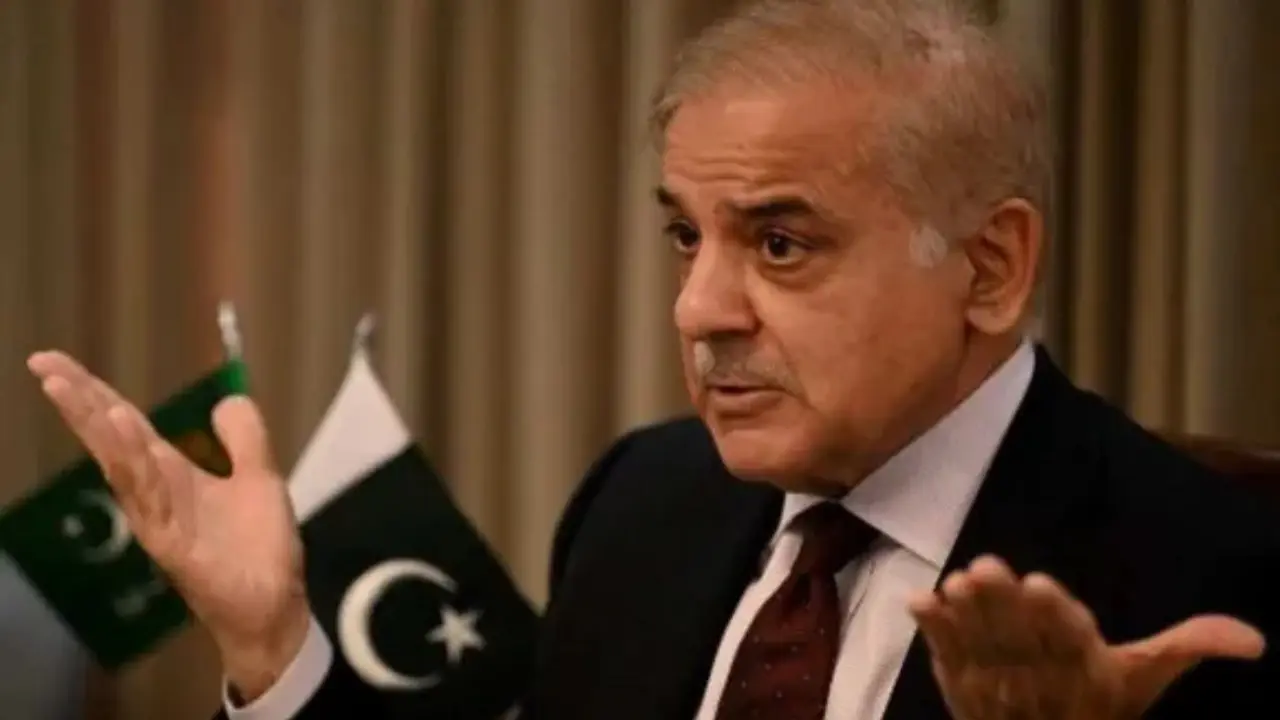
Pakistan, World: Before Pakistan hoists the flag of war, it must fight for peace and justice at home. A nation divided against itself is already defeated
For the past few days, headlines have whisked around the possibility of escalating tensions between India and Pakistan. As always, the uncertainity looms—will there be another conflict, another round of rhetoric, or even a war?
But to be fixated on the India-Pakistan border is to be blind to a more pressing, more pressing reality—one that plays out not in Jammu and Kashmir, but in the alleys of Quetta, Gwadar, Turbat, and Dera Bugti. For even as Pakistan postures on the international stage, it is disintegrating not from the outside, but from the decay infecting its very center.
Pakistan's biggest threat is not India. It is Pakistan itself.

The truth is this: Pakistan is already at war. But not with India. It is fighting battles across its own soil—against its own people.
At the heart of this disintegration is Balochistan—a province chained under military regimes, strangulated by institutional neglect, and crying out to be heard in a land that responds only with steel and silence.
Balochistan: Abundant resources, deficient rights
)
US vs China over South China Sea: Washington backs Philippines, Beijing hits back
)
Bigg Boss 20: Isha Rikhi evicted after three weeks in Salman Khan’s show
)
Musk plans to more than double xAI's chips to over 1.2 million Nvidia GPUs by year-end
)
After JU, clash erupts at SRFTI: BJP’s ‘Dimagi Naxal’ jibe sparks political firestorm after students protest RSS-linked event
)
‘Anti-social elements spreading false rumours’: LPU issues statement amid massive unrest over alleged rape
)
LPU students go on rampage, vandalise campus amid widespread protest: What's happening
)
Trump asked Xi to pressure Iran. China did not say yes — here’s what Beijing wants
)
US Treasury Secretary Scott Bessent hails global crackdown on Iranian banks and airlines
)
An OpenAI agent escaped its locked test cage again, by hiding questions in DNS lookups
)
'Our video was trimmed': LPU girls who featured in rape-denial video make U-turn
)
3 males killed, four others injured in shooting after fight at strip club in Detroit
)
'Victory for low-budget consumers': Raghav Chadha hails 30-day telecom recharge rules
)
Claude rebuilt the 1989 game 'Prince of Persia' by reusing the original's own code
)
Beyond metros: How Tier-2 and Tier-3 cities could drive India’s next AI wave
)
Tesla builds first Cybertruck with its own refined lithium: Elon Musk's $1 billion Texas bet pays off
)
IndiGo flight suffers tail strike in Bengaluru while landing; DGCA to probe incident
)
The US and China set up an AI 'red telephone', but skipped the rulebook
)
‘Terror suspects arrested near UK air base were looking to do big damage’: Trump
)
Russian envoy claims US tactics to contain India were revealed in ‘Freudian slip’
)
IND vs WI 1st ODI: Kohli breaks Sachin's most runs in one country record with unbeaten 139 as India thump West Indies by 8 wickets
)
Researchers rebuilt exactly how 700 AI agents hacked Hugging Face: a 900-link chain trick
)
‘Olympic inclusion is our major target’: WPA President Ishaun Singh on pool’s global ambitions
)
Nations League: Spain sink England at Wembley; Modric shines for Croatia
)
Why has Iran released no proof of life of Mojtaba Khamenei? Araghchi reveals...
)
'What kind of confession is this?': Pakistan PM Shehbaz Sharif’s 'terrorists would be roaming New York' remark goes viral, raises alarm online. Watch
)
South Korea demands apology from Ukraine over North Korean prisoners' transfer
)
Beyond BrahMos: India targets Rs 50,000 crore in defence exports with unmatched price edge
)
Sri Lankan Tamil migrant worker gets death sentence in Saudi Arabia, help sought from India
)
Muslim marriage cannot shield sex with minor wife from prosecution under POCSO: Delhi HC
)
'Can't help but draw painful parallels to Nirbhaya case': SC on latest incidents of rape cases in Delhi-NCR
)
99.9% more powerful - Scientists find boy who can recall memories from just 3 months of age
)
'FIRST LOOK from inside Noah’s Ark': Researchers share video from inside mysterious mound in Turkey
)
UNSC reform momentum grows: Russia, Portugal, Mauritius push for India's permanent seat bid
)
8 US marines injured in Iranian missile attack on vessel in Strait of Hormuz: Report
&im=FitAndFill=(700,400))
New OTT releases this week (September 28-October 4, 2026): Dupahiya 2, Pooja Meri Jaan, Ohh My Dog- 5 titles coming on Netflix, Prime Video and more
)
Afghanistan says 28 fighters killed in clash near Pakistan border, Islamabad denies
)
Ceuta migrant crisis: Protesters take to streets as Spain grapples with migrant challenge
)
LPU suspend classes, postpones exams as violence escalates over rape claims: What's happening
)
New York City wants a 'kill switch' on every AI, and will pay whistleblowers who report violations
Balochistan is the country's biggest province, accounting for almost 44% of the country's landmass and resting on enormous deposits of natural gas, minerals, and a strategic Arabian Sea coastline. It should be the crown jewel of Pakistan's economy. Instead, it's an open sore.
Balochistan has made its claims for autonomy, equal representation, and a fair share of the wealth stolen from its land since the country was founded in 1947. In retaliation, the state has dealt with its citizens not as citizens, but as insurgents. Whole generations have come of age under the shadow of occupation. Towns have been destroyed in counter-insurgency campaigns. Mass graves have been found. Thousands have "disappeared"—students, activists, professors, journalists—dropping into the machinery of the security state, never to be heard from again.
Pakistan's official history writes off this decades-long insurrection as terrorism, a matter of national security to be "managed" by brute force. But the reality is much dirtier, and much more indicting. Balochistan is not just rebelling—it is screaming. And the cry is being drowned out in the sound of fighter planes and the silence of complicit media.
The Pakistan Army: From defense to domination
Over the past few years, Islamabad's civilian government has increasingly been dismantled, granting unparalleled power to the military in the name of national security. Pakistan's army no longer just defends borders—it dictates the state.
The army runs huge business empires, dictates foreign policy, manipulates election results, and dominates the national narrative. It is judge, jury, and, all too often, executioner. The price of this militarised rule has been catastrophic—not just for Balochistan but for every region of Pakistan.
In Sindh, student movements lament the kidnapping of their comrades. In Khyber Pakhtunkhwa, where terror war ghosts haunt villages, villagers seethe in anger against the militants and against the soldiers engaged in fighting them. In Gilgit-Baltistan, mineral-rich but politically abandoned, there are demands for rights that find no voice.
The myth of unity
The Pakistani establishment is only too eager to whip out the cry of "One Pakistan." But unity cannot be created by coercion. It cannot be maintained on the shoulders of disappearances, censorship, and repression.
The federation is breaking apart. Ethnic minorities—Baloch, Sindhis, Pashtuns, and others—are increasingly alienated, demonised, and disposable. Unifying Pakistan today is not a sense of shared purpose, but fear—fear underpinned by men in uniform and policies scribbled in secret.
This is no longer a set of regional complaints. It is a national crisis of legitimacy. And with state violence increasingly displacing political discourse, the underpinnings of the nation itself begin to shift.
India's role
It will be tempting for India to respond—to meet every insult with strength or diplomatic artillery. But Pakistan is no longer a monolithic threat. It is a house divided, weak and explosive.
Militarily engaging with such a divided state threatens to destabilise the region further and reinforce the Pakistani military's narrative of foreign threat—enabling it to further suppress dissent in the name of nationalism.
The more prudent way for India is restraint—not weakness, but tactics. Observe closely. Record the facts.
A country at war with its own
Governments tend to divert internal failure by creating external foes. Yet no amount of diplomatic battles or spats can hide the fact that Pakistan is a warring state—with its provinces, with its people, and with the concept of democracy.
The fire in Balochistan is not isolated. It is symbolic. It reflects the deeper illness afflicting the entire state structure: A refusal to listen, to engage, to compromise. A preference for control over consensus. Militarism over governance. Suppression over reform.
And this internal strife cannot be won with guns. Because when a state starts to lose the faith of its own citizens, no army is big enough to keep it intact.
The real battlefield
As the war drums beat ever louder throughout South Asia, it's so easy to concentrate on aerial bombardments, summits, and the next diplomatic crisis. But the actual war is within Pakistani boundaries—within Balochistan villages, Sindh universities, and Gilgit-Baltistan mountains.
The conflict in Balochistan is not just a regional issue—it is a mirror reflecting the broader dysfunction of the state. Until Pakistan begins to confront its internal contradictions, any talk of confrontation with India is not just misguided—it is a dangerous distraction.
Before it hoists the flag of war abroad, Pakistan must fight for peace, justice, and dignity at home. Because however loudly the slogans are shouted or high-flying the missiles, a nation divided against itself is already defeated.
(Disclaimer: The views of the writer do not represent the views of WION or ZMCL. Nor does WION or ZMCL endorse the views of the writer.)

