Zawahiri killing: Tenacity of US agencies in hunting down enemies

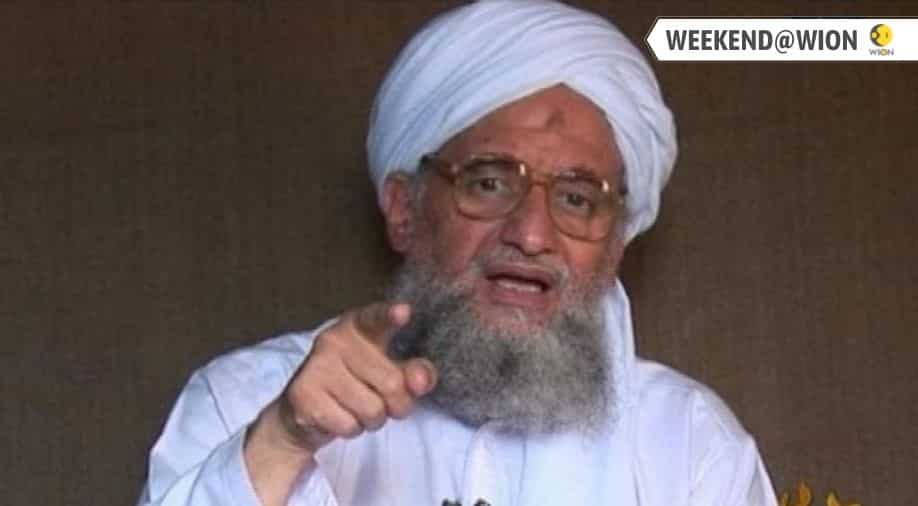
Zawahiri killing: Tenacity of US agencies in hunting down enemies
Early morning of July 31, 2022 marked the culmination of the United States’ relentless 11-year hunt for its most wanted terrorist — al-Qaeda chief Ayman al-Zawahiri — bringing closure to the kin of 9/11 victims.
Zawahiri met a violent death, and since the US had picked an unmanned advanced technology warfare option for the precision strike in the upscale, highly-secure neighbourhood of Kabul, it knew collecting DNA sample for identity confirmation testing, as in Osama Bin Laden’s case, was not possible, and must have ensured a visual feed and photographic evidence to confirm the kill.
The visuals of the killing must have been gory, given one of the two, or both, likely options of the Hellfire RNX missiles being used to exterminate the biggest bugbear of United States. One Hellfire variant uses sword-like blades and a set of six rotors that can shred even the metal bodies of tanks and armoured vehicles to reach the target. Two such missiles fired at Zawahiri would have inflicted lethal gashes and left the third-floor balcony of the safehouse in the tony Sherpur locality of Kabul quite bloodied.

Also read |Anas Mallick abduction: Taliban assault WION's crew before releasing them The other option is a Hellfire RNX with small-munition equivalent to a hand grenade. Two missiles on target would have severely dismembered the target.
The al-Qaeda has not confirmed Zawahiri’s death, while Taliban issued a vague statement denying any knowledge of his presence in Kabul, saying it will probe US claims. The US has still not shared the evidence (it must be having) to prove Zawahiri’s annihilation. It was a major breakthrough for the US and the news hogged limelight, taking some attention off China’s aggressive posturing on Speaker Nancy Pelosi’s Taipei visit. It will also be seen as US posturing and flexing its expertise in advanced techno warfare, and not being bogged down by the military might of China and its threats.
The doggedness with which US intelligence and defence agencies have been pursuing the enemies of the state is highly praiseworthy and worth emulating for a country like India which has been battling terrorism and bleeding for decades now.
&imwidth=180&imheight=135&format=webp&quality=medium)
US troop deaths in Iran war on rise? Pentagon reveals latest toll
&imwidth=180&imheight=135&format=webp&quality=medium)
Lula campaign accuses Meta of election interference after social media content blocked
&imwidth=180&imheight=135&format=webp&quality=medium)
100,000 strikes in 3 years: How October 7 redefined Israel's war
&imwidth=180&imheight=135&format=webp&quality=medium)
‘Your people don’t even let us near it’: IAF chief’s blunt response on US F-35; India yet to decide on Russia’s Su-57
&imwidth=180&imheight=135&format=webp&quality=medium)
Saudi Arabia's King Khalid International Airport attack kills 12, injures 309; India calls it 'unacceptable'
&imwidth=180&imheight=135&format=webp&quality=medium)
‘Never-ending flow of cheap labour’: JD Vance hits back at Indian-origin Congresswoman over US green card curbs for major tech companies
&imwidth=180&imheight=135&format=webp&quality=medium)
HYBE’s Weverse Con India sets ticket sale date for March 2027 festival
&imwidth=180&imheight=135&format=webp&quality=medium)
Messi scores twice in Inter Miami return following final match for Argentina
&imwidth=180&imheight=135&format=webp&quality=medium)
CJP's Abhijeet Dipke, Ashutosh Ranka, Saurav Das released 22 hours after flight detention
&imwidth=180&imheight=135&format=webp&quality=medium)
'Unwarranted interference': India slams UN human rights office over remarks on Delhi protests
&imwidth=180&imheight=135&format=webp&quality=medium)
'Jantar Mantar not the story of India': BJP's Sambit Patra claims 'anarchists' tried to hold Delhi captive
&imwidth=180&imheight=135&format=webp&quality=medium)
3rd T20I Preview: Another run-fest on cards as India face West Indies in Indore
&imwidth=180&imheight=135&format=webp&quality=medium)
Nicolas Cage refuses AI waiver for Spider-Noir, hints at Amazon exit and True Detective role
&imwidth=180&imheight=135&format=webp&quality=medium)
Riyadh airport hit in missile attack, dozens injured; 5 in intensive care
&imwidth=180&imheight=135&format=webp&quality=medium)
'Spent Rs 2,000 cr to elect Trump': Elon Musk bought US President's loyalty by writing the biggest political cheque in human history
&imwidth=180&imheight=135&format=webp&quality=medium)
Powerful 7.7 magnitude earthquake strikes Panama, tsunami warning issued
&imwidth=180&imheight=135&format=webp&quality=medium)
US mid-term elections: What are PACs - Unique American System that lets corporates shape voting
&imwidth=180&imheight=135&format=webp&quality=medium)
Nathan Lyon completes 1,000 Test runs at No. 10 to script rare cricket feat
&imwidth=180&imheight=135&format=webp&quality=medium)
'Ouch!!! That must hurt': Kangana Ranaut hails Kamal Haasan's sharp reply to Elon Musk over Starlink row
&imwidth=180&imheight=135&format=webp&quality=medium)
Barry Manilow cuts short Las Vegas comeback show, cancels next concert over Bronchitis
&imwidth=180&imheight=135&format=webp&quality=medium)
Hamas used double agents, deceived Israel to carry out October 7 massacre
&imwidth=180&imheight=135&format=webp&quality=medium)
Bigg Boss 20: Who is Manish Goel? Meet the new wild card contestant on Salman Khan’s show
&imwidth=180&imheight=135&format=webp&quality=medium)
Portugal Federation confirms Cristiano Ronaldo’s return to national team despite suspension
&imwidth=180&imheight=135&format=webp&quality=medium)
Kim Kardashian brings glamour to Singapore Grand Prix while supporting boyfriend Lewis Hamilton
&imwidth=180&imheight=135&format=webp&quality=medium)
‘Time for Ukraine to get a new president’: Trump lashes out at Zelensky over Russia strikes
&im=FitAndFill=(700,400)&imwidth=180&imheight=135&format=webp&quality=medium)
Amitabh Bachchan @ 84: A look at his most iconic on-screen avatars - Anthony Gonsalves, Vijay Kumar and more
&imwidth=180&imheight=135&format=webp&quality=medium)
BTS’ RM raises privacy concerns over drones, lasers outside hotel amid Lima concert, urges fan respect
&imwidth=180&imheight=135&format=webp&quality=medium)
Thai queen becomes first reigning monarch to fly jet solothailand #queen #wion
&im=FitAndFill=(700,400)&imwidth=180&imheight=135&format=webp&quality=medium)
Food shortages, suicide attempts and more: USS Abraham Lincoln returns to US after 321 day deployment — What happened aboard the US carrier?
&imwidth=180&imheight=135&format=webp&quality=medium)
Rahul Gandhi calls Modi, Shah ‘cowards’ amid CJP protest crackdown in Delhi
&imwidth=180&imheight=135&format=webp&quality=medium)
‘Had he known, would have been here’: CJP Chief Abhijeet Dipke denied news of grandmother's death, family claims
&imwidth=180&imheight=135&format=webp&quality=medium)
Delhi Police arrest 4 men seen in viral video allegedly assaulting women protesters during CJP protest
&imwidth=180&imheight=135&format=webp&quality=medium)
Where are Abhijeet Dipke, Ashutosh Ranka, Saurav Das? CJP gives big update after flight detention
&imwidth=180&imheight=135&format=webp&quality=medium)
Putin conveys Iran’s proposal to Trump, offers to take Tehran’s enriched uranium
&im=FitAndFill=(700,400)&imwidth=180&imheight=135&format=webp&quality=medium)
Amitabh Bachchan turns 84: A look at Big B’s iconic dialogues that continue to win hearts
While the Operation Neptune Star in May 2011 killing Zawahiri’s predecessor Osama bin Laden was then seen as highly audacious as the Red Squadron of US Navy SEAL Team Six shot him at the safehouse in Pakistan’s garrison city Abbottabad and carried away his body, the CIA and US defence agencies have since killed Iranian General Qassem Soleimani, IS chief Abu Bakr al-Baghdadi and his right hand Abu al-Hassan al-Muhajir among the key ‘enemies’.
In contrast, India is still looking for action by Pakistan against Maulana Masood Azhar, Hafiz Muhammad Saeed, Zaki-Ur-Rehman Lakhvi, and Dawood Ibrahim Kaskar. As per Union Home Ministry officials, infiltration of terrorists from Pakistan into Kashmir continues unabated. As on July 5, 2022, there were 82 ‘foreign’ active terrorists in Kashmir against 59 locals. Will India finally take a leaf out of the US policy and hit its targets to end the inflow of terror into Kashmir from across the border is best left to conjecture, or imagination…
(Anuj Shrivastava is Senior News Editor, WION digital. He is always keen to use his insight to critically analyse developments, policies, decisions and anything of public interest.)
WATCH WION LIVE HERE -

