&imwidth=800&imheight=600&format=webp&quality=medium "The Washington Gambit: Trump juggles a Putin call, European doubts, and Zelensky’s hopes for a deal")
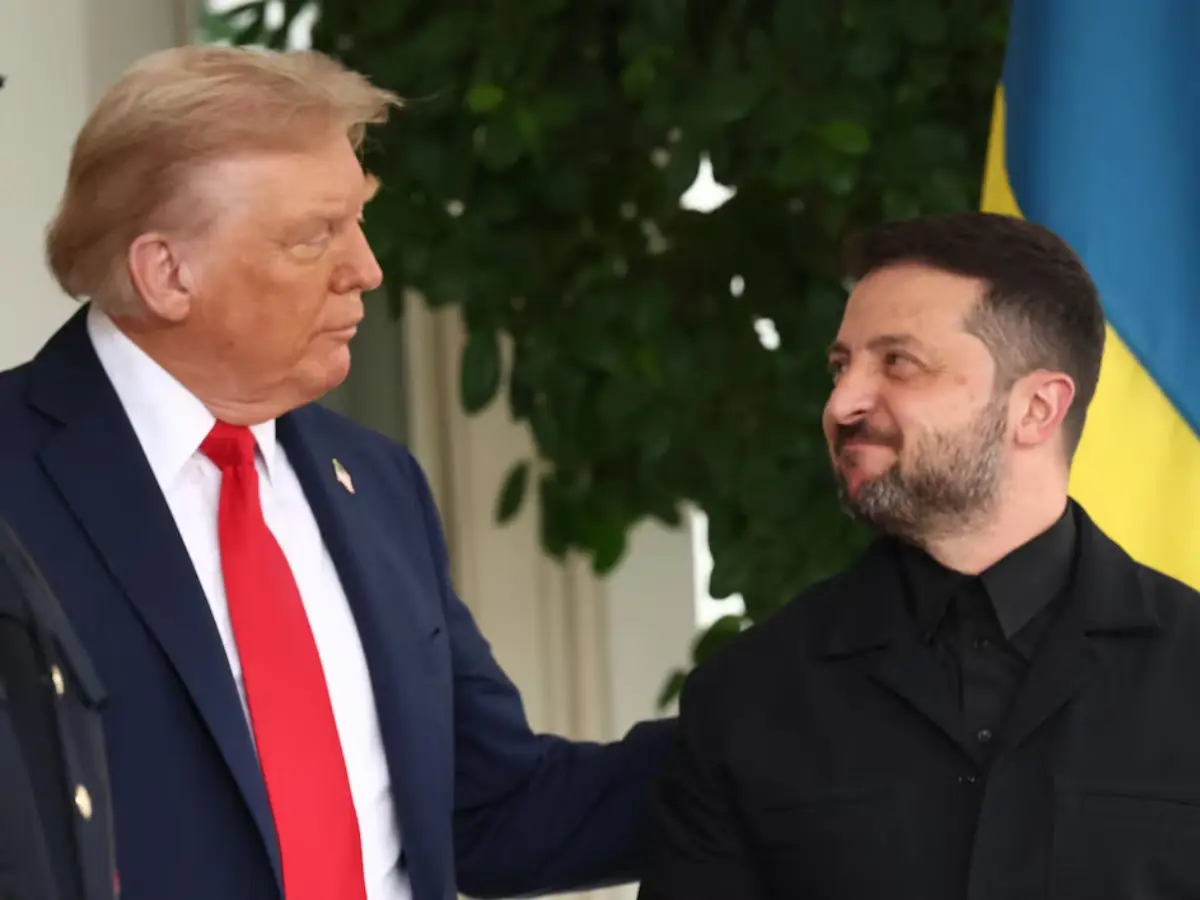
Ukrainian President Volodymyr Zelensky met US President Donald Trump at the White House on Monday to talk about ending the war in Ukraine. Several European leaders also came to Washington, just days after Trump’s meeting with Russian President Vladimir Putin in Alaska, which did not bring a ceasefire. Even though Trump sounded hopeful, and European leaders were more cautious, by Monday evening there were no clear promises of security guarantees or a peace deal.
Here are the main points from the talks:
1. A Putin-Zelensky meeting on the cards?

After the summit, Trump wrote on Truth Social that he had called Putin to start planning a meeting between the Russian leader and Zelensky. Trump said that after this one-on-one meeting, there could be a three-way meeting where the US president would also join.
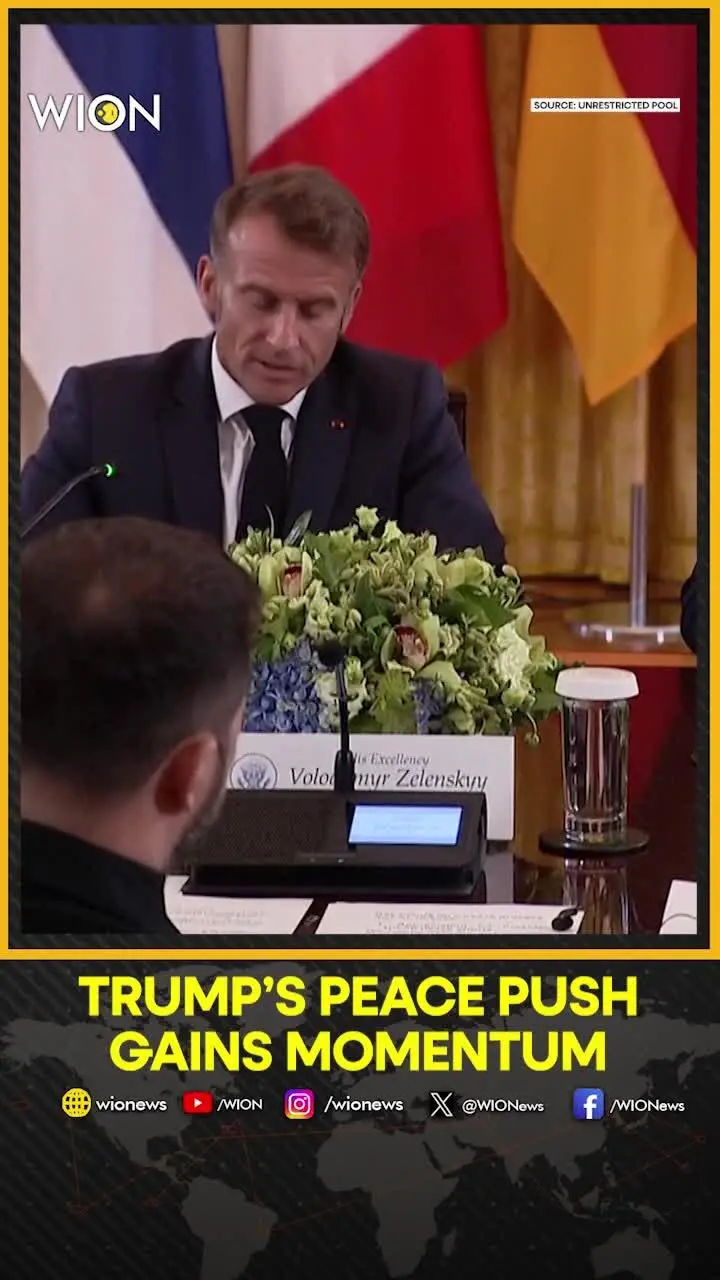
A Putin adviser later said that Trump and Putin had spoken for 40 minutes on Monday. Before the European leaders met Trump in the East Room of the White House, a hot mic caught a private chat between Trump and French President Emmanuel Macron. “I think he wants to make a deal. I think he wants to make a deal for me. You understand that? As crazy as that sounds,” Trump told Macron, speaking about Putin.
(Here, Trump is suggesting that Putin might agree to talks mainly to give Trump the credit of being a peacemaker, rather than out of genuine interest in ending the war.) It is still uncertain how easy it will be to bring the two bitter enemies together at the negotiating table for the first time since Russia’s full-scale invasion in February 2022. For months, Zelensky has been asking to meet Putin, mainly to prove that Russia is not serious about peace, since he believes the Kremlin has no real interest in such talks. Moscow has repeatedly rejected the idea of a Putin-Zelensky meeting. A Kremlin aide, Yuri Ushakov, gave a noncommittal statement on Monday night, saying it might be “worthwhile” to “explore the possibility” of sending higher-level representatives from the Russian and Ukrainian delegations for talks.
Trending Stories
)
Nigeria: Protesters take to the streets, police fire shots
)
US-Iran war: Tehran draws red lines — seven demands before any peace talks
)
Russia-Europe tensions: Polish PM warns Russian attacks could test NATO's unity
&im=FitAndFill=(700,400))
‘Not the US or China’: These are the countries leading the world in arable land
)
EXCLUSIVE | Singer Hanita Bhambri on her Toxic debut, working with Vishal Mishra and more
)
Mark Carney mimics Trump in hilarious moment over C$70 billion clean-energy investment; room erupts in laughter
)
Delhi voter roll shake-up: 3.31 million electors flagged in SIR review
)
Aravana prasadam shortage at Sabarimala temple in Kerala triggers protests, TDB questioned
)
‘End of my career...’: NSA Doval recalls tense Sikkim mission when China captured Indian intelligence team
)
Report: Iran rebuilding Taleghan 2, nuclear site tied to past weapons research, hit twice by Israel
)
Trump defends AI amid growing alarm, announces new 'AI force' and promises an 'AI czar'
)
Iran sets 7 conditions to end war with US: What are Tehran’s demands?
)
Trump announces ‘AI Force’ as debate grows over AI risks and regulation
)
China may have gained access to US's classified F-35 jets; parts meant for repairs diverted to Hong Kong, sparking Pentagon inquiry
)
Gaza under attack: Health chief's son killed in IDF strikes
)
Arvind Kejriwal, family members, Delhi CM Rekha Gupta get SIR notices
)
Cochin shipyard starts building Indian Navy's next-gen missile vessels
)
Saudi vs Houthis: Houthis claim missiles & drones used in attack on key Saudi sites
)
Ed Sheeran addresses Macklemore's removal, Gaza conflict during Philadelphia concert: 'I cannot hide how I feel'
)
Nepal forms 7-member panel to probe August 26 Bhotekoshi flood from source to downstream
)
‘Will go to any extent’: Pakistan vows to defend Saudi Arabia amid Houthi attacks
66 years of the Indus Waters Treaty: How India and Pakistan settled a bitter river dispute
)
The Verdict | When precision fails: US commits war crime in Minab school strike, UN finds
Russia attacks Ukraine with 174 drones, kills 8; 2 vessels hit in Black Sea
)
9 women found dead near Johannesburg: South Africans rally, demand 'enough' to femicide
)
Kampala-Ankara rift deepens: Uganda suspends military ties, seeks Fred Lumbuye's extradition
)
Several petrol pumps, other businesses to refuse UPI payments above Rs 2,000 from Oct 16: Is it legal?
)
US-Iran war: Tehran sets seven conditions to re-engage in talks with US
)
Reacher star Alan Ritchson opens up about alleged blackmail, suicide attempt during difficult period
)
Africa is splitting, and a lot sooner than estimated, giving way to a new ocean
)
Flying cars in UAE: Ras Al Khaimah signs deal with Chinese company to test new transport
)
Trump bans CNN, MS NOW and Politico from White House over ‘FAKE NEWS’
)
Trump 2.0: Dark days ahead for America’s ‘imperial presidency’
&im=FitAndFill=(700,400))
How many F-35s does Britain, Japan and Israel have?
)
Harry Brook targets long reign at top of T20I rankings after Sri Lanka sweep
)
Russia's deadly Ukraine strikes kill 2 in Sumy, hit Dnipro mall
)
Russia holds first parliamentary elections since the beginning of the Ukraine war
&im=FitAndFill=(700,400))
Meet top 5 Indian batters with fastest T20I centuries
)
Raphinha hat-trick powers Barcelona to 3-1 win over Sevilla in La Liga
)
)
2. Europeans push back as Trump backs away from ceasefire
Trump suggested that a ceasefire might not be needed before starting peace talks to end the war.
In the past, Ukraine has been clear that stopping the fighting is a must before any further talks with Russia, and before working on a long-term settlement. A ceasefire is usually easier to agree on than a full peace deal, which could take many months of negotiations, while Russia’s attacks would likely continue. “I don’t know that it’s necessary,” Trump said about a ceasefire. But European leaders pushed back, with the strongest response coming from German Chancellor Friedrich Merz. (This means that while Trump was downplaying the need for a ceasefire, European leaders — especially Merz — strongly disagreed, insisting that stopping the fighting first is essential before any real peace talks can begin.) “I can’t imagine that the next meeting would happen without a ceasefire,” Merz said. “So, let’s work on that and let’s try to put pressure on Russia.” When asked to speak, Zelensky did not repeat his earlier calls for a ceasefire.
3. Trump engaged in some shuttle diplomacy with Putin
President Joseph R. Biden Jr. (the former US president before Trump’s return to office) once called Putin a “murderous dictator,” but Trump has always shown a more positive view of the Russian president. On Monday, Trump continued to present Putin as being serious about ending the war he had started. At one point, Trump even paused his meeting with the European leaders in the East Room of the White House to call the Russian leader. Afterward, Trump brought Zelensky and the European leaders into the Oval Office to explain his discussion with Putin, according to President Alexander Stubb of Finland, as reported by New York Times.
4. Trump hints at security guarantees
Trump told Zelensky that the US would help guarantee Ukraine’s security in any deal to end the war, though he did not say exactly how. The US president did not promise troops on the ground, but when reporters asked if the guarantees could include American military in Ukraine, Trump did not rule it out. He said Europe was the “first line of defence”, but added that “we’ll be involved.”
(This means Trump believes Europe should take the lead in defending Ukraine, but the US will also play a role and not stay out completely.) “We’ll give them good protection,” the president said. This was the strongest statement yet from Trump on security guarantees, which are seen as crucial for any deal with Russia. He also said that during last week’s Alaska summit, Putin had agreed that there would be security guarantees for Ukraine as part of any peace deal. At a news conference after Monday’s meetings, Zelensky said that part of the security guarantee would include a $90 billion (₹7.83 lakh crore / £67 billion) arms deal between the US and Ukraine. He said this would include US weapons that Ukraine does not yet have, such as aviation systems, anti-missile systems, “and other things I will not disclose.” Zelensky also said the US would buy Ukrainian drones, which would help fund local production of these unmanned aircraft.The Ukrainian president told reporters that security guarantees for Kyiv would likely be finalised within 10 days.
5. Zelensky launches charm offensive
After his tense visit to the Oval Office in February, the Ukrainian president made a big effort to impress his American hosts — even saying “thank you” six times in the first few minutes, according to BBC. During his last visit to the White House, Zelensky was scolded by Vice-President JD Vance for not showing enough gratitude for US support. This time, Zelensky wore a dark suit instead of his usual military uniform, which previously drew a joke from Trump that his guest was “all dressed up today.” Zelensky also tried to build personal ties during the meeting by giving Trump a letter from Ukrainian First Lady Olena Zelenska to be passed on to US First Lady Melania Trump. “It’s not to you — [it’s] to your wife,” Zelensky told Trump. European leaders also increased their praise for Trump before their joint meeting, crediting him for bringing them together at the table. “I really want to thank you for your leadership,” said Nato chief Mark Rutte. Italian PM Giorgia Meloni said that earlier there was no sign Russia wanted peace, but now “something had changed” because of Trump. Despite the positive words, the Europeans also warned that they feel vulnerable to any future Russian aggression. French President Emmanuel Macron told the leaders: “When we talk about security guarantees, we are also talking about the security of the European continent.”