

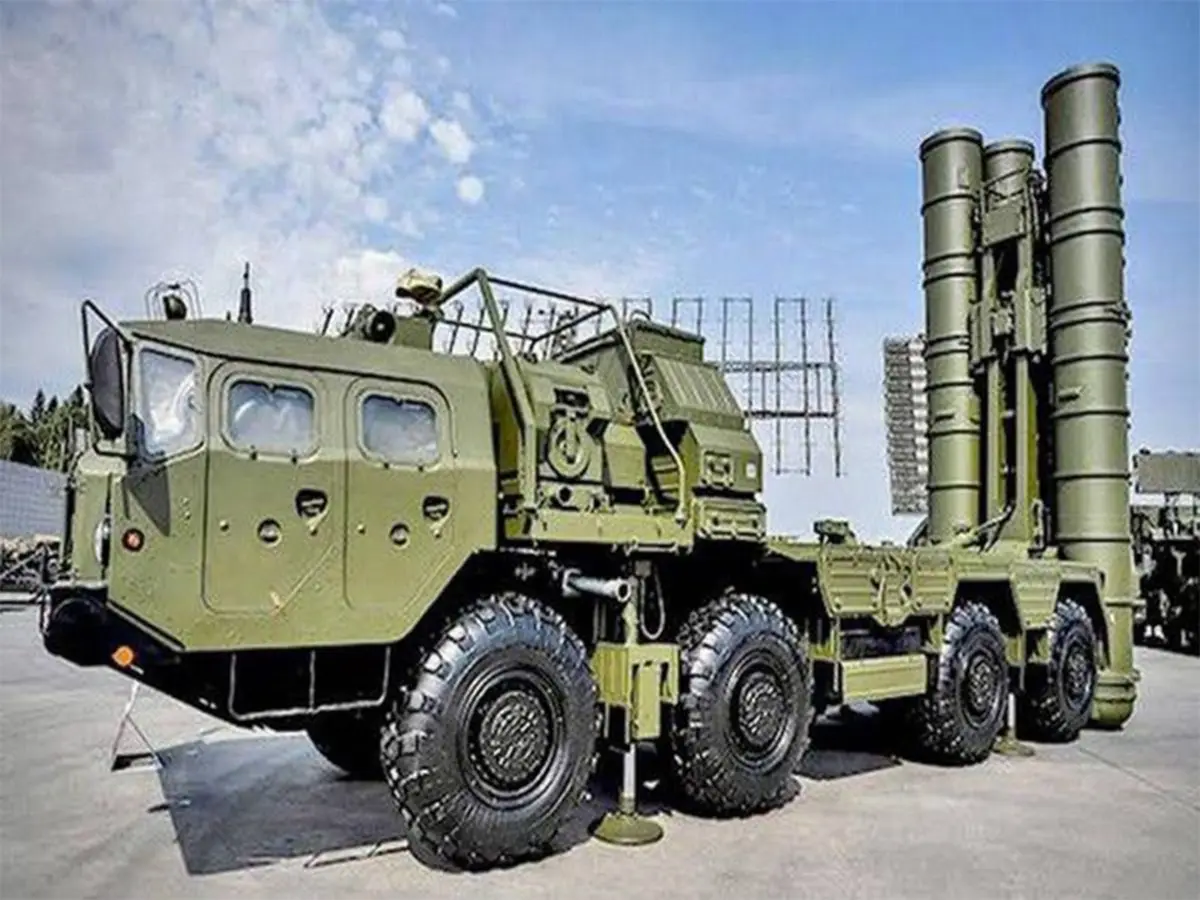
&imwidth=800&imheight=600&format=webp&quality=medium "Sky Fortress India: 4th Russian S-400 squadron lands, AI-powered defence goes live")
India has just received the fourth batch of the powerful Russian-made S-400 air defence system. This is big news because it makes India's long-range air defence network much stronger and more capable of protecting our skies.
The system reached India on schedule in May, and it is expected to be deployed soon in an active operational area, according to defence sources. In simple words, an air defence system is like a giant shield in the sky. It can spot enemy aircraft, missiles, and drones from very far away and shoot them down before they cause harm.
This delivery is part of a huge $5.43 billion deal (around ₹52,128 crore) signed between India and Russia back in 2018. Under this deal, India agreed to buy five S-400 regimental systems. What is interesting is that India went ahead with this purchase even though America repeatedly warned of possible sanctions under a law called CAATSA (Countering America's Adversaries Through Sanctions Act). By doing so, New Delhi clearly showed that it values strategic independence and national security more than outside pressure.
Three S-400 squadrons are already in service, and now the fourth has arrived. There were some delays earlier because of the Russia-Ukraine war, but things are now back on track. Officials said the fifth and final squadron under the original deal is expected to arrive in 2027.
One exciting upgrade is that the S-400 will soon get AI-based support systems. This artificial intelligence will help operators identify threats faster and pick targets more wisely. Imagine many enemy aircraft, missiles, and drones appearing on a screen at once. The AI will study them and suggest which one is most dangerous and should be tackled first. However, the final decision to fire will always be taken by a human operator, not the machine. The AI only assists; it does not control.
This smart system can recognise different kinds of threats such as ballistic missiles, fighter jets, drones, and cruise missiles. This helps the S-400 use its interceptor missiles more carefully and efficiently, without wasting them.
Trending Stories
&imwidth=180&imheight=135&format=webp&quality=medium)
'My name has always been Ilhan Omar': Congresswoman hits back at Trump, calls him a 'creep'
&imwidth=180&imheight=135&format=webp&quality=medium)
Gravitas | US attack could trigger WW III: Russian planes in Tehran, Israeli jets, US warships in action
&imwidth=180&imheight=135&format=webp&quality=medium)
Viral video shows cross falling on Colombia priest, no official confirmation | WATCH
&imwidth=180&imheight=135&format=webp&quality=medium)
US Navy, Marine Corps boards defy Trump's transgender military ban, vote to retain troops
&imwidth=180&imheight=135&format=webp&quality=medium)
Will the US attack Iran this weekend? Trump's envoy says, 'absolutely'
&imwidth=180&imheight=135&format=webp&quality=medium)
Fauzi teaser out: Prabhas takes on the British Empire in patriotic avatar | Watch
&imwidth=180&imheight=135&format=webp&quality=medium)
India-China face-off continues near Arunachal’s Taksing, reveals ITBP chief in first official confirmation of tensions
&imwidth=180&imheight=135&format=webp&quality=medium)
Nairobi building collapse: Several feared trapped after 16-storey structure crumbles; rescue operation underway
&imwidth=180&imheight=135&format=webp&quality=medium)
Pakistan airline PIA unveils new crew uniforms, faces online criticism
&imwidth=180&imheight=135&format=webp&quality=medium)
Did Neha Bora call for Bangladesh-like GenZ protest, 'anarchy' in India? WION Fact-checks viral claim
&imwidth=180&imheight=135&format=webp&quality=medium)
Scientists make digital nose that can sniff and send scents over the internet
&imwidth=180&imheight=135&format=webp&quality=medium)
'Already tired of his 9-to-5': Baby born with a moustache becomes internet sensation, video goes viral | Watch
&imwidth=180&imheight=135&format=webp&quality=medium)
Horrific video shows the moment 18-year-old fell to her death from Mexico amusement park ride
&imwidth=180&imheight=135&format=webp&quality=medium)
'Black triangle' UFO flying at 1,800mph spotted over sensitive US site: Latest Trump admin UFO file dump
&imwidth=180&imheight=135&format=webp&quality=medium)
IND-W vs ZIM-W, 1st ODI: Rawal, Charani star in India’s nine-wicket win over Zimbabwe
&imwidth=180&imheight=135&format=webp&quality=medium)
Massive 7.2 magnitude quake off Vanuatu triggers tsunami warning for coasts within 300 km
&imwidth=180&imheight=135&format=webp&quality=medium)
Microsoft AI diagnoses complex medical cases more than twice as accurately as doctors, study finds
&imwidth=180&imheight=135&format=webp&quality=medium)
Google Fitbit Air’s new health guardian feature tracks trends: How it works
&imwidth=180&imheight=135&format=webp&quality=medium)
US midterms 2026: Trump revises Canada tariffs as Susan Collins faces tight re-election race in Maine
&imwidth=180&imheight=135&format=webp&quality=medium)
US midterms 2026: Viral video claims Lindsey Graham paid underage men for sex; clip released weeks before his sister's Senate race
&imwidth=180&imheight=135&format=webp&quality=medium)
IND vs NZ 2nd T20I: Shreyas Iyer on brink of breaking Rohit Sharma’s record
&imwidth=180&imheight=135&format=webp&quality=medium)
AI deepfakes are spreading online: Why is removing them so difficult?
&imwidth=180&imheight=135&format=webp&quality=medium)
China's dancing robot turns violent bodyguard, lifts cars and fights intruders - Watch
&imwidth=180&imheight=135&format=webp&quality=medium)
Global cybersecurity alert: PHP flaws trigger website shutdowns as hack attempts surge into millions
&imwidth=180&imheight=135&format=webp&quality=medium)
'You’re a horrible little reporter, aren’t you?': Trump snaps at NBC reporter questioning his support for Ramaswamy's campaign ad
&imwidth=180&imheight=135&format=webp&quality=medium)
Chemical warehouse explosion in Mexico: Several injured in multiple blasts, 1,000 evacuated in León
&imwidth=180&imheight=135&format=webp&quality=medium)
US charges two former FBI officials with lying to Congress about Hunter Biden probes. 'Politically motivated' Trump grievance or something else?
&im=FitAndFill=(700,400)&imwidth=180&imheight=135&format=webp&quality=medium)
New Friday OTT releases (October 23, 2026): Gajab Raat, Dorothy, Chaar Yaar- Watch these 6 new movies and TV shows on Netflix, Prime Video and more
&imwidth=180&imheight=135&format=webp&quality=medium)
Anthropic security chief issues grim cyberattack warning: ‘It’s going to get a lot worse’
&imwidth=180&imheight=135&format=webp&quality=medium)
Tu Hai Meri Kiran film review: Sonakshi Sinha and Zaheer Iqbal's thriller gets tangled in its own twists
&imwidth=180&imheight=135&format=webp&quality=medium)
First Lady Melania Trump secures ceasefire between Russia, Ukraine in Oleshky: White House
&imwidth=180&imheight=135&format=webp&quality=medium)
Jenna Ortega plans TV break after Wednesday: ‘I want to leave time for new things’
&imwidth=180&imheight=135&format=webp&quality=medium)
Iran targeting US diplomats? Intelligence warns of 'advanced' assassination plots: Report
&imwidth=180&imheight=135&format=webp&quality=medium)
Emmanuel Macron calls Paris suburb shooting a 'racist terrorist attack' after one killed, several injured
The S-400 Triumf is counted among the world's most advanced long-range air defence systems. It can detect and attack aircraft, drones, cruise missiles, and ballistic missiles from great distances. It forms an important part of India's multi-layered air defence, guarding both our western and northern borders. Officials said the S-400 even played an important role during Operation Sindoor, where it proved effective in handling aerial threats and engaging targets from long range.
India is not depending only on Russian systems. Under the bigger 'Sudarshan Chakra' initiative, the country is building its own integrated air defence network. The S-400 will work together with Indian-made systems like Project Kusha, Akash, and ballistic missile interceptors to create an even tougher shield.
Project Kusha is India's own three-layer missile defence system, supported by advanced AESA radars and connected command systems. Its M1 interceptor handles short to medium threats up to 150 km away. The M2 interceptor covers medium to long range up to 250 km. The top-layer M3 interceptor is built to stop high-value threats like hypersonic weapons at distances of about 350 to 400 km.
Coming back to the fourth regiment, its first batch reached India on June 3, after Indian Air Force officials completed inspections in Russia. The remaining parts will arrive through different ports in the coming days, with full delivery expected this month. This new unit will likely be deployed near the western border, close to Pakistan, sharpening our ability to detect and stop aerial threats there.
Now let us understand the S-400 a little more. It is a mobile system, meaning it can be easily moved to protect large areas. Its development began in the 1990s, and it was first deployed in 2007. It uses several types of missiles. The 48N6E3 missile reaches 250 km, while the 40N6 has the longest range of 400 km, both used against stealth aircraft, cruise missiles, and drones. The smaller 9M96E (40 km) and 9M96E2 (120 km) missiles target ballistic missiles, jets, and drones, and four of them fit in one container.
One S-400 launcher can carry between 4 and 16 missiles. A full battalion has a command vehicle, radar vehicles, and eight launchers carrying 32 to 128 missiles together. Its upgraded 'Big Bird' radar can spot targets up to 600 km away and track up to 36 targets at once. The missiles fly at amazing speeds of up to 17,000 km/h (around Mach 14). Each missile costs between $300,000 and $2 million, that is roughly ₹2.88 crore to ₹19.2 crore.
In short, India's skies are now better guarded than ever before.
