Reassessing rules-based order: India, Japan, and ASEAN in changing Indo-Pacific

&imwidth=600&imheight=450&format=webp&quality=medium "Reassessing rules-based order: India, Japan, and ASEAN in changing Indo-Pacific")
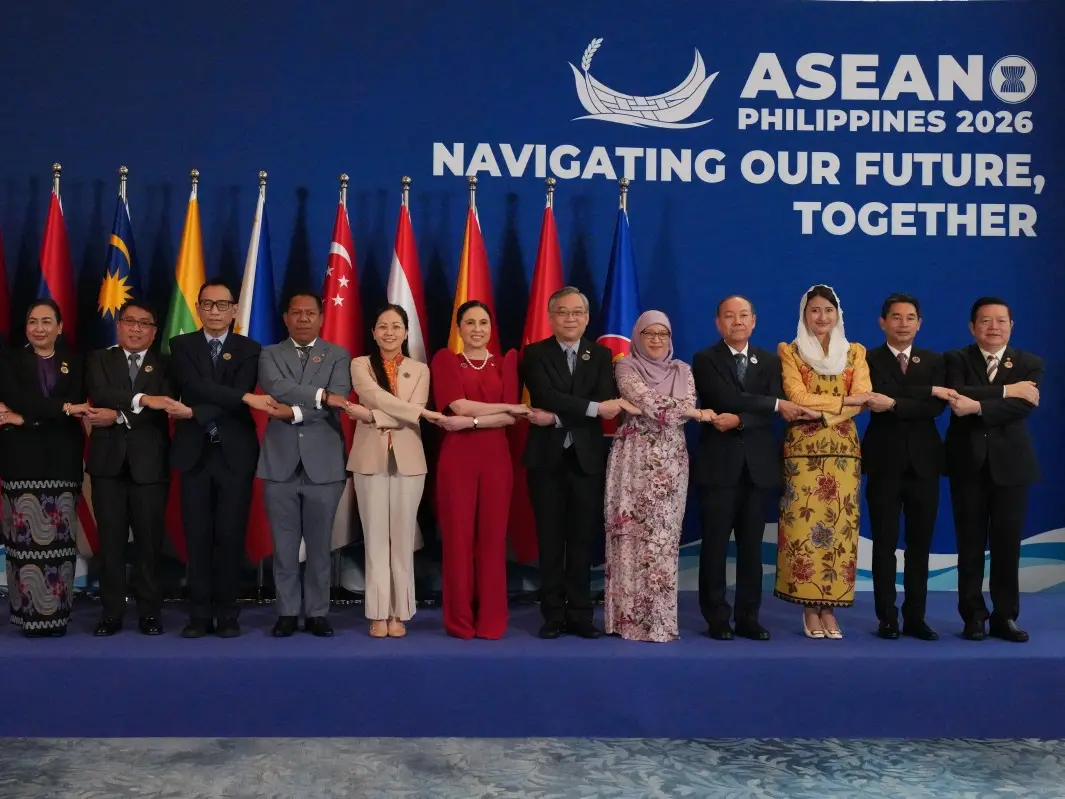
Reassessing rules-based order: India, Japan, and ASEAN in changing Indo-Pacific Photograph: (AFP)
The Indo-Pacific has emerged as the epicenter of global economic dynamism, maritime connectivity, and geopolitical competition. At the same time, it is a region where fundamental principles and adherence to international law are increasingly being tested
Written by Dr Shristi Pukhrem
The question of whether the rules-based order is still alive is both timely and consequential, particularly in the context of the Indo-Pacific. The answer is neither a straightforward affirmation nor a definitive negation. Rather, the rules-based order today is under strain, contested, and evolving. Despite these challenges, it remains relevant and continues to be actively upheld by key regional actors, most notably India, Japan, and ASEAN (Association of Southeast Asian Nations).
The Indo-Pacific: A region in flux
The Indo-Pacific has emerged as the epicenter of global economic dynamism, maritime connectivity, and geopolitical competition. At the same time, it is a region where fundamental principles such as sovereignty, freedom of navigation, peaceful dispute resolution, and adherence to international law are increasingly being tested. The contemporary rules-based order, largely shaped in the aftermath of World War II, was designed to ensure predictability and stability through institutions and norms. However, rising unilateral actions, maritime disputes, and intensifying strategic rivalries have raised concerns about the durability of these rules in guiding state behaviour.
India and Japan: Pillars of a free and open Indo-Pacific
Despite mounting pressures, the persistence of the rules-based order is evident in the continued commitment of regional powers. India and Japan have become key advocates for a free, open, and inclusive Indo-Pacific. Japan’s vision of a Free and Open Indo-Pacific (FOIP), first articulated under Shinzo Abe, emphasizes maritime security, rule of law, and economic connectivity. Central to this vision is respect for international legal frameworks such as the United Nations Convention on the Law of the Sea (1982), which serves as the cornerstone of global maritime governance.
Trending Stories
)
)
)
)
)
)
)
)
)
)
)
)
)
&im=FitAndFill=(700,400))
)
)
)
)
)
)
)
)
)
)
)
)
)
)
)
)
)
)
)
)
)
)
)
)
India complements this approach through its doctrine of Security and Growth for All in the Region (SAGAR), announced by Prime Minister Narendra Modi in 2015 and in March 2025 as Mutual and Holistic Advancement for Security and Growth Across Regions (MAHASAGAR). Coupled with the Act East Policy (upgraded from the Look East Policy in 2014), India’s Indo-Pacific vision underscores openness, inclusivity, and the centrality of ASEAN. India’s official Indo-Pacific Oceans Initiative (IPOI), launched in 2019, further operationalizes this vision through pillars such as maritime security, disaster risk reduction, and sustainable use of marine resources.
ASEAN centrality and regional architecture
At the heart of the Indo-Pacific’s institutional architecture lies the ASEAN, established in 1967 through the Bangkok Declaration. ASEAN centrality remains a foundational principle for maintaining regional stability and dialogue. ASEAN-led mechanisms including the East Asia Summit (EAS) and the ASEAN Regional Forum (ARF) provide critical platforms for confidence-building, multilateral engagement, and diplomatic dialogue. These institutions play a vital role in fostering norms of peaceful dispute resolution and cooperative security.
The ASEAN Outlook on the Indo-Pacific (AOIP), adopted in 2019, reinforces principles that closely align with those advocated by India and Japan: openness, transparency, inclusivity, respect for international law, and development-oriented cooperation. The AOIP notably avoids securitized frameworks and instead emphasizes dialogue and cooperation, thereby offering a bridging mechanism between competing strategic visions.
Trilateral cooperation: Opportunities and pathways
The evolving Indo-Pacific landscape presents significant opportunities for enhanced cooperation among India, Japan, and ASEAN.
- Maritime Security and Capacity Building: Southeast Asian nations face growing challenges in maritime domain awareness, illegal, unreported and unregulated (IUU) fishing, and maritime law enforcement. India has engaged in capacity-building through initiatives such as training programs under the Indian Coast Guard and information-sharing through the Information Fusion Centre–Indian Ocean Region (IFC-IOR). Japan, through the Japan International Cooperation Agency (JICA), has supported coast guard modernization and maritime infrastructure development across Southeast Asia.
- Connectivity and Infrastructure Development: Transparent and sustainable infrastructure remains essential for maintaining a stable regional order. Japan’s Partnership for Quality Infrastructure (2015) emphasizes economic efficiency, environmental sustainability, and debt transparency. India’s connectivity projects such as the India–Myanmar–Thailand Trilateral Highway (IMT) and the Kaladan Multimodal Transit Transport Project (KMTTP) aim to physically link South Asia with Southeast Asia. Collaborative initiatives involving ASEAN can reinforce rules-based development norms and offer viable alternatives to opaque financing models.
- Supply Chain Resilience and Economic Cooperation: The COVID-19 pandemic and subsequent geopolitical disruptions have exposed vulnerabilities in global supply chains. The Supply Chain Resilience Initiative (SCRI), launched in 2020 by India, Japan, and Australia, seeks to diversify supply networks and reduce over-dependence on single sources. Expanding this framework to include ASEAN economies could significantly enhance regional economic resilience.
- Norm-Building in Emerging Domains: The future of the rules-based order will increasingly be shaped in emerging domains such as digital governance, cybersecurity, climate change, and critical technologies. Frameworks such as the ASEAN Digital Masterplan 2025 and India’s Digital Public Infrastructure initiatives provide opportunities for collaborative norm-setting. Similarly, Japan’s leadership in green technologies and climate finance can complement ASEAN’s sustainability goals under the ASEAN Community Vision 2025.
Flexibility and inclusivity: Strengths of regional order
Maintaining a rules-based order does not necessitate rigid or uniform structures. The Indo-Pacific is characterized by diversity in governance systems, economic priorities, and threat perceptions. Its resilience lies in its flexibility and inclusiveness. In this context, the complementary strengths of India, Japan, and ASEAN become particularly significant. India offers geographic and strategic connectivity between the Indian Ocean and Southeast Asia; Japan contributes technological expertise and financial resources; and ASEAN provides institutional legitimacy and convening power that sustains regional multilateralism.
Conclusion
The rules-based order in the Indo-Pacific is undoubtedly under pressure, but it is far from obsolete. Its endurance depends on the continued commitment and cooperation of regional actors. India, Japan, and ASEAN, through shared principles and pragmatic engagement, possess both the responsibility and the capacity to sustain and revitalize this order. The critical question, therefore, is not whether the rules-based order is alive, but who will shape and uphold it in the years to come. In the Indo-Pacific Region, these three actors are uniquely positioned to lead that effort.
The author, Dr Shristi Pukhrem is a Director, Act East Centre & Visiting Fellow, India Foundation. India Foundation is an independent research centre focused on the issues, challenges and opportunities of the Indian polity.