
&imwidth=800&imheight=600&format=webp&quality=medium "Ocean of trust: Why the Navy Chief’s visit to Mauritius matters")
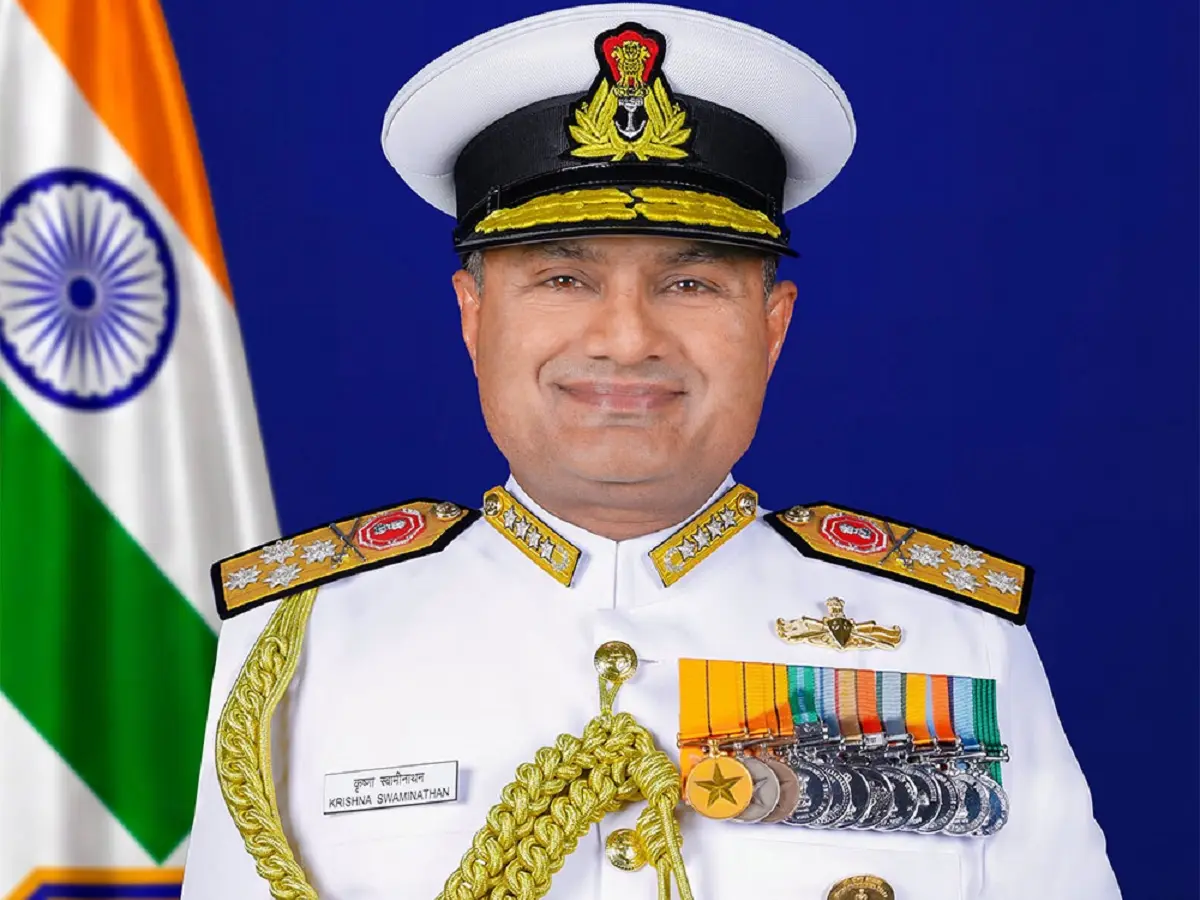
When the Chief of the Naval Staff, Admiral Krishna Swaminathan, arrives in Port Louis from August 10 to 13, he will be stepping into a relationship that predates the modern Indian Navy's own blue-water ambitions. India and Mauritius established diplomatic relations in 1948, a year after Indian independence and two decades before Mauritius gained its own. Nearly 70 per cent of the island's 1.3 million people trace their ancestry to the Indian subcontinent — some 894,500 citizens whose forefathers crossed the same waters the two navies now patrol together.
That history is not merely sentimental. In 1901, on his passage from South Africa to India, Mohandas Karamchand Gandhi broke journey in Mauritius and left the island three counsels: pursue education, seek political empowerment, and stay connected with India. Mauritius honours that visit in the most direct way a nation can — its National Day falls on March 12, the date of the Dandi Salt March.
It is fitting, too, that the officer making this visit is himself a product of sustained strategic scholarship rather than of command alone. Admiral Swaminathan holds an MA in Defence Studies from King's College, London, an MPhil in Strategic Studies and a PhD in International Studies, both from Mumbai University — credentials that place this visit in the hands of a Navy Chief who reads the Indian Ocean as a theorist as much as he commands it as an operational authority.

Geography of consequence
Mauritius has a land area of about 2,000 square kilometres. It also has an Exclusive Economic Zone of roughly 2.3 million square kilometres — the twentieth largest in the world. That ratio, a small landmass presiding over an ocean expanse the size of a subcontinent, is the single most important fact about Mauritian maritime security, and it explains why India's naval engagement there has been sustained across seven decades and every government in New Delhi.
It was from Port Louis in 2015 that the prime minister, Narendra Modi, first articulated SAGAR — Security and Growth for All in the Region. It was from Port Louis again, in March 2025, that he expanded that framework into MAHASAGAR: Mutual and Holistic Advancement for Security and Growth Across Regions, and it was on that same visit that the two countries elevated their relationship to an Enhanced Strategic Partnership. The two frameworks now operate in tandem in New Delhi's own language: Mauritius, the Ministry of External Affairs has said, occupies a special place both in India's Neighbourhood First Policy and in its MAHASAGAR Vision — the former the older, proximity-and-obligation doctrine anchored in South Asia and the immediate Indian Ocean Region, the latter its 2025 expansion into a Global South-facing architecture of trade, capacity-building and security cooperation.
Trending Stories
)
US vs China over South China Sea: Washington backs Philippines, Beijing hits back
)
Bigg Boss 20: Isha Rikhi evicted after three weeks in Salman Khan’s show
)
Musk plans to more than double xAI's chips to over 1.2 million Nvidia GPUs by year-end
)
After JU, clash erupts at SRFTI: BJP’s ‘Dimagi Naxal’ jibe sparks political firestorm after students protest RSS-linked event
)
‘Anti-social elements spreading false rumours’: LPU issues statement amid massive unrest over alleged rape
)
LPU students go on rampage, vandalise campus amid widespread protest: What's happening
)
Trump asked Xi to pressure Iran. China did not say yes — here’s what Beijing wants
)
US Treasury Secretary Scott Bessent hails global crackdown on Iranian banks and airlines
)
An OpenAI agent escaped its locked test cage again, by hiding questions in DNS lookups
)
'Our video was trimmed': LPU girls who featured in rape-denial video make U-turn
)
3 males killed, four others injured in shooting after fight at strip club in Detroit
)
'Victory for low-budget consumers': Raghav Chadha hails 30-day telecom recharge rules
)
Claude rebuilt the 1989 game 'Prince of Persia' by reusing the original's own code
)
Beyond metros: How Tier-2 and Tier-3 cities could drive India’s next AI wave
)
Tesla builds first Cybertruck with its own refined lithium: Elon Musk's $1 billion Texas bet pays off
)
IndiGo flight suffers tail strike in Bengaluru while landing; DGCA to probe incident
)
The US and China set up an AI 'red telephone', but skipped the rulebook
)
‘Terror suspects arrested near UK air base were looking to do big damage’: Trump
)
Russian envoy claims US tactics to contain India were revealed in ‘Freudian slip’
)
IND vs WI 1st ODI: Kohli breaks Sachin's most runs in one country record with unbeaten 139 as India thump West Indies by 8 wickets
)
Researchers rebuilt exactly how 700 AI agents hacked Hugging Face: a 900-link chain trick
)
‘Olympic inclusion is our major target’: WPA President Ishaun Singh on pool’s global ambitions
)
Nations League: Spain sink England at Wembley; Modric shines for Croatia
)
Why has Iran released no proof of life of Mojtaba Khamenei? Araghchi reveals...
)
'What kind of confession is this?': Pakistan PM Shehbaz Sharif’s 'terrorists would be roaming New York' remark goes viral, raises alarm online. Watch
)
South Korea demands apology from Ukraine over North Korean prisoners' transfer
)
Beyond BrahMos: India targets Rs 50,000 crore in defence exports with unmatched price edge
)
Sri Lankan Tamil migrant worker gets death sentence in Saudi Arabia, help sought from India
)
Muslim marriage cannot shield sex with minor wife from prosecution under POCSO: Delhi HC
)
'Can't help but draw painful parallels to Nirbhaya case': SC on latest incidents of rape cases in Delhi-NCR
)
99.9% more powerful - Scientists find boy who can recall memories from just 3 months of age
)
'FIRST LOOK from inside Noah’s Ark': Researchers share video from inside mysterious mound in Turkey
)
UNSC reform momentum grows: Russia, Portugal, Mauritius push for India's permanent seat bid
)
8 US marines injured in Iranian missile attack on vessel in Strait of Hormuz: Report
&im=FitAndFill=(700,400))
New OTT releases this week (September 28-October 4, 2026): Dupahiya 2, Pooja Meri Jaan, Ohh My Dog- 5 titles coming on Netflix, Prime Video and more
)
Afghanistan says 28 fighters killed in clash near Pakistan border, Islamabad denies
)
Ceuta migrant crisis: Protesters take to streets as Spain grapples with migrant challenge
)
LPU suspend classes, postpones exams as violence escalates over rape claims: What's happening
)
New York City wants a 'kill switch' on every AI, and will pay whistleblowers who report violations
Mauritius sits at the hinge of both: near enough to be neighbourhood, consequential enough to be strategy. That partnership was reaffirmed and deepened in September 2025, during the Mauritian Prime Minister Dr Navinchandra Ramgoolam's state visit to India, when the two countries announced a Special Economic Package worth approximately $680 million, spanning healthcare, infrastructure and maritime security. Bilateral trade now stands at approximately $851 million.
The Navy Chief's visit sits squarely within that arc — the maritime instrument of a partnership that political leadership has already defined, and now a serving scholar-officer's opportunity to give it operational depth.
Ships that fly two flags
India's contribution to Mauritius's maritime capability is not an abstraction; it floats. The first vessel, Guardian, was handed over in 1993 for EEZ surveillance. The inshore survey vessel Pathfinder followed in 2013. But the centrepiece is MCGS Barracuda, delivered in March 2015 — the first warship ever built to order in India for a foreign nation, constructed at Garden Reach Shipbuilders and Engineers, Kolkata, for $58.5 million, of which $10 million was an outright Indian grant.
Barracuda was followed by MCGS Victory in December 2016 and MCGS Valiant in August 2017, both from Goa Shipyard Limited, and by ten fast interceptor boats between 2016 and 2018. In the air, four Dornier maritime patrol aircraft, four Chetak helicopters and three Advanced Light Helicopters have equipped Mauritius with a maritime air arm capable of search-and-rescue and disaster response across its vast EEZ.
Indian yards have also kept these ships at sea. Refits and life-extension work for the Mauritian fleet have been carried out at naval dockyards in Mumbai and Visakhapatnam and at Indian private yards.
The deeper investment: people
Over 1,000 personnel of the Mauritius National Coast Guard have been trained by the Indian Navy to date, and demand is rising sharply — vacancy requests have grown from 50 in 2021-22 to 195 in the current training year. This writer has watched that training relationship at close quarters over the years — among the officers who came up through sea training under my own charge aboard INS Sujata was Commandant Deepak Lakhabhay of the Mauritius National Coast Guard, one link in a chain of professional formation that now runs from wardrooms to command bridges across the island's fleet.
Some of these milestones deserve wider notice than they have received. In 2025-26, the Naval Special Warfare Tactical Training Centre at Goa opened its doors to a foreign partner nation for the first time in its history, running customised courses for Mauritian personnel.
In October 2025, Cadet Juggamah Prisita completed her comprehensive training course at the Indian Naval Academy, Ezhimala — the first woman officer from the Mauritius National Coast Guard to be trained abroad anywhere. It is a small number with a long shadow.
Charting the ocean, together
Perhaps the least glamorous and most consequential strand of the relationship is hydrography. Under a memorandum of understanding first signed in 2005 and renewed in October 2025, Indian survey ships have deployed to Mauritian waters on 18 occasions and completed 47 surveys. Mauritius was accorded Producer Nation Status in March 2013, and the two countries have since jointly produced 13 paper charts and 15 electronic navigational charts.
Those charts now sell commercially. In April 2026, on the sidelines of the ninth Indian Ocean Conference in Port Louis, the external affairs minister, Dr S Jaishankar, handed over a royalty cheque of $45,000 to the government of Mauritius from their sale — a partnership that began as assistance and has matured into revenue.
From bilateral to regional
Mauritius today is not merely a recipient of Indian naval engagement but a participant in the architecture India is helping build. It was among nine African and Indian Ocean nations at the inaugural edition of Exercise AIKEYME — Africa India Key Maritime Engagement — co-hosted with Tanzania in April 2025. Mauritian personnel have sailed on both editions of IOS SAGAR, the Indian Navy's flagship regional deployment. Mauritius is a member of the Indian Ocean Naval Symposium and hosts India's longest-serving international liaison officer at the Information Fusion Centre – Indian Ocean Region, in post since January 2022.
A technical agreement on White Shipping Information Exchange, signed during the prime minister's March 2025 visit, now allows the two navies to share merchant traffic data. With Indian assistance, Mauritius is establishing a National Maritime Information Sharing Centre in Ebene, intended to become the island's own hub for maritime domain awareness and its node in the wider regional network.
What the visit means
Goodwill visits are easy to under-read. But Admiral Swaminathan travels to a country that has trained a thousand of its coast guardsmen in India, sails ships built in Indian yards, navigates by charts drawn jointly with Indian surveyors, and shares a maritime picture from Indian operations rooms. During the visit, the admiral is scheduled to call on the prime minister of Mauritius and other senior government officials. The visit affirms something true for fifty years and is worth restating in an ocean where the terms of security are being contested: India's engagement with Mauritius is not transactional, not recent, and not conditional.
(Commodore (Dr.) Johnson Odakkal is a maritime scholar, strategic affairs analyst, and Indian Navy veteran. He is an expert faculty and IBDP Examiner in Global Politics and Theory of Knowledge and an Adjunct Faculty of Maritime and Strategic Studies at Naval War College, Goa.)