Is America ready for President AOC? The question Democrats can no longer ignore

&imwidth=600&imheight=450&format=webp&quality=medium "Is America ready for President AOC? The question Democrats can no longer ignore")
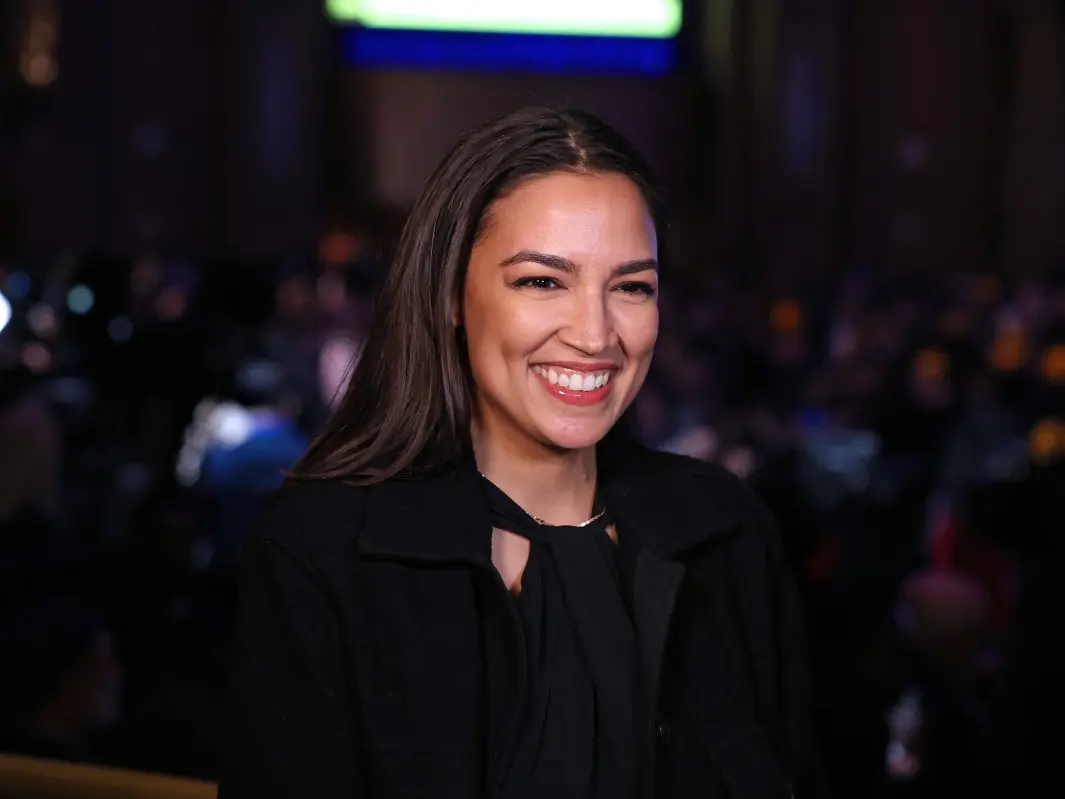
Alexandria Ocasio-Cortez Photograph: (AFP)
AOC's potential 2028 White House bid is gaining momentum, but can her progressive politics, youth and polarising image win over America's voters?
For years, Alexandria Ocasio-Cortez has been treated as a political phenomenon rather than a potential president. She was the young progressive who shocked the Democratic establishment in 2018, the congresswoman who could dominate a news cycle with a social-media post, and one of the most recognisable faces of the American left.
Now, that assumption may be changing.
At 36, Ocasio-Cortez is openly keeping her 2028 options alive. In an August 9 interview with ABC News, she declined to rule out either a presidential run or a challenge to Senate Democratic Leader Chuck Schumer. Her comments came as polling and prediction markets increasingly placed her among the leading potential Democratic contenders. The question, therefore, is no longer simply whether AOC wants to be president. It is whether America is ready for her. And that is a much more complicated question.
AOC is no longer the same politician
The AOC who entered Congress in 2019 was easy for her critics to caricature. She was young, unapologetically progressive and closely associated with the Democratic Socialists of America. Her politics were built around Medicare for All, climate action, economic inequality, workers' rights and a fundamental challenge to the political establishment.
But six years in Washington have changed her.
Trending Stories
)
)
)
)
)
)
)
)
)
)
)
)
)
)
)
)
)
)
)
)
)
)
)
)
)
)
)
)
)
)
)
)
)
)
&im=FitAndFill=(700,400))
)
)
)
)
Ocasio-Cortez remains firmly on the progressive side of the Democratic Party, but she has also demonstrated a greater understanding of political power and coalition-building. Her ability to communicate directly with voters, particularly younger Americans, has become one of her biggest political assets. She is no longer simply the insurgent who defeated a veteran Democrat. She is part of the Democratic Party's national conversation about what comes next.
That distinction matters. The Democratic Party is searching for a new identity after the Biden and Harris years, while progressives are increasingly testing whether their ideas can translate into electoral victories. AOC's growing national profile comes at precisely the moment when Democrats are debating whether the answer lies in moderation or a more aggressive progressive agenda.
Her biggest strength may also be her biggest weakness
There is an obvious reason AOC can excite Democrats. She knows how to command attention. In an era when political communication is increasingly conducted through Instagram, TikTok, YouTube and X rather than traditional campaign rallies, Ocasio-Cortez possesses something many conventional politicians spend millions trying to manufacture: an authentic digital following. She can speak to voters without sounding like a press release.
That is particularly valuable with younger Americans, many of whom have little emotional connection to the political establishment. But presidential elections are not won on social media. They are won in Pennsylvania, Michigan, Wisconsin, Arizona, Georgia, Nevada and other battlegrounds where candidates must build broad coalitions that extend far beyond their ideological base.
And this is where the AOC question becomes difficult. Can someone identified so strongly with the progressive wing of the Democratic Party appeal to moderate voters, suburban voters, working-class voters and older Americans who may not share her politics? That is the test she has yet to pass.
America has changed, but not necessarily enough
There is a temptation to look at AOC's rise and conclude that America has simply moved to the left. That would be too simplistic. America is not one electorate. It is a collection of competing political identities, economic anxieties, cultural fears and regional realities. The country is simultaneously becoming more comfortable with women in positions of power and more polarised over issues such as immigration, abortion, healthcare, race and the role of government.
AOC represents one answer to those tensions. Her supporters see a politician prepared to challenge entrenched interests and speak openly about inequality. Her critics see a symbol of an ideological left that has moved too far from the political centre. Both perceptions matter. A presidential candidate does not get to choose which version of themselves voters see.
The gender question cannot be ignored
There is another uncomfortable reality. America has elected a Black president. It has elected women as vice-president. But it has never elected a woman president. Hillary Clinton came close in 2016. Kamala Harris became the Democratic nominee in 2024 but failed to defeat Donald Trump. AOC would therefore enter a presidential race carrying two identities that have historically generated intense political reactions: she would be a woman and a progressive.
Her recent decision to publicly discuss freezing her eggs has already demonstrated how differently female politicians can be scrutinised. Ocasio-Cortez has framed the issue around women's autonomy and the difficulty of balancing career and personal choices, while the disclosure has generated both support and political criticism. That episode may seem unrelated to presidential politics. It isn't. It is a reminder that if AOC eventually runs, almost every aspect of her life will become political ammunition. The question is whether she can withstand that scrutiny, and whether voters will ultimately judge her more by her policies than by the culture-war narratives built around her.
The Democratic primary may be harder than the general election
Ironically, AOC's first major challenge may not be Republicans. It may be Democrats. The party is likely to have a crowded 2028 field. Gavin Newsom, Pete Buttigieg, Mark Kelly and other nationally recognised Democrats could all compete for the nomination.
AOC would have to convince Democratic voters that she is not merely the most exciting progressive candidate, but the candidate capable of actually winning the White House. That means proving she can broaden her coalition. It also means answering difficult questions about foreign policy, national security, the economy, immigration and the country's role in the world, issues on which presidential candidates face a level of scrutiny that congressional politicians rarely experience. The early signals are encouraging for her.
But early polls are not elections. Prediction markets can capture political momentum, but they do not put voters in polling booths. And a presidential campaign is an entirely different political ecosystem.
Yet dismissing AOC could be an even bigger mistake
This is where Democrats should be careful. It would be easy for party insiders to look at AOC and conclude that she is simply too progressive to win nationally. That argument may be increasingly outdated. The political environment that produced AOC in 2018 is not the same environment that exists today. Younger voters are more politically engaged, traditional media has less control over political narratives, and distrust of established institutions remains high.
The Democratic Party cannot simply tell a new generation of voters that their preferred candidates are too radical.
It has to understand why those voters are attracted to them in the first place. AOC's appeal is not solely ideological. It is also generational. She represents a generation that entered adulthood amid student debt, soaring housing costs, economic insecurity, climate anxiety and deep distrust of institutions. Whether one agrees with her solutions or not, she speaks directly to those frustrations. That is politically powerful.
So, is America ready?
Not yet, but perhaps that is the wrong question. America rarely announces that it is ready for a political transformation.
It simply arrives at one. Barack Obama was once dismissed as too inexperienced. Donald Trump was once dismissed as too unconventional to become president. Hillary Clinton was once considered almost inevitable. Political history is full of candidates who appeared impossible until they weren't.
AOC may or may not become president. She may decide to run for the Senate instead. She may ultimately conclude that 2028 is not her moment. She may enter the race and lose the Democratic nomination. But something important has already happened. The idea of Alexandria Ocasio-Cortez as president is no longer politically absurd.
It is now a serious question. And perhaps the bigger question for America is not whether it is ready for AOC. It is whether the Democratic Party is ready to find out. Because if Ocasio-Cortez does run in 2028, she will not simply be asking Americans to vote for another Democrat. She will be asking them to decide what kind of Democrat, and what kind of America, they want next. That is a much bigger election than AOC alone.
Disclaimer: The views of the writer do not represent the views of WION or ZMCL. Nor does WION or ZMCL endorse the views of the writer.

