
&imwidth=800&imheight=600&format=webp&quality=medium "How China makes a protest disappear: Inside the machinery of real-time censorship")
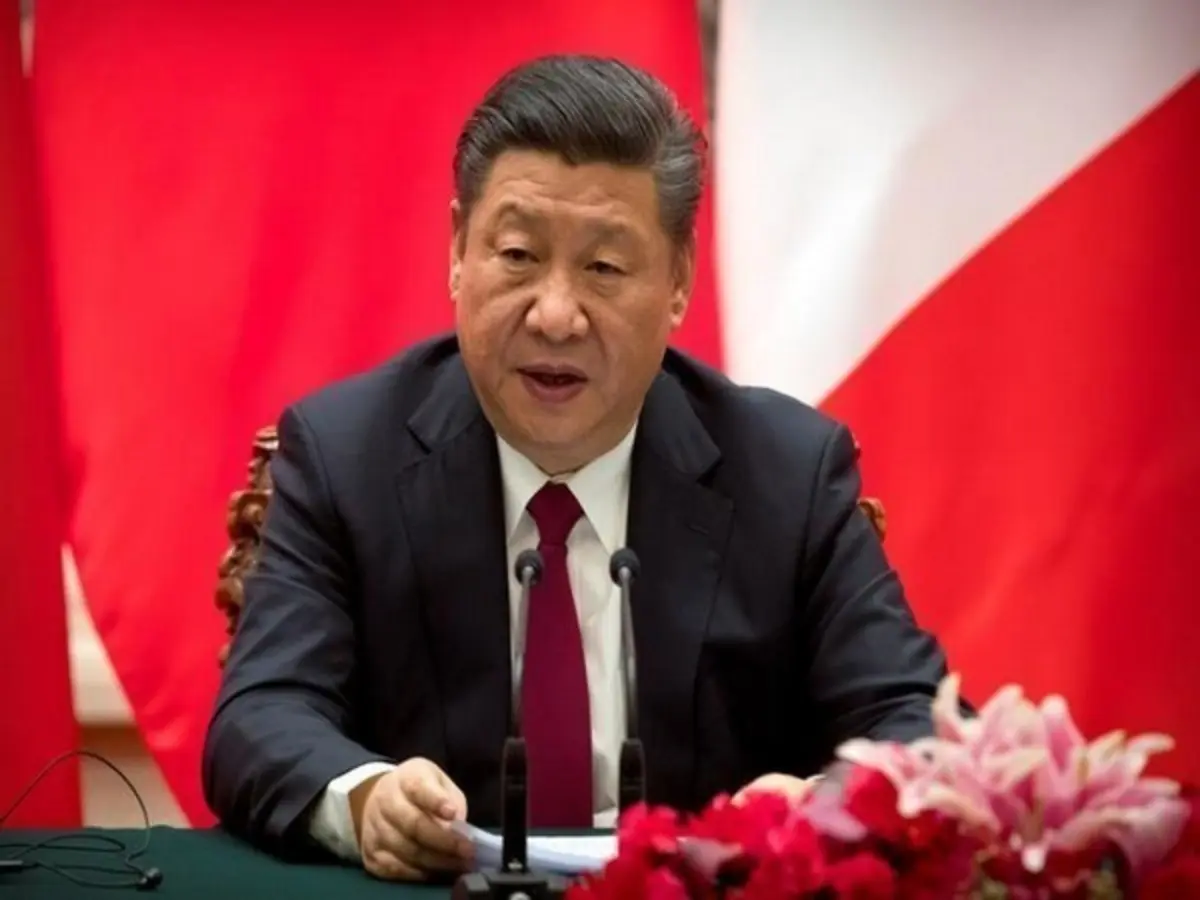
China’s response to public expression is most visible on the streets, where police arrive quickly and gatherings are dispersed before they grow. But the more decisive battle takes place elsewhere — on servers, content dashboards, messaging platforms and keyword filters. In China’s largest cities, including Shanghai, a protest does not simply end; it is erased. This digital erasure is not improvised. It is the result of a well-developed system that treats information itself as a site of political control.
Understanding this system requires looking at the steps that unfold in the minutes after a civic incident begins. The process is technical, coordinated and remarkably fast.
Step 1: Automated detection through keyword patterns

Chinese platforms rely on a mixture of automated filters and human moderators. Certain terms — names of streets, slogans, even coded references to past incidents — trigger heightened monitoring. When residents in Shanghai posted messages during the 2022 unrest, relevant keywords began disappearing almost immediately. Images were flagged automatically, even when captions avoided political language.
These filters are not fixed lists. They update dynamically when a topic begins to trend. A phrase that was harmless an hour earlier may become sensitive without notice, reducing the visibility of posts that would otherwise circulate rapidly.
Step 2: Image recognition and metadata scans
Trending Stories
&im=FitAndFill=(700,400))
National Handloom Day 2026: From Alia Bhatt to Samantha Ruth Prabhu; Actresses who celebrated India's textile heritage as brides
)
The Royals enter the Doctor Who universe: King Charles and Queen Camilla beam into Commonwealth Games in TARDIS
)
Unitree Robotics targets $9 billion valuation in landmark IPO backed by DeepSeek and Tencent
)
India names 27 sites in Arunachal Pradesh
)
Bharat Bhhagya Viddhaata OTT: When will Kangana Ranaut's film stream online?
&im=FitAndFill=(700,400))
How many soldiers operate one S-400 battery?
)
Shakib Al Hasan ready to return to Bangladesh—under one condition
)
‘Fake news’: MEA rejects report claiming India sought defence pact with Israel after Pakistan, Saudi Arabia, Turkey deal
)
Rockstar to unveil GTA 6 extended look ahead of November launch
)
Russia forms Ukrainian Volunteer Spetsnaz Brigade to fight Ukraine
)
Drug-resistant fungus that hides in hair and enters bloodstream reported in 23 US states
)
Technology transfer deal boosts India's defence manufacturing ambitions
)
Border row erupts in Europe after Ceuta crossings, Spain imposes border controls on Italy
)
Morale plummets on USS Abraham Lincoln: Are US sailors reaching a breaking point? | GRAVITAS
)
'Security can't be bought with Pakistan, Turkey deal': Iran tells Saudi Arabia
)
Baba Vanga's 2026 prophecy: 2 predictions 'already came true', 3 terrifying ones remain. Details inside
)
Colombia’s new president Abelardo de la Espriella vows to ‘defeat narco-terrorists’, signals hardline shift
&im=FitAndFill=(700,400))
New Friday OTT releases (August 7, 2026): Operation Safed Sagar, Vadhandhi, Main Vaapis Aaunga- 6 movies and TV shows on Netflix, Prime Video and more
)
Squadron Leader Bhawana Kanth scripts history as Indian Air Force gets its first woman ‘Top Gun’ pilot
)
RSS says Gen Z protests reflect genuine distress
)
Trump says Iranian school bombing photos could be AI-generated - 'I don’t think...'
)
IAF officer held for sharing sensitive information in 'honey trap' case, booked under Official Secrets Act
)
Stray Kids under scrutiny? Fans react to Grammy submission silence after BTS boycott
&im=FitAndFill=(700,400))
Why the Su-30MKI doesn't need external fuel tanks to fly vast distances
)
Jugal Hansraj reunites with Shekhar Kapur after 40 years for Masoom: The Next Generation
)
New speed limits, automatic challans: Big traffic change coming to Delhi-Meerut Expressway. All you need to know
)
India officially names 27 places in Arunachal to counter China's renaming claims
)
Trump calls White House ballroom ruling a 'national disgrace' as court says Congress approval needed
)
US sanctions Iran’s crypto network after Strait of Hormuz attacks, offers $15m bounty for intel on IRGC finance
&im=FitAndFill=(700,400))
Why the Su-30MKI is one of the heaviest fighters ever built
)
Uttarakhand young innovator builds India's own flying vehicle, conducts first test flight: WATCH
)
Chilling video shows students take cover as teen opens fire at Thai school
)
Reese Witherspoon's father hospitalised after poolside incident in Nashville: Report
Modern censorship in China is no longer limited to text. Visual content is scanned for indicators of gatherings, such as clusters of people, police presence or placards. Even without explicit banners, footage showing groups assembling in public spaces can trigger review.
Metadata — timestamps, location tags and device identifiers — also contributes to the platform’s assessment. If multiple users in the same area post similar material simultaneously, the system flags the cluster for immediate moderation.
Step 3: Rapid human intervention
Once automated systems elevate an issue, teams of human moderators review flagged content. In sensitive cities like Shanghai, these teams operate with speed and discretion. Entire hashtag threads can be purged within minutes. Users may find their posts visible only to themselves, a tactic known as “shadow restriction” that prevents content from spreading without alerting the user.
Accounts that repeatedly upload sensitive material may be suspended temporarily. In more serious cases, platform security teams forward information to local authorities for offline follow-up.
Step 4: Offline enforcement reinforces online silence
China’s approach blends digital censorship with physical intervention. After incidents in Shanghai, individuals reported receiving phone calls or visits from police referencing posts that had already been removed online. Some were asked to delete photos stored on their devices; others were warned about “spreading rumours”.
The possibility of offline repercussions discourages users from sharing information even in private groups. Over time, people learn to self-censor, reducing the volume of material before authorities intervene.
Step 5: Memory removal through search sanitisation
Once an incident is contained, the next step is narrative control. Searches for relevant locations, dates or keywords return unrelated content — tourist photos, civic announcements, or cultural events. Posts from the time of the incident are buried under newly boosted material.
This sanitisation builds an information vacuum. Without persistent evidence, it becomes difficult for domestic users to revisit or discuss an event, and harder for external observers to piece together what happened.
Step 6: Platform messaging aligns with official narratives
Chinese platforms do not publicly acknowledge removals. Instead, they amplify approved messaging: law-and-order updates, community bulletins and statements from local authorities.
The absence of reference to civic unrest creates the impression that nothing significant occurred.
In Shanghai, this approach maintains the city’s image as a stable financial centre, where everyday life appears untouched by public frustration.
A system designed to prevent momentum
The success of China’s censorship system lies in its ability to intervene before public expression gathers pace. By removing digital traces early and often, the state prevents a narrative from forming, which in turn helps suppress physical mobilisation.
This process also obscures the breadth of public sentiment. When posts disappear instantly, it becomes impossible to gauge how many people shared similar concerns, and whether frustration was more widespread than the brief assembly suggested.
Why this matters outside China
China’s approach is increasingly studied by governments seeking to manage civic expression in the digital age. Its combination of automated scanning, human moderation and offline consequences presents a model that can be replicated elsewhere, particularly by regimes seeking to pre-empt dissent before it becomes visible.
For researchers, journalists and rights groups, understanding the mechanics of Shanghai-style erasure is essential. The issue is not only whether people can gather in public, but whether the record of that gathering survives long enough to inform public debate.