
&imwidth=800&imheight=600&format=webp&quality=medium "Forging strategic ties: How India–Australia army cooperation shapes the Indo-Pacific")
The forthcoming visit of Australian Army Chief Lieutenant General Simon Stuart to India, scheduled from 10–14 August 2025, comes at a moment when the land-domain relationship between New Delhi and Canberra is emerging as a decisive pillar of Indo-Pacific security. Far from being a ceremonial exchange, this visit signals the consolidation of an Army-to-Army partnership that has matured into a strategic enabler for both nations.
In a region defined by shifting power balances and unconventional threats, building operational trust between land forces offers a form of resilience that neither geography nor diplomacy alone can guarantee.
Land Forces: The Overlooked Foundation of Indo-Pacific Stability

Discussions about Indo-Pacific security tend to revolve around naval deployments and maritime chokepoints. Yet, the stability of this vast region also depends on the ability of land forces to deter, respond, and adapt. Humanitarian assistance, stabilisation in grey-zone environments, counter-insurgency, and counter-terrorism are all areas where armies provide capabilities that are both unique and irreplaceable.
India and Australia, as continental powers with expeditionary reach, share this understanding. Their approach to the Indo-Pacific recognises that sustainable security must be anchored in credible land-domain capacity, and that capacity is best developed through enduring military-to-military cooperation.
AUSTRAHIND: Building Interoperability Through Realism
Trending Stories
)
US vs China over South China Sea: Washington backs Philippines, Beijing hits back
)
Bigg Boss 20: Isha Rikhi evicted after three weeks in Salman Khan’s show
)
Musk plans to more than double xAI's chips to over 1.2 million Nvidia GPUs by year-end
)
After JU, clash erupts at SRFTI: BJP’s ‘Dimagi Naxal’ jibe sparks political firestorm after students protest RSS-linked event
)
‘Anti-social elements spreading false rumours’: LPU issues statement amid massive unrest over alleged rape
)
LPU students go on rampage, vandalise campus amid widespread protest: What's happening
)
Trump asked Xi to pressure Iran. China did not say yes — here’s what Beijing wants
)
US Treasury Secretary Scott Bessent hails global crackdown on Iranian banks and airlines
)
An OpenAI agent escaped its locked test cage again, by hiding questions in DNS lookups
)
'Our video was trimmed': LPU girls who featured in rape-denial video make U-turn
)
3 males killed, four others injured in shooting after fight at strip club in Detroit
)
'Victory for low-budget consumers': Raghav Chadha hails 30-day telecom recharge rules
)
Claude rebuilt the 1989 game 'Prince of Persia' by reusing the original's own code
)
Beyond metros: How Tier-2 and Tier-3 cities could drive India’s next AI wave
)
Tesla builds first Cybertruck with its own refined lithium: Elon Musk's $1 billion Texas bet pays off
)
IndiGo flight suffers tail strike in Bengaluru while landing; DGCA to probe incident
)
The US and China set up an AI 'red telephone', but skipped the rulebook
)
‘Terror suspects arrested near UK air base were looking to do big damage’: Trump
)
Russian envoy claims US tactics to contain India were revealed in ‘Freudian slip’
)
IND vs WI 1st ODI: Kohli breaks Sachin's most runs in one country record with unbeaten 139 as India thump West Indies by 8 wickets
)
Researchers rebuilt exactly how 700 AI agents hacked Hugging Face: a 900-link chain trick
)
‘Olympic inclusion is our major target’: WPA President Ishaun Singh on pool’s global ambitions
)
Nations League: Spain sink England at Wembley; Modric shines for Croatia
)
Why has Iran released no proof of life of Mojtaba Khamenei? Araghchi reveals...
)
'What kind of confession is this?': Pakistan PM Shehbaz Sharif’s 'terrorists would be roaming New York' remark goes viral, raises alarm online. Watch
)
South Korea demands apology from Ukraine over North Korean prisoners' transfer
)
Beyond BrahMos: India targets Rs 50,000 crore in defence exports with unmatched price edge
)
Sri Lankan Tamil migrant worker gets death sentence in Saudi Arabia, help sought from India
)
Muslim marriage cannot shield sex with minor wife from prosecution under POCSO: Delhi HC
)
'Can't help but draw painful parallels to Nirbhaya case': SC on latest incidents of rape cases in Delhi-NCR
)
99.9% more powerful - Scientists find boy who can recall memories from just 3 months of age
)
'FIRST LOOK from inside Noah’s Ark': Researchers share video from inside mysterious mound in Turkey
)
UNSC reform momentum grows: Russia, Portugal, Mauritius push for India's permanent seat bid
)
8 US marines injured in Iranian missile attack on vessel in Strait of Hormuz: Report
&im=FitAndFill=(700,400))
New OTT releases this week (September 28-October 4, 2026): Dupahiya 2, Pooja Meri Jaan, Ohh My Dog- 5 titles coming on Netflix, Prime Video and more
)
Afghanistan says 28 fighters killed in clash near Pakistan border, Islamabad denies
)
Ceuta migrant crisis: Protesters take to streets as Spain grapples with migrant challenge
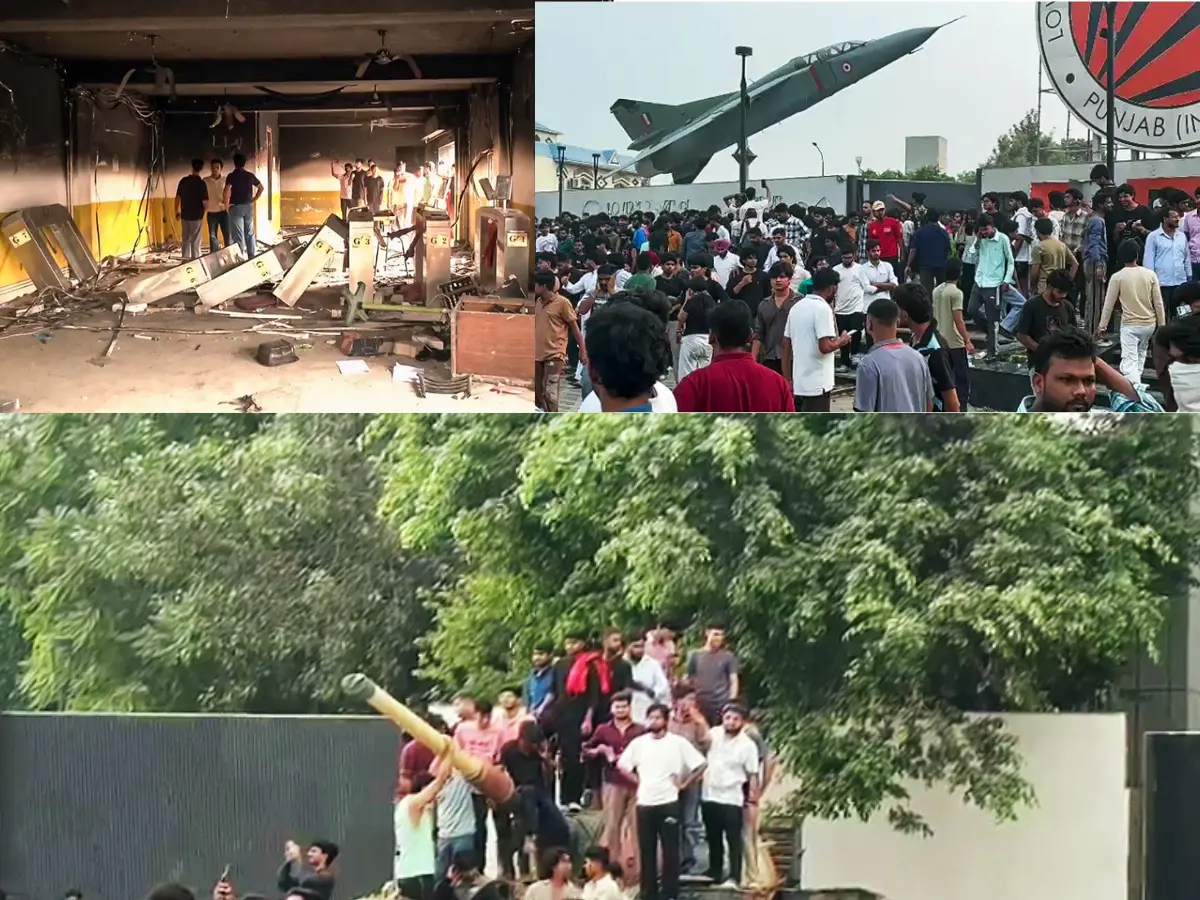)
LPU suspend classes, postpones exams as violence escalates over rape claims: What's happening
)
New York City wants a 'kill switch' on every AI, and will pay whistleblowers who report violations
The joint exercise AUSTRAHIND is the most visible manifestation of this partnership. Initiated in 2016, it has steadily expanded from counter-terrorism drills to comprehensive tactical scenarios involving close-quarter battle, combined manoeuvre, and interoperability in diverse environments.
The 2025 edition, to be held in Australia, will challenge soldiers from both armies to operate together in jungle terrain, urban settings, and contested zones, simulating the kind of multi-domain conditions they could face in real-world missions. Such exercises not only refine tactical skills but also accelerate the development of shared operating procedures.
Dialogue Mechanisms That Deliver
Below the surface of these exercises is a structured network of institutional engagements. The Army-to-Army Staff Talks, which have been held annually since 2016, now function as operational planning forums, addressing doctrine alignment, capability development, and mission coordination.
These linkages connect directly into broader bilateral formats such as the 2+2 Ministerial Dialogue and the Defence Policy Talks, ensuring that land-domain priorities feed into the overall strategic agenda. This integrated approach means that lessons from an exercise or a tactical exchange can quickly be translated into joint planning for humanitarian relief, disaster recovery, or regional capacity-building.
Collaboration between Think Tanks: MoU with CLAWS
The intellectual foundation of this relationship has been reinforced by the Centre for Land Warfare Studies (CLAWS), the Indian Army’s autonomous think tank. India and Australia have collaborated with CLAWS before, and the forthcoming Memorandum of Understanding will take this to a new level.
The agreement envisages joint studies on land warfare, counter-terrorism, and operational innovation, informed by each nation’s combat experiences. It will also open pathways for scenario-gaming exercises, strategic roundtables, and reciprocal scholar exchanges. Participation in key events such as the Chanakya Defence Dialogue, organised by CLAWS for the Ministry of Defence and the Indian Army, will allow Australian scholars and officers to engage directly with India’s strategic community.
By embedding intellectual collaboration alongside tactical engagement, the two armies are aligning their thinking as much as their manoeuvres.
Developing the Next Generation of Commanders
Another standout initiative is the Young Officers Exchange Programme, conceived by the late General Bipin Rawat and launched in 2022. This programme embeds junior officers within each other’s formations, exposing them to different command styles, operational doctrines, and field realities early in their careers.
Over time, this creates a cadre of leaders who can instinctively work together in coalition settings — whether during a UN peacekeeping mission, a humanitarian crisis, or a deterrence deployment in a volatile theatre.
From Training Grounds to the Workshop Floor
The Army partnership is also driving industrial cooperation. Indian companies have supplied Australia with tactical ISR systems, protected mobility vehicles, and other battlefield platforms. Collaborative development between India’s Army Design Bureau and Australia’s Digger Works is under consideration, with the goal of producing affordable, combat-tested solutions suited to contemporary battlefield requirements.
This blend of operational and industrial synergy could become a model for broader Indo-Pacific defence cooperation.
An Anchor in Uncertain Waters
Lieutenant General Stuart’s visit underlines the reality that land-force collaboration is no longer a supplementary track in India–Australia defence relations — it is a core pillar. By combining realistic training, doctrinal exchange, industrial linkages, and strategic dialogue, the two armies are building a relationship that can adapt to the unpredictability of the Indo-Pacific.
In an era where alliances are tested and the nature of threats is evolving, this partnership stands out for its pragmatism, mutual respect, and ability to convert operational cooperation into strategic influence. Grounded in trust and shaped by shared purpose, it is helping to ensure that the Indo-Pacific remains free, stable, and multipolar.