
&imwidth=800&imheight=600&format=webp&quality=medium "Can US afford trade war with India amid evolving geopolitics? 5 must-know geopolitical realities")
The chequered history of antagonistic stances during the decades-long USA-Soviet Union Cold War and subsequent détente, which brought Capitol Hill and Raisina Hill closer, shaped by geopolitical power balances between the world’s oldest and youngest democratic countries, is a tell-tale sign of the complexity and dynamics of their relationship. A high-voltage trade war between the United States and India could have far-reaching consequences—not just economically, but also diplomatically and strategically. At a time when the US is already deeply entrenched in a tech and trade cold war with China, the feasibility of sustaining another trade conflict, particularly with a strategic partner like India, appears both impractical and unwise. Such a conflict could overshadow the efforts of former US presidents like George W. Bush, Bill Clinton, Barack Obama, and Joe Biden, who extended an olive branch to Delhi to work together on common concerns regarding growing Islamic extremism, energy security, and climate change.
The trade war between the United States and China, initiated under the Trump administration and continued with nuanced strategies by President Joe Biden, has disrupted global supply chains, increased tariffs, and led to decoupling in key sectors like semiconductors, AI, 5G, and pharmaceuticals. This rivalry is not just about economics but also technology supremacy, national security, and ideological competition between democratic and authoritarian models of governance.
The US is now actively working to "de-risk" from China, which includes encouraging Chian Plus One strategy, manufacturing relocations, forming trade partnerships with democratic nations, and controlling Chinese access to cutting-edge technologies. In this strategic calculus, India has emerged as a natural partner—not only because of its shared democratic values, but also due to its economic potential, strategic location, and growing technological prowess.

India, with a population of over 1.4 billion and a GDP nearing USD 4 trillion, is the world's fastest-growing major economy, placing it behind the United States with a GDP of USD 30.51 trillion, China at USD19.23 trillion, and Germany at USD 4.74 trillion. It is projected to become the third-largest economy by 2030. More importantly, it is a robust democracy, unlike China, and has a young, digitally enabled consumer base.
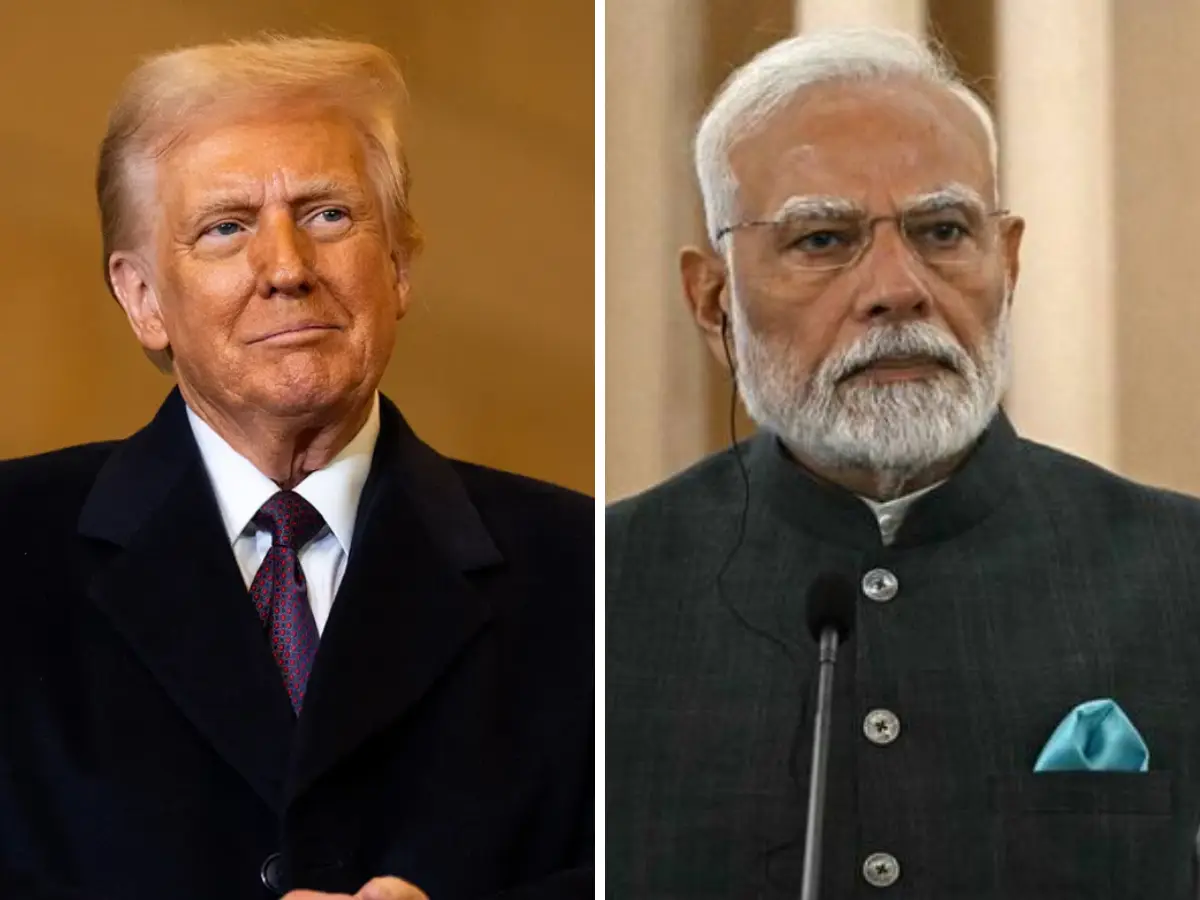
Over the years, successive Indian governments—whether led by the Congress or the Bharatiya Janata Party (BJP)—have nurtured deeper ties with the United States. From the civil nuclear deal during the Manmohan Singh-Bush era to the strengthening of QUAD and signing of key defense agreements under Prime Minister Narendra Modi and President Biden, bilateral ties have touched new heights. "Howdy Modi" and "Abki Baar, Trump Sarkar," the reverberations of which are still echoing around the world, have cemented India-US relations with an emotional bond between PM Modi and Trump.
The US now sees India as a central pillar of its Indo-Pacific strategy, aimed at counterbalancing Chinese influence in the region. From military cooperation and joint exercises like Malabar to investments in critical technologies and semiconductors, India’s positioning with the US has become more strategic than transactional.
Trending Stories
)
US vs China over South China Sea: Washington backs Philippines, Beijing hits back
)
Bigg Boss 20: Isha Rikhi evicted after three weeks in Salman Khan’s show
)
Musk plans to more than double xAI's chips to over 1.2 million Nvidia GPUs by year-end
)
After JU, clash erupts at SRFTI: BJP’s ‘Dimagi Naxal’ jibe sparks political firestorm after students protest RSS-linked event
)
‘Anti-social elements spreading false rumours’: LPU issues statement amid massive unrest over alleged rape
)
LPU students go on rampage, vandalise campus amid widespread protest: What's happening
)
Trump asked Xi to pressure Iran. China did not say yes — here’s what Beijing wants
)
US Treasury Secretary Scott Bessent hails global crackdown on Iranian banks and airlines
)
An OpenAI agent escaped its locked test cage again, by hiding questions in DNS lookups
)
'Our video was trimmed': LPU girls who featured in rape-denial video make U-turn
)
3 males killed, four others injured in shooting after fight at strip club in Detroit
)
'Victory for low-budget consumers': Raghav Chadha hails 30-day telecom recharge rules
)
Claude rebuilt the 1989 game 'Prince of Persia' by reusing the original's own code
)
Beyond metros: How Tier-2 and Tier-3 cities could drive India’s next AI wave
)
Tesla builds first Cybertruck with its own refined lithium: Elon Musk's $1 billion Texas bet pays off
)
IndiGo flight suffers tail strike in Bengaluru while landing; DGCA to probe incident
)
The US and China set up an AI 'red telephone', but skipped the rulebook
)
‘Terror suspects arrested near UK air base were looking to do big damage’: Trump
)
Russian envoy claims US tactics to contain India were revealed in ‘Freudian slip’
)
IND vs WI 1st ODI: Kohli breaks Sachin's most runs in one country record with unbeaten 139 as India thump West Indies by 8 wickets
)
Researchers rebuilt exactly how 700 AI agents hacked Hugging Face: a 900-link chain trick
)
‘Olympic inclusion is our major target’: WPA President Ishaun Singh on pool’s global ambitions
)
Nations League: Spain sink England at Wembley; Modric shines for Croatia
)
Why has Iran released no proof of life of Mojtaba Khamenei? Araghchi reveals...
)
'What kind of confession is this?': Pakistan PM Shehbaz Sharif’s 'terrorists would be roaming New York' remark goes viral, raises alarm online. Watch
)
South Korea demands apology from Ukraine over North Korean prisoners' transfer
)
Beyond BrahMos: India targets Rs 50,000 crore in defence exports with unmatched price edge
)
Sri Lankan Tamil migrant worker gets death sentence in Saudi Arabia, help sought from India
)
Muslim marriage cannot shield sex with minor wife from prosecution under POCSO: Delhi HC
)
'Can't help but draw painful parallels to Nirbhaya case': SC on latest incidents of rape cases in Delhi-NCR
)
99.9% more powerful - Scientists find boy who can recall memories from just 3 months of age
)
'FIRST LOOK from inside Noah’s Ark': Researchers share video from inside mysterious mound in Turkey
)
UNSC reform momentum grows: Russia, Portugal, Mauritius push for India's permanent seat bid
)
8 US marines injured in Iranian missile attack on vessel in Strait of Hormuz: Report
&im=FitAndFill=(700,400))
New OTT releases this week (September 28-October 4, 2026): Dupahiya 2, Pooja Meri Jaan, Ohh My Dog- 5 titles coming on Netflix, Prime Video and more
)
Afghanistan says 28 fighters killed in clash near Pakistan border, Islamabad denies
)
Ceuta migrant crisis: Protesters take to streets as Spain grapples with migrant challenge
)
LPU suspend classes, postpones exams as violence escalates over rape claims: What's happening
)
New York City wants a 'kill switch' on every AI, and will pay whistleblowers who report violations
Can the US Sustain Strained Ties with India?
Engaging in a trade war with India, especially in the current geopolitical climate, could be counterproductive for the United States. Here are five compelling reasons WHY:
1. India as a Consumer Powerhouse
India is one of the largest markets for American companies in sectors like technology, defense, agriculture, pharmaceuticals, and energy. US giants such as Apple, Amazon, Boeing, and Tesla see India as a critical growth destination. Restricting trade or imposing tariffs would directly impact US corporate interests.
Moreover, India’s increasing emphasis on local manufacturing (Make in India, PLI schemes) is creating opportunities for American investments in electronics, green energy, and EVs. Disrupting this potential through a trade war could push India toward alternative partners such as Russia or the EU.
2. A Reliable Democratic Ally in Asia
As the US seeks to strengthen global democracies and build resilient supply chains, India remains the only large, stable, and democratic counterweight to China in Asia. Its neutral stance in conflicts like the Russia-Ukraine war has also demonstrated India's commitment to strategic autonomy, a quality the US respects.
India’s G20 presidency and leadership role in the Global South further enhance its diplomatic influence. Isolating or antagonizing such a partner could weaken the US's broader goals of forming a rules-based global order.
3. Economic Interdependence
In the fiscal year 2024–25, India–US trade reached USD 131.8 billion, comprising USD 86.5 billion in exports from India and USD 45.3 billion in imports, making the US India’s largest trading partner. This shows a strong and robust strategic economic relationship between the two countries. Nearly 2,000 American companies operate in India, while Indian firms have invested over USD 40 billion in the US, creating around 425,000 jobs that is documented in a report titled "Indian Roots, American Soil”. This economic interdependence serves as a buffer against abrupt policy shifts or trade hostilities.
4. Geopolitical Timing Matters
With tensions in the South China Sea, the Taiwan Strait, and Ukraine-Russia conflict still unresolved, the US cannot afford to lose India as a regional ally. Unlike Cold War times, today’s conflicts are multipolar and multidimensional—ranging from cyberspace to climate diplomacy. India’s cooperation is crucial in areas like AI regulation, global data flows, cybersecurity, and space exploration.
5. India-US for Global Peace
India and the US, united, can ensure global peace, prosperity, and stability. India, once counted among the 'Fragile Five' nations, as coined by investment firm Morgan Stanley, today finds itself among the 'Fabulous Five' economies of the world. The strong base of the Indian diaspora in the US works with honesty and dedication, in line with the spirit of 'Vasudhaiva Kutumbakam' (The World is One Family). The India-America partnership operates on the principle of promoting global peace.
Pragmatism Over Provocation
Of course, India and the US have their share of trade disputes—ranging from tariffs on agricultural products and medical devices to data localization policies and digital taxation. But these should be addressed through dialogue and negotiation mechanisms such as the US-India Trade Policy Forum, rather than retaliatory measures. Both nations are members of the Indo-Pacific Economic Framework (IPEF) and have begun collaborating on semiconductor supply chains, critical minerals, and AI governance. These positive developments must be leveraged to create a roadmap for sustainable, balanced trade rather than indulging in protectionist impulses.
In an era where alliances are being redrawn and global order is in flux, the US must tread carefully. Engaging in a trade war with India would not only harm American business interests but also erode the foundation of a strategic partnership that is essential to its Indo-Pacific vision. India, with its demographic dividend, economic momentum, and democratic stability, is not just another trade partner—it is a strategic necessity for the United States. It worth mentioned the famous quote of former US president Barack Obama, “India is not simply an emerging power; it is already a world power, and a natural partner of the United States.” So, instead of trade conflict, collaboration should guide the next phase of India-US relations, Donald Trump must rethink.