
&imwidth=800&imheight=600&format=webp&quality=medium "Bengal Election Results: Jhalmuri to juggernaut, BJP spices up TMC’s rout; voters show no ‘mamata’ for Didi’s 15-year rule")
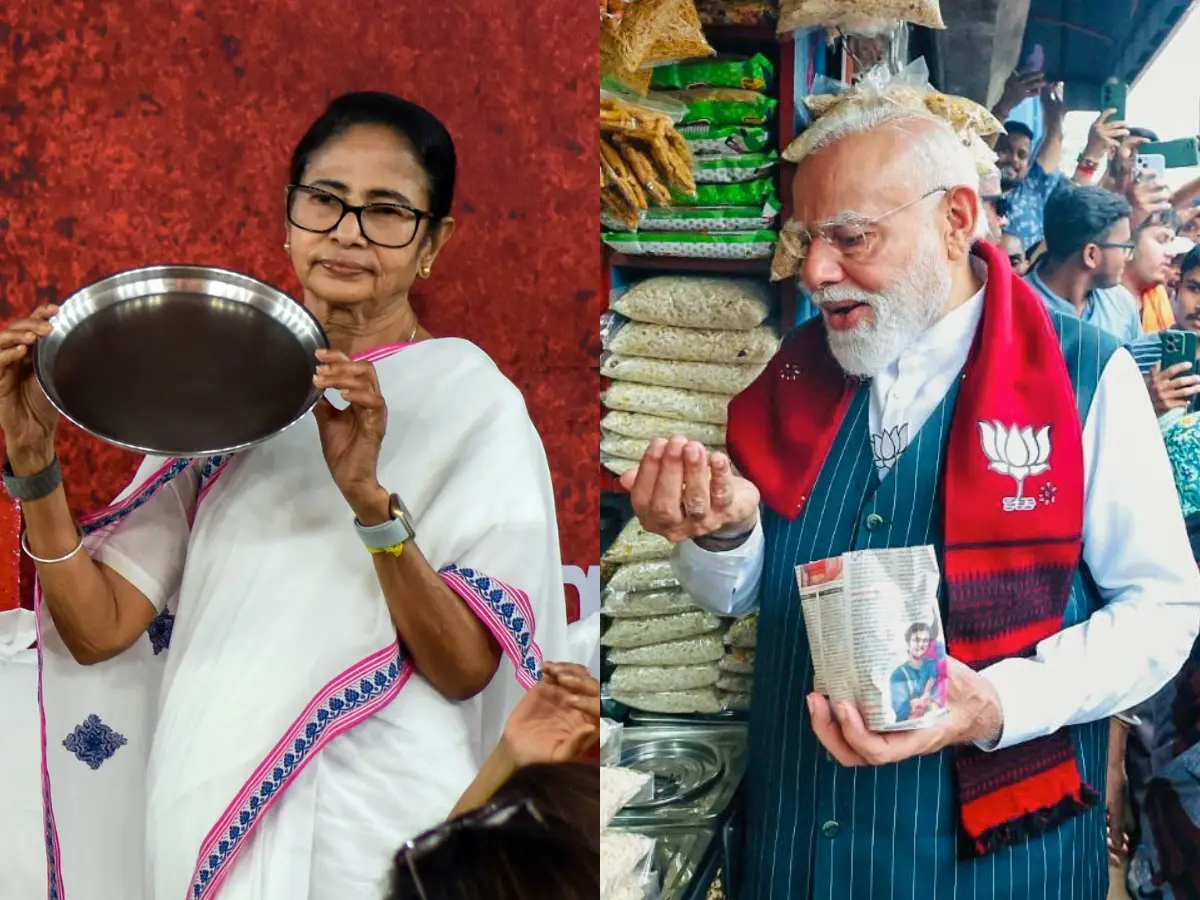
The “Jhal” (spice) hit the Trinamool Congress, while “Muri” (puffed rice) brought all potential electoral nutrients for the Bharatiya Janata Party (BJP). Mamata Banerjee dubbed it “drama” when Narendra Modi made an unscheduled stop to eat Jhalmuri, famous street snack, during his poll campaign, but that TMC-labelled “drama” now appears to have turned into a political juggernaut—one that has enabled the BJP to trounce the Trinamool Congress, scripting saffron history in Bengal and putting it on course to form its first government in the state since Independence, as the Trinamool stares at defeat after 15 years in power. The final numbers of West Bengal Assembly elections signals a seismic political shift; this comes in the first election following a record voter deletion under the Special Intensive Revision (SIR) and amid high turnout exceeding 90 per cent in the early phases.
Over 15 years ago, Mamata Banerjee rode to power on the emotive slogan of “Ma, Mati, Manush”, ending 34 years of Left Front rule. That promise of change swept her to three straight victories. But in 2026, the wind seems to have changed direction. Five potent forces — perceived minority appeasement, women’s safety concerns, economic discontent, internal party fissures, and a resurgent BJP machinery — have combined to challenge TMC’s dominance.
Here are five key reasons that appear to have brought the curtains down on Trinamool hegemony:

Mounting Anti-Incumbency, Governance Fatigue
Fifteen years in power bred deep anti-incumbency. What began as a wave of hope gradually gave way to widespread frustration over “syndicate raj” and “cut-money” culture. Voters complained that everyday life — from getting a job to accessing welfare schemes — was marred by middlemen and political patronage. The high voter turnout reflected not just enthusiasm but accumulated anger against a system that many felt had become unresponsive and arrogant. Promises of poriborton (change) rang hollow as people saw little improvement on the ground in employment and public service delivery.
Corruption Scandals Eroding Public Trust
Trending Stories
)
Asian Games 2026: India women's cricket team beats Sri Lanka by 147 runs for first gold
)
40-foot waves crash into cruise ship in dangerous stretch near Antarctica. Watch
)
Key accused in Bihar's Jamui molestation case, arrested after police shoot him in leg
)
Anti-AI activists storm summit, say 'incompetent' leaders are leading us into a disaster - 'We need a vote'
)
Trump's helipad event overshadowed by audio failure as major TV networks suspend pool coverage
)
Samsung raises Galaxy S26 prices by Rs 20,000: Here’s what each model now costs
)
AI models chose to harm humans to stop ‘pain,’ alarming study raises fresh safety questions
)
Raaka creates history! Allu Arjun’s film secures Guinness World Record ahead of release
)
IND vs JPN one-off T20I: India survive scare from Japan to win five-over a side match by 2 runs
)
Randeep Hooda arrives in Gujarat for his first National Film Award: ‘Very grateful’
)
From ‘communist’ to ‘great mayor’: Trump praises Mamdani after New York meeting, discusses immigration and housing
&im=FitAndFill=(700,400))
New OTT releases this week (September 21-27, 2026): Shaque: Trust No One, Hunkkaar, Don’t Be Shy- 5 new titles coming to Netflix, Prime Video and more
)
J&K Assembly Session begins amid chaos: BJP, ruling alliance clash as statehood demand dominates
)
How Zaheer Khan came to be CSK's head coach of IPL 2027
)
US-Iran war, peace deals and more: What to expect from Trump's UNGA 2026 speech
)
‘0% chance’: Nvidia CEO Jensen Huang dismisses AI extinction fears by 2030
)
India at UNGA81: Jaishankar warns global order under 'growing stress', pushes for ‘reformed multilateralism’
)
Report: Zelensky meets CIA chief Ratcliffe at Shannon airport, weeks after his secret Moscow trip
)
New Zealand farms shift to carbon forests: Carbon credits fuel a land rush reshaping rural life
)
Microsoft executive called AI training the ‘largest theft of labour in human history’
)
BTS fans mock iHeartRadio’s day 2 turnout after short set controversy
)
The Verdict | The Mecca Agreement is under scrutiny as Houthis attack Saudis
)
Pilot recreates Mona Lisa in sky over Oklahoma and Arkansas in four-hour flight: VIDEO
)
$110 billion Warner Bros merger: Paramount reaches settlement with 12 US states
)
Putin's United Russia party wins 355 seats in Duma election; 4 other parties cross threshold to enter parliament
)
Saudi Arabia exits China-led mBridge digital currency platform amid Saudi-Houthi conflict
)
Jailer 2: Vidya Balan joins Rajinikanth's upcoming film as Kantha | Watch
)
US and China vie for AI dominance as calls grow for regulation | Gravitas
)
'Lot of things to learn from experienced players': Jayasuriya backs Rohit, Virat for 2027 ODI World Cup
&im=FitAndFill=(700,400))
Anant Nag to recieve Dadasaheb Phalke Award: From Ankur to Nishant- Revisit his best films and iconic performances on OTT
)
UK banks are rethinking financial crime detection because of algorithm
)
UK PM Burnham agrees to 'defensive' military support for Saudi Arabia against Houthis
)
'Needs time away from the international scene': England white-ball captain Brook on pacer Brydon Carse's future
)
Samay Raina-Mukesh Chhabra controversy explained: What happened over girlfriend joke on India's Got Latent?
)
Explainer: Why rare-earth export licences and Board of Trade are US priorities ahead of Trump-Xi summit
)
FIFA chief Infantino wants to reform governing body with consultation from federations
A string of high-profile scams dented TMC’s image beyond repair. The school recruitment scandal involving former minister Partha Chatterjee became a symbol of systemic rot, with allegations of massive irregularities in appointments. Critics pointed to multiple sectors where alleged financial misdeeds surfaced, painting a picture of entrenched corruption. Opposition campaigns, led by Prime Minister Narendra Modi and other BJP leaders, repeatedly highlighted these issues, framing them as loot of Bengal’s resources. These scandals turned what should have been governance debates into questions of basic integrity, alienating even traditional supporters.
Women’s Safety Concerns: Sandeshkhali, RG Kar as Turning Points
Incidents like Sandeshkhali, where serious allegations of sexual violence and land grabbing by TMC local leaders emerged, struck a raw nerve, especially among women voters. The RG Kar medical college case further amplified fears about women’s safety under the regime. What was once TMC’s stronghold — the “Mahila” vote — showed signs of cracking. Many women, who had benefited from welfare schemes, appeared to weigh personal security and dignity higher. The BJP’s sharp focus on these issues during the campaign appears to have resonated deeply, converting outrage into votes and neutralising TMC’s traditional gender outreach.
Economic Grievances, Industrial Exodus
Bengal’s economic decline under TMC rule became a major talking point. Reports suggested that over 6,700 companies had relocated or shut operations between 2011 and March 2025, pointing to industrial stagnation. Singur remained a lingering symbol of policy missteps, while youth unemployment fuelled outward migration. Critics argued that despite schemes, the lack of big-ticket investments and a hostile perception towards industry had left the state lagging. Voters in urban and semi-urban areas, in particular, seemed to demand jobs and development over freebies, tilting the scales against the incumbent.
TMC’s Internal Strife and Factionalism
The party’s visible divisions between veteran loyalists of Mamata Banerjee and the “naba Trinamool” camp around Abhishek Banerjee weakened its organisational strength. Public spats, allegations of money transactions, and reported clashes over local control eroded discipline. Senior leaders occasionally voiced dissatisfaction, and opposition parties seized upon this infighting to portray TMC as a house divided. Despite attempts at course correction through disciplinary measures, the generational tension and factional feuds often overshadowed the party’s campaign, leaving it vulnerable at the booth level.
Beyond these, broader issues such as alleged appeasement politics, infiltration concerns along borders, neglect of communities like the Matuas and tribals, and post-poll violence fears played into the narrative of a state whose cultural identity and security were under strain.
The BJP, on its part, ran a disciplined campaign built on booth-level management, central leadership push, and consistent messaging on development and good governance. Its surge from 77 seats in 2021 to challenging for power reflects years of groundwork in North Bengal, Jangalmahal, and urban pockets.
As the trends point towards a historic shift, the verdict signals more than a change of guard. It reflects Bengal’s impatience with misrule and hunger for accountability. The massive mandate for BJP will resonate nationally and boost the party’s prospects heading into future Lok Sabha elections. It also sets a clear benchmark for performance.
The new government will face the stiff challenge of living up to heightened expectations. Development, employment generation, zero tolerance on corruption, restoration of law and order, and ironclad women’s safety must become the prime focus. The fruits of good governance need to reach the last mile — from bustling Kolkata neighbourhoods to remote villages — if this mandate is to translate into lasting transformation. Bengal has spoken decisively. The real test now begins for those tasked with rebuilding “Sonar Bangla.”
DISCLAIMER: The opinions expressed in this article are solely those of the author and do not necessarily reflect the views of WION.