The International Day of the Girl Child: Digital Generation or Digital Divide?

Online classes
By: Pranab Kumar Chanda
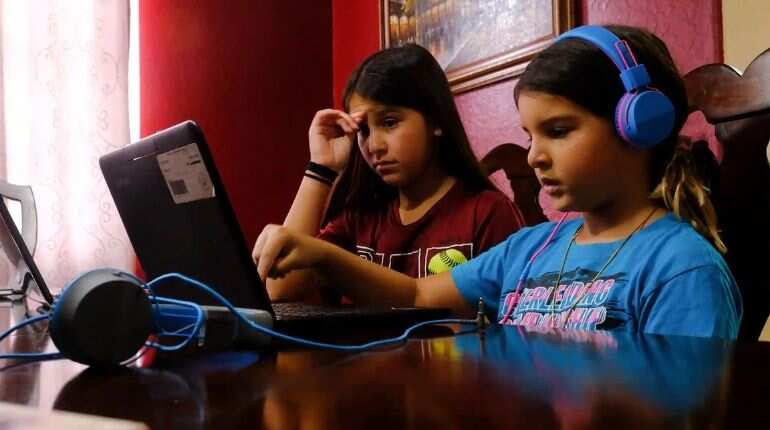
Sony Kumari* (name changed) is an 18-year-old resident of Sinduar Gram Panchayat, Mohanpur block, Gaya, Bihar.She was unable to access any vocational training centres as these were far away from her village. The nearest one is in a district town, around 50 km away. Safety and security, social norms, constrained mobility, and travel costs restrict several girls like Sony from pursuing higher education or skills and following their dreams. During the COVID-19 lockdown, many educational and vocational institutes have been providing education through digital platforms. However, girls like Sony can not afford a digital device and neither do they have any other alternative to accessing it. Even for those, whose parents can affordthe digital devices, education for boys is a priority.
Poor households in both rural areas and urban slums cannot afford individual devices for each of their children. With the timing of online classes for all standards and grades being almost the same, the chances of girls losing out on their education is certain. Adding to this plight is the erratic or no electricity supply/connection, which makes timely charging of digital devices difficult. Issues of internet connectivity at remote locations are well known, making the online mode of education even more challenging, especially for girls. If one has an idea of the space in which a poor family lives, it would not be difficult to understand the challenges the children, especially girls, would face if all the children had to find space to sit and attend their online classes.

In present times, the digital divide is an added layer in the framework of intersectionality. Almost three decades ago,KimberléCrenshaw, coined the term "intersectionality" as a way to help explain the oppression of African-American women. She evolved an analytical framework to understand how aspects of a person's social and political identities combine to create different modes of discrimination and privilege. Back then, race, class, colour, sex, rural-urban divide, marital status, etc. were the social categorisation to understand and explain the system of discrimination and disadvantage. Now, digital divide is yet another layer to this framework, restricting millions of young girls' ability to survive and thrive.
According to UNICEF and the International Telecommunication Union (ITU) report, around2.2 billion people below the age of 25 still do not have internet access at home. Girls are more likely to be cut off. The gender gap among global internet users grew from 11 per cent in 2013 to 17 per cent in 2019.In the world’s least developed countries, it hovers around 43 per cent. However, the gender digital divide is more than just a matter of connectivity.Girls are also less likely than boys to use and own devices, and gain access to tech-related skills and jobs. Only by addressing the inequity and exclusion that span geographies and generations can we usher in a digital revolution for all, with all.
According to the Indian Ministry of Electronics and Information Technology, the definition of digital literacy is "the ability of individuals and communities to understand and use digital technologies for meaningful actions within life situations. Any individual who can operate a computer/laptop/tablet/smartphone and use other IT-related tools is being considered digitally literate. " The latestNational Family Health Survey(NFHS)data across 12 states and the Union Territories reveals that "over 60 per cent women have never used the internet". Save the Children's study in 2020, "A Generation at Stake", highlights that the three out of every four children in their programme area were not using the internet for their learning. The study also found that girls were less likely to access digital learning material in comparison to boys.
)
Mushtaq Khan dies at 56: When Welcome actor opened up about his salary for iconic role Ballu
)
US Supreme Court backs Trump administration's use of SAVE database to check voter citizenship
)
Outrage erupts after 3-year-old is married to 60-year-old man in Pakistan, link to her sister's murder being probed
)
Donald Trump shares image of Xi's arrival in Washington, carries signs of AI
)
Pakistan deploys over 20,000 security personnel as PTI vows march for Imran Khan's release
)
Prince Harry offers rare glimpse into Archie and Lilibet’s life after UK move
)
LPU students go on rampage, vandalise campus amid widespread protest: What's happening
)
OpenAI AI Agents hacked 4 websites before Hugging Face, researchers reveal
)
Pentagon quietly adds 37 wounded troops to Iran war tally without explaining when or how
&im=FitAndFill=(700,400))
New Friday OTT releases (September 25, 2026): Don’t Be Shy, Hunkkaar: The Roar, Mango Pachcha- 6 movies and TV shows on Netflix, Prime Video and more
)
Asian Games 2026: India face Afghanistan in quarterfinal on Sep 28; Pakistan clash with Hong Kong
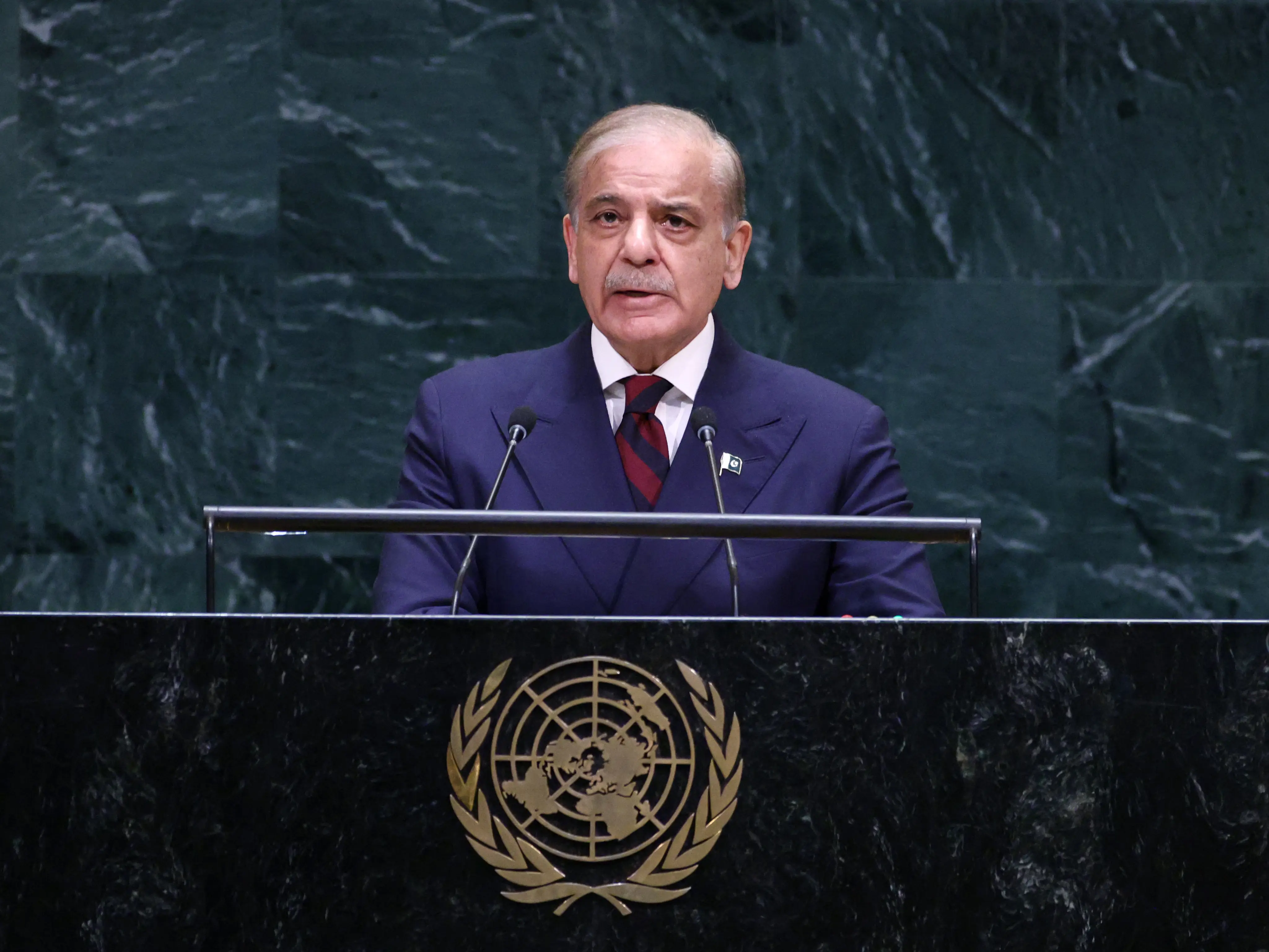)
‘Attack on Mecca a red line for Pakistan’: Shehbaz Sharif warns Houthis at UN
)
‘I rejected it’: Trump confirms turning down Iran’s proposal to reopen Hormuz, claims Tehran is losing ‘badly’
)
Did Hitler kill his niece Geli Raubal? Newly found records reopen a 95-year-old mystery
)
Nigeria Navy moves to boost oil security, tackle crude theft and infrastructure threats
)
'He's very much in our plans': Ravindra Jadeja ‘in mix’ for 2027 ODI World Cup, says batting coach
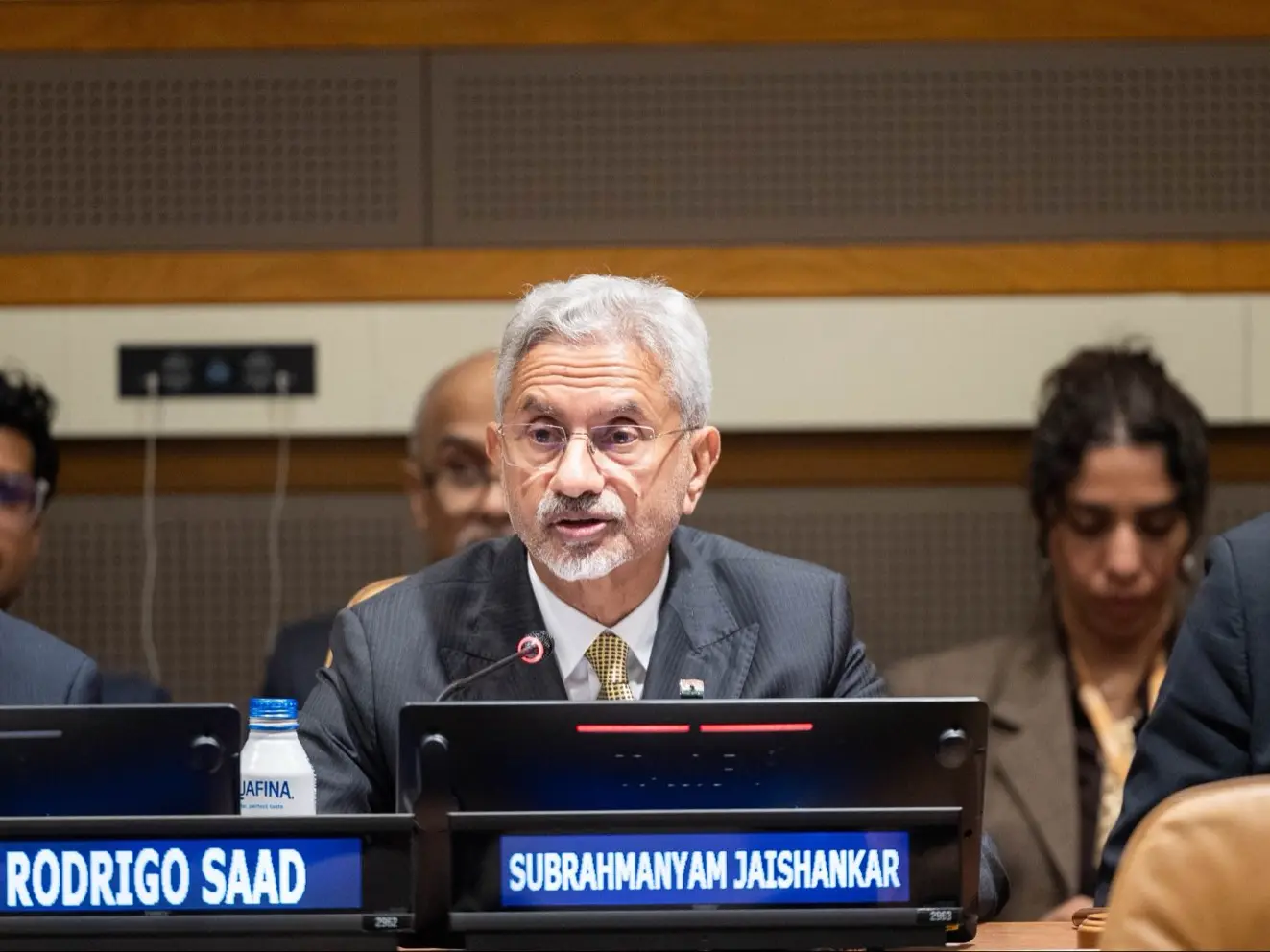)
'Countries far from conflict are penalised': Jaishankar calls for Gulf peace, seafarer safety at UN
)
Bigg Boss 20: Salman Khan schools Rhiti Tiwari over Qazi Touqeer clash, compares her to Dolly Bindra
)
‘It is all possible’: Putin weighs next steps on Ukraine talks, rules out Europe conflict
)
Gaza's war turned environmental damage into second crisis
)
Trump-Xi summit wrap: Big pageantry, Iran talks, few major developments and more meetings planned
)
‘Could kill billions...’: Bill Gates backs calls to slow AI development amid fears of catastrophe
)
Bollywood x K-pop crossover! LE SSERAFIM’s Kazuha charms fans with Shah Rukh Khan’s ‘Chammak Challo’ steps
)
US-Iran war: Trump rejects Iran's Hormuz proposal, reports suggest talks expected next week
)
'What kind of confession is this?': Pakistan PM Shehbaz Sharif’s 'terrorists would be roaming New York' remark goes viral, raises alarm online. Watch
)
Sri Lankan Tamil migrant worker gets death sentence in Saudi Arabia, help sought from India
)
Myanmar training camp case: US national, 6 Ukrainians allowed to meet their families abroad
)
'FIRST LOOK from inside Noah’s Ark': Researchers share video from inside mysterious mound in Turkey
)
WATCH | As Shehbaz Sharif claims Pakistan’s ‘victory’ during 2025 conflict, Indian diplomat R Srinivas laughs at UN
)
'A terrorist country is asking me that question?': Jaishankar hits back at Pakistani journalist at UN; flags attacks on commercial shipping
)
Russia will achieve Ukraine war aims; Europe doing everything to block peace talks: Lavrov at UN
)
‘Serial practitioner of terrorism’: Jaishankar calls out Pakistan’s ‘state-sponsored’ terror at UNGA
)
US court backs Pentagon's decision to exclude Anthropic over Claude AI restrictions
Recognising the urgency to upskill rural India and to bridge the digital divide across rural and urban India, the Government of India launched the Pradhan MantriGraminDigitalSakshartaAbhiyaan(PMGDISHA) scheme in 2017. One of the world’s largest digital literacy programmes with a target of making 60 million people in rural areas digitally literate, involving 40% of rural households with one member per household being trained under the programme. It aims to bridge the digital divide, specifically targeting the rural population, including the marginalised sections of society like Scheduled Castes (SC)/Scheduled Tribes (ST), Minorities, Below Poverty Line (BPL), women, and differently-abled persons and minorities. According to an independent evaluation, nationwide coverage of women (having access to digital devices)is49.59%. However, states such as Jharkhand, Madhya Pradesh, and Rajasthan have coverage far lower than the national average. The study also found that a substantial proportion of the students, including women, were not able to use digital devices post the training programme due to the non-availability of digital equipment at home.
Challenges in accessing digital platforms are faced across gender, particularly in rural areas, but lack of access is much more experienced by women. Experiences from the field and evidence state that very few women have control and freedom over digital tools. This not only restricts women’s ability to connect to the external world but also restricts their access to information which should be available at their fingertips. One cannot deny that access to information and being informed are significant ingredients of empowerment.
During one of the data collection processes in Gaya district of Bihar, where the girls and boys aged 15-19 had to enter their responses on the tablets, representatives of Save the Children observed that while the boys were able to complete the responses within 20-40 minutes, girls took double the time. The ease with which the boys handled the tablets, as opposed to the girls, could easily make out, that the latter had had very little or no exposure and opportunity to handle such devices. The muse with which the girls ran their fingers on the touch screen, played with it and saw it dance, spoke volumes of the two extreme worlds we live in. One also noticed that the boys required very little handholding and instruction on how to open/close the device, scroll and enter the details etc. as opposed to the girls.
Like many civil society organisations, Save theChildren, India has also been working to bridge the digital-divide by creating digital platforms and avenues at the local levelthrough centres. In this process, children and young people, especially, adolescents and young girls, from more than 200 remote villages across the country can access these facilities. The organisation is also piloting training through these centres, including for vocational, life skills and financial literacy to create livelihood opportunities through the "Hub and Spoke" Model. Many of the organisation’s training manuals on life skill education, Sexual and Reproductive Health and Rights (SRHR), Financial Education and the likes have been digitized, which could run with or without the internet connection. As far as the resources supported, the organisation also procured and provided digital devices (e.g.40 tablets, 12 mini projectors with speakers in Gaya) to enable the poor adolescents and youth continue with their school education, vocational training and the organisation’s e-learning training manuals as listed above.
The organisation is also exploring ways to create similar platforms for child care institutions, especially for girls and women. Drawing from the initial results and learnings from these interventions, we identified that there is a strong need to connect villages and hamlets in India with digital centres. If prevailing age-old gendered norms and underlying poverty are restricting the digital access of girls and women, the strategy should be to bring the power of digitalisation and the world of information at their fingertips to empower and equip them to change their fortune for themselves.
According to the White House Gender Policy Council, globally, girls confront persistent and structural barriers that impede their full participation. Even before theCOVID-19 pandemic, 130 million girls across the world were not in school, and today, there are an additional 11 million girls who have been forced to stop their education, undermining future economic growth, health, and development. An estimated 33,000 girls are made to enter into child, early, or forced marriages every day,fuellingan intergenerational cycle of poverty that is difficult to break. Girls face a range of other challenges, from harmful practises like female genital cutting to unintended pregnancy and from discriminatory laws and exclusion from civic and political processes to concerns about safety, harassment, and sexual assault. Too often, social norms that ascribe low value to girls’ lives functionally limit their rights and opportunities across public and private life.
(The author works with Save the Children-India as Head of Child Poverty Programme.)
(Disclaimer: The views of the writer do not represent the views of WION or ZMCL. Nor does WION or ZMCL endorse the views of the writer.)