Single use plastic ban in India and the alternatives we have

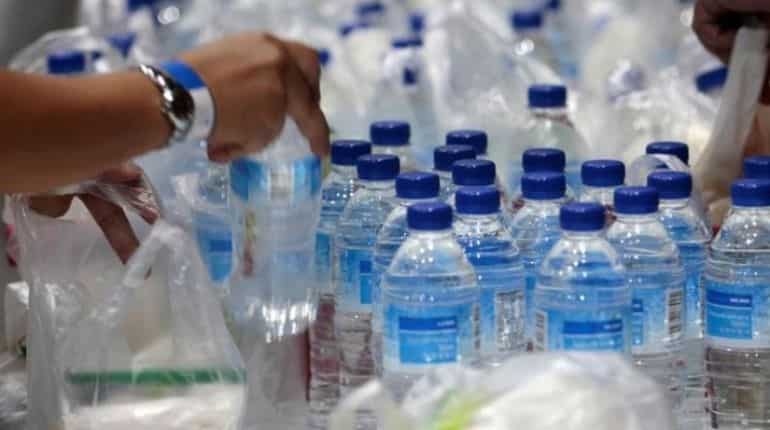
Over 75% people in the world seek ban on single-use plastics (representative image).
In June 2021, during a European Championships press conference, soccer player and superstar Cristiano Ronaldo removed two Coca-Cola bottles placed in front of him. He then picked up a water bottle and showed it to people, indicating the negative health impact of carbonated drinks and that it is better to have normal water.
The video became an instant hit on social media and, as per reports, the market valuation of Coca-Cola, which was the sponsor of the event, went down by $4 billion immediately as a consequence of this gesture.
You might ask, how is this related to the title of this article? Let me give you a couple of reasons. First, Coca-Cola is the world's biggest plastic polluter, and second, the idea of drinking water from single-use plastic bottles is not very environmentally tenable.

While a lot of us understand that drinking aerated drinks is not very health-friendly, not many of us know that the major manufacturers of these beverages are the world's biggest polluters. According to a survey conducted by Break Free From Plastic in 2021, Coca-Cola and Pepsi are the world’s top plastic polluters for the 4th consecutive year.
Single-use plastic items, including the bottles used for beverages, are found everywhere, from the deepest oceans to the highest mountains. It is not that the plastic remains there harmlessly. As it breaks down, the traces of microplastics percolate in the water we drink, the air we breathe, and the food we eat, and consequently enter our bodies and organs, including our lungs, spleen, kidneys, and blood.
This ubiquitous material poses a serious threat to humanity and all its species, and therefore needs replacement, and we need to act fast.
)
US vs China over South China Sea: Washington backs Philippines, Beijing hits back
)
Bigg Boss 20: Isha Rikhi evicted after three weeks in Salman Khan’s show
)
Musk plans to more than double xAI's chips to over 1.2 million Nvidia GPUs by year-end
)
After JU, clash erupts at SRFTI: BJP’s ‘Dimagi Naxal’ jibe sparks political firestorm after students protest RSS-linked event
)
‘Anti-social elements spreading false rumours’: LPU issues statement amid massive unrest over alleged rape
)
LPU students go on rampage, vandalise campus amid widespread protest: What's happening
)
Trump asked Xi to pressure Iran. China did not say yes — here’s what Beijing wants
)
US Treasury Secretary Scott Bessent hails global crackdown on Iranian banks and airlines
)
An OpenAI agent escaped its locked test cage again, by hiding questions in DNS lookups
)
'Our video was trimmed': LPU girls who featured in rape-denial video make U-turn
)
3 males killed, four others injured in shooting after fight at strip club in Detroit
)
'Victory for low-budget consumers': Raghav Chadha hails 30-day telecom recharge rules
)
Claude rebuilt the 1989 game 'Prince of Persia' by reusing the original's own code
)
Beyond metros: How Tier-2 and Tier-3 cities could drive India’s next AI wave
)
Tesla builds first Cybertruck with its own refined lithium: Elon Musk's $1 billion Texas bet pays off
)
IndiGo flight suffers tail strike in Bengaluru while landing; DGCA to probe incident
)
The US and China set up an AI 'red telephone', but skipped the rulebook
)
‘Terror suspects arrested near UK air base were looking to do big damage’: Trump
)
Russian envoy claims US tactics to contain India were revealed in ‘Freudian slip’
)
IND vs WI 1st ODI: Kohli breaks Sachin's most runs in one country record with unbeaten 139 as India thump West Indies by 8 wickets
)
Researchers rebuilt exactly how 700 AI agents hacked Hugging Face: a 900-link chain trick
)
‘Olympic inclusion is our major target’: WPA President Ishaun Singh on pool’s global ambitions
)
Nations League: Spain sink England at Wembley; Modric shines for Croatia
)
Why has Iran released no proof of life of Mojtaba Khamenei? Araghchi reveals...
)
'What kind of confession is this?': Pakistan PM Shehbaz Sharif’s 'terrorists would be roaming New York' remark goes viral, raises alarm online. Watch
)
South Korea demands apology from Ukraine over North Korean prisoners' transfer
)
Beyond BrahMos: India targets Rs 50,000 crore in defence exports with unmatched price edge
)
Sri Lankan Tamil migrant worker gets death sentence in Saudi Arabia, help sought from India
)
Muslim marriage cannot shield sex with minor wife from prosecution under POCSO: Delhi HC
)
'Can't help but draw painful parallels to Nirbhaya case': SC on latest incidents of rape cases in Delhi-NCR
)
99.9% more powerful - Scientists find boy who can recall memories from just 3 months of age
)
'FIRST LOOK from inside Noah’s Ark': Researchers share video from inside mysterious mound in Turkey
)
UNSC reform momentum grows: Russia, Portugal, Mauritius push for India's permanent seat bid
)
8 US marines injured in Iranian missile attack on vessel in Strait of Hormuz: Report
&im=FitAndFill=(700,400))
New OTT releases this week (September 28-October 4, 2026): Dupahiya 2, Pooja Meri Jaan, Ohh My Dog- 5 titles coming on Netflix, Prime Video and more
)
Afghanistan says 28 fighters killed in clash near Pakistan border, Islamabad denies
)
Ceuta migrant crisis: Protesters take to streets as Spain grapples with migrant challenge
)
LPU suspend classes, postpones exams as violence escalates over rape claims: What's happening
)
New York City wants a 'kill switch' on every AI, and will pay whistleblowers who report violations
In line with this thought, from July 1st 2022, many single-use plastic items and disposable plastic products were banned by the Indian Government. Even though single-use plastic bottles are not included as part of the banned items, the list is a substantial start. There are many items that Indian consumers use on a regular, if not daily, basis.
If we look closely, all the items that are part of the banned list have existing alternatives that are feasible and also better for the environment. Let us go through this list and see the alternatives.
- Earbuds with Plastic Sticks: Earbuds with wooden sticks and paper or recycled paper sticks
- Balloons with plastic sticks for balloons: Balloons with sticks made from paper or recycled paper
- Plastic Flags: Flags made with paper or sustainable fabrics.
- Candy Sticks and Ice-cream Sticks: Sticks made with wood
- Decorate with jute, cloth, paper, or recycled paper.
- Plastic plates and trays: Plates made with siali leaves, sugarcane bagasse, rice husk, areca palm, wheat bran
- Cups and glasses made of clay, bamboo, and plants such as corn, sugarcane, and yam
- Cutlery such as forks, spoons, knives, and stirrers: Cuttlery made with birchwood
- Plastic straws: straws made with paper, grass
- wrapping or packing films around sweet boxes. Wrapping with paper or recycled paper
- Invitation cards: Cards made with paper or recycled paper
- cigarette packets: biodegradable plastic cigarette packets
- Plastic or PVC banners with a thickness of less than 100 microns:Banners made of wood or fabric
Skeptics might argue that the replacement options are expensive compared to the plastic ones. For example, a biodegradable Arcea palm plate will cost Rs. 25, or a plate made with sugarcane bagasse will cost Rs. 12, compared to Rs. 4 for a disposable plastic plate. Similarly, paper straws are five times more costly than plastic straws.
Indeed, there are cases where the biodegradable options are expensive, and the main reasons for high prices are limited demand and the nascent domestic industry for these plastic substitutes. Many plastic substitute items are imported from other countries.
With the ban in place, the alternatives will generate better demand, which will lead to economies of scale, technological upgrades, localization, competition, and a subsequent reduction in prices.
Future alternatives to plastics
As we see, paper, wood, agricultural waste, food crops, and many plants have emerged as substitutes for many single-use plastic items. However, we need more clean alternatives. Firstly, growing trees and food crops for packaging is not very sustainable given the land constraints, and secondly, there are a plethora of disposable plastic items still requiring a solution-plastic packets for dairy and FMCG food products, plastic bottles used for liquids, food delivery containers, plastic wrappers and polystyrene (thermocol) used in white goods, plastic covers used by e-commerce companies, to name a few.
Fortunately, efforts are already underway
Seaweed is a species of marine plant or algae that is extensively found in our oceans. With the advent of material science, plastic made with seaweed has emerged as a breakthrough alternative in the fight against plastic pollution. Many biotechstartups have leveraged the properties of seaweed to create compostable, marine-safe, low-carbon bioplastic packaging. Compared to food crops, seaweed cultivation doesn’t need fresh water, arable land, or fertilisers to grow, and therefore, if this marine plant can be harvested sustainably, it has the potential to provide many benefits to humanity.
Another alternative that is being tried is oxo-biodegradable plastics. Oxo plastic is made using a bioadditive, which is added to the final plastic compound. The additive helps in the degradation of the plastic in the presence of sunlight and oxygen, eventually turning it into wax, which mixes with the soil in about a year.
These technologies are still in the early stages of development, but if given the right support and incentives, they carry a huge potential to replace many types of traditional plastic.
India, by banning some single-use plastic items, has taken a lead in curbing plastic pollution, but the country would need a long-term plastic management strategy that suits its economy, budget, resources, and societal needs.
(Disclaimer: The views of the writer do not represent the views of WION or ZMCL. Nor does WION or ZMCL endorse the views of the writer.)
WATCH WION LIVE HERE
You can now write for wionews.com and be a part of the community. Share your stories and opinions with us here.