Opinion | A reflection on effectiveness of UN as UNGA begins

United Nations
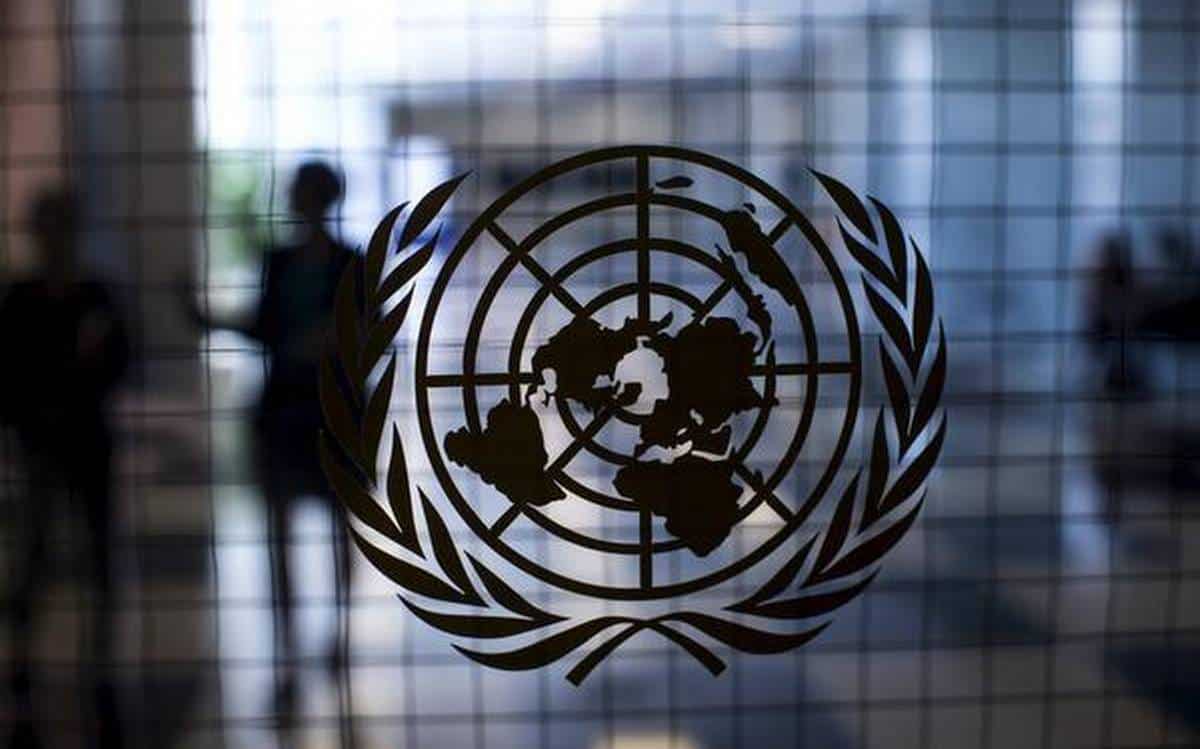
The 76th Session of the UN General Assembly is in progress from 14th September. Undoubtedly the event held annually is the largest gathering of world leaders, and provides a platform to discuss, debate, and identify the key issues of global concern. An attempt is also made to reach a consensus on the ways and means of addressing and resolving these issues.
This makes it a desirable global body that can set the basic norms of global governance. Opinions, however, differ on the effectiveness of the world body to translate the lofty declarations of intent into concrete actions and deliver as per the expectations of the global community.
When the Heads of State/Government from all over the world met last year on the landmark occasion of the 75th anniversary of the foundation of the United Nations, they were candid in admitting that the world envisaged by the UN’s founders 75 years ago has not yet been realised.

Some of the important observations included that the world is plagued by growing inequality, poverty, hunger, armed conflicts, terrorism, insecurity, climate change, and pandemics, and the people are forced to make dangerous journeys in search of refuge and safety.
The world leaders, therefore, made twelve commitments: 1. Leave no one behind, 2. Protect our planet, 3. Promote peace and prevent conflicts, 4. Abide by international law and ensure justice. 5. Place women and girls at the center,6. Build trust, 7. Improve digital cooperation, 8. Upgrade the UN, 9.Ensure sustainable financing, 10 Boost partnerships,11. Listen to and work with youth, and 12. Be prepared.
&imwidth=180&imheight=135&format=webp&quality=medium)
Pakistan to head IMF, World Bank boards after 74 years amid persistent economic crisis
&imwidth=180&imheight=135&format=webp&quality=medium)
'We are not sitting in ivory towers, we are aware': SC issues notice to Rahul Gandhi, Akhilesh Yadav
&imwidth=180&imheight=135&format=webp&quality=medium)
6-year-old among 2 killed as vehicle crashes into youth soccer game in US
&imwidth=180&imheight=135&format=webp&quality=medium)
Can you wash your brain? How glymphatic system protects against cognitive decline
&imwidth=180&imheight=135&format=webp&quality=medium)
SC panel launches portal to submit evidence of July Jantar Mantar violence
&imwidth=180&imheight=135&format=webp&quality=medium)
Lizard people? Ex-US Army sniper claims soldier killed by 'reptilian beings' in battle near Area 51
&imwidth=180&imheight=135&format=webp&quality=medium)
Ankita Bhandari murder case: Parents meet CBI, seek impartial investigation
&imwidth=180&imheight=135&format=webp&quality=medium)
Bangladesh resort fire kills 10 tourists, including a 5-year-old child
&imwidth=180&imheight=135&format=webp&quality=medium)
At least 19 killed in stampede-like situation after part of Kolkata Durga Puja pandal collapses
&imwidth=180&imheight=135&format=webp&quality=medium)
Rain washes out 5th T20I as India-West Indies share honours 2-2
&imwidth=180&imheight=135&format=webp&quality=medium)
'Reason UN has lost credibility': Amid SIR protests India hits out at report alleging 'youth repression'
&imwidth=180&imheight=135&format=webp&quality=medium)
‘My president, I mean my husband’: Trump's new press secretary Katie Zacharia's first briefing goes off the rails in 14 minutes
&imwidth=180&imheight=135&format=webp&quality=medium)
China responds to Trump's Press Secretary Katie Zacharia after toilet remark: 'Visit China more often'
&imwidth=180&imheight=135&format=webp&quality=medium)
UAE agrees with Saudi Arabia to rejoin Yemen fight as Houthi strikes rattle Riyadh
&imwidth=180&imheight=135&format=webp&quality=medium)
COVID-19 pandemic led to increase in divorce cases, observes Madras High Court
&imwidth=180&imheight=135&format=webp&quality=medium)
At least 400 arrested as protests turn violent in France; PM blames far left
&imwidth=180&imheight=135&format=webp&quality=medium)
Explosion and fire at military base in Canada's Alberta, casualties feared
&imwidth=180&imheight=135&format=webp&quality=medium)
Israel examines Russia's Shahed-type drones sent by Ukraine to combat Iran | Gravitas
&imwidth=180&imheight=135&format=webp&quality=medium)
WATCH | iPhones, luxury perfumes floating in Hormuz? Iranian fishermen make bizarre discovery
&imwidth=180&imheight=135&format=webp&quality=medium)
China’s ‘dark tourism’ boom: Why are young travelers paying to experience simulated disasters?
&imwidth=180&imheight=135&format=webp&quality=medium)
Two students die, 14 injured at Dandiya event in Hyderabad: Know what happened? VIDEO
&imwidth=180&imheight=135&format=webp&quality=medium)
WATCH | Zelensky gives cheeky response when asked if Trump is making him a scapegoat ahead of US midterms
&im=FitAndFill=(700,400)&imwidth=180&imheight=135&format=webp&quality=medium)
Durga Puja 2026: Ranbir Kapoor, Kajol, Jaya Bachchan, and other celebs bring festive glam to pandals
&imwidth=180&imheight=135&format=webp&quality=medium)
No Ravindra Jadeja, Yashasvi Jaiswal in India’s 2027 ODI World Cup plans: Report
&imwidth=180&imheight=135&format=webp&quality=medium)
Kolkata Durga Puja stampede: PM Modi announces Rs 2 lakh ex-gratia for kin of dead, Amit Shah to visit injured
&im=FitAndFill=(700,400)&imwidth=180&imheight=135&format=webp&quality=medium)
Inside Tesla's Roadster: 10 features of Elon Musk's 'flying car' that push the limits of electric vehicles | In Pics
&imwidth=180&imheight=135&format=webp&quality=medium)
Anirudh Ravichander-Kavya Maran wedding: Telangana CM reveals Chennai reception date
&imwidth=180&imheight=135&format=webp&quality=medium)
Ranbir Kapoor visits North Bombay Durga Puja pandal, offers prayers
&imwidth=180&imheight=135&format=webp&quality=medium)
One species, two lineages: Why Sri Lanka’s spectacled cobra differs genetically from Indian variant
&imwidth=180&imheight=135&format=webp&quality=medium)
Oil tanker carrying over 2M barrels of crude hits mine in Strait of Hormuz, catches fire, says Iran
&imwidth=180&imheight=135&format=webp&quality=medium)
2 injured in plane crash on busy California highway
&imwidth=180&imheight=135&format=webp&quality=medium)
'We feel like Mr India': Gujarat’s undercover SHE team guard garba nights at Navratri

US ends automatic work permit extensions; Indian workers lose 540-day safety net: What it means
&imwidth=180&imheight=135&format=webp&quality=medium)
'It's a joy to see the makers bring it on such a grand scale': SS Rajamouli on Ramayana
&imwidth=180&imheight=135&format=webp&quality=medium)
13 dead after truck mows down devotees, crashes into temple gate in Madhya Pradesh's Gwalior
&imwidth=180&imheight=135&format=webp&quality=medium)
IND-W vs ZIM-W, 2nd T20I: When and where to watch live streaming in India?
&imwidth=180&imheight=135&format=webp&quality=medium)
US lawmaker Pramila Jaypal writes to Rubio, urges to raise handling of CJP protest with India
&imwidth=180&imheight=135&format=webp&quality=medium)
Kolkata puja pandal stampede: 7 arrested, section 163 restrictions imposed in north Kolkata
Also Read | President Biden, PM Modi's meeting will strengthen deep ties, says US ahead of UNGA
As a follow-up to the twelve commitments of the global leaders, the UN Secretary-General unveiled, on the eve of the inauguration of the current session, a report titled “Our Common Agenda”, said to have been prepared after extensive consultations.
Prima-facie, it is difficult to disagree on any of the twelve objectives identified by the global leaders. But as they say proverbially, the taste of the pudding is in eating it. We therefore need to wait for a while to see how much the UN will succeed in the realisation of these noble intentions.
Going by the past track record, the UN has to its credit some notable achievements in selected areas such as Sustainable Development Goals, Climate Change, monitoring the proliferation of nuclear weapons etc. However, the promotion of peace and security, prevention of conflicts, ensuring that all member states abide by the international law and the UN’s reform are some of the important areas where the UN’s delivery so far has been less than satisfactory.

In the recent past, there have been at least three instances when the UN failed to prevent or halt the serious escalation in the historic on-going armed conflicts, which caused substantial loss of human lives and severe damage to property, besides rendering several thousand people as internally displaced or as refugees.
These conflicts include: the Armenia-Azerbaijan war over Nagorno-Karabakh, Israel-Palestine conflict, and most recently the takeover by force of Afghanistan by the Taliban some of whose “ministers” in the so-called interim government are UN-designated terrorists.

In all these and many other similar cases the events were influenced or controlled and ultimately settled by a handful of global players outside the framework of the UN, while the world body and by implications the rest of the global community remained a silent spectator.
Take for instance the case of Afghanistan. After fighting the Taliban for nearly two decades the US- a world power and celebrated democracy- finally entered into a formal agreement (29th February 2020) with the Taliban– an ultra-conservative, fundamentalist, radical, extremist terror organisation.
What followed is now etched in world history the making of which was watched by the international community in silence, without shedding a tear over the victory of bullet over ballot. The UN Security Council Statements/Resolution (2593) issued/adopted since the Taliban’s take-over on 15th August are anything but critical of the Taliban.
There is no condemnation of the Taliban; instead, in an implied de-facto recognition of the Taliban, the UN appears to be pleading with the Taliban to comply with the expectations of the international community and form an inclusive government, not to allow the Afghan territory being used for terror activities, ensure observance of human rights etc.
No warning has been given as to what could be the consequences of non-observance of the UNSC resolution.
So the pertinent question that arises is: is the UN a too powerless and helpless body that it cannot prevent or resolve conflicts. The answer to this seemingly difficult question is rather simple: the UN is not a superstate presiding over 192 sovereign member states. It can be effective only to the extent it is allowed to be.
Often, the decisions of the UNGA/UNSC or other UN organs are overshadowed by the conflict of interests and proxy wars between a handful of international powers, particularly the five veto-wielding members of the UNSC, who more often pull in different directions rather than being on the same page on issues of strategic and security dimensions.
The UN has but only two weapons at its disposal: the punitive weapon of economic sanctions and the weapon for the positive intervention through International Peace Keeping Force. Once again, neither of these weapons can be deployed unless there is a consensus between these all-powerful players. Net result is the unilateral actions taken by certain individual countries which do not necessarily reflect the collective wish of the international community.
It is therefore not without a reason that India along with some other like-minded countries has repeatedly called for serious reforms in the UN and other global institutional mechanisms to make them truly representatives and relevant to the realities of the 21st century.
Notwithstanding the debatable issue of the usefulness or otherwise of the United Nations, all eyes are as usual now set on the General Debate, scheduled to take place from Tuesday, September 21 to Monday, September 27, including Saturday, September 25. Despite the challenges posed by the Covid-19 pandemic, over 100 Heads of State or Government are expected to travel to New York to address the UNGA. Many of them are very likely to go beyond the main theme:, “Building Resilience through Hope – to Recover from COVID-19, Rebuild Sustainably, Respond to the needs of the Planet, Respect the rights of people and Revitalize the United Nations.”
The leaders have traditionally used this opportunity to address both the domestic and international audience and reveal their priorities and policy approaches, besides messaging their friends, allies and adversaries. At the end of the day, each of the national statement will be assigned a reference number and added to the UN archives but for keen and interested observers there will be much to read between the lines to gauge the mind-set of those who matter in international affairs.
In short, the UN is a desirable world body which in present circumstances requires a complete overhauling so that it can deliver as per the expectations of the international community.
(Disclaimer: The views of the writer do not represent the views of WION or ZMCL. Nor does WION or ZMCL endorse the views of the writer.)