Chinese vignettes | China is steadily making gains overseas. At home, it struggles to fight Covid

COVID-19 outbreak in Shanghai, China
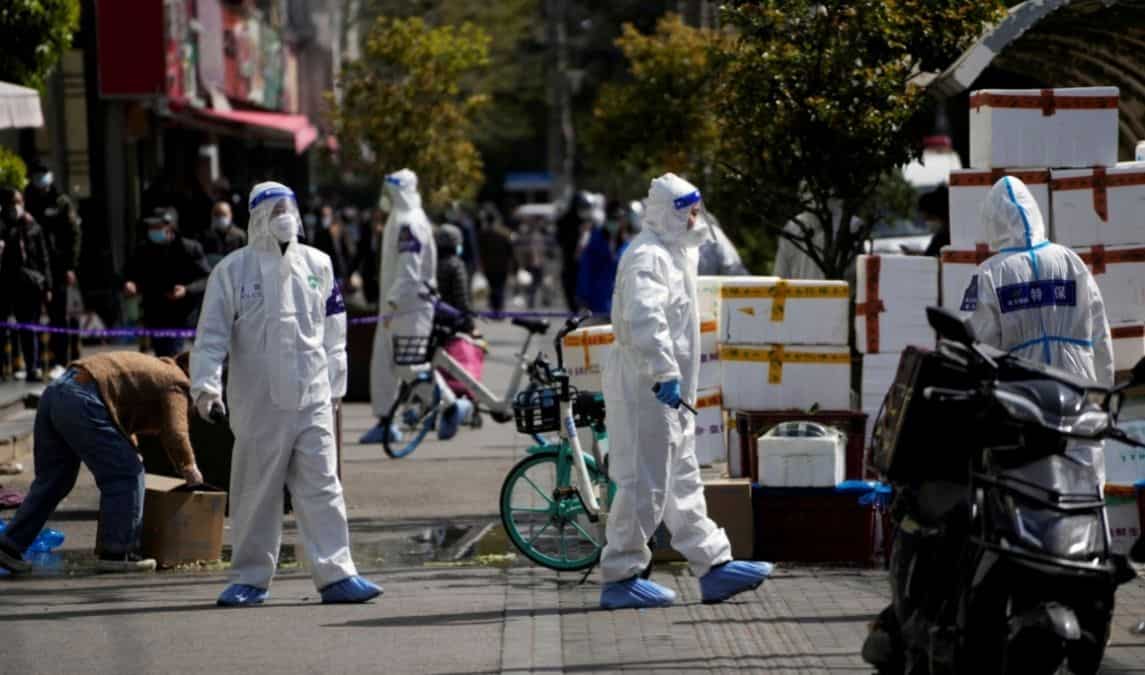
Rising Covid Cases and Shanghai Lockdown
Early this week, China locked down its most populous city of Shanghai. China’s cosmopolitan financial capital was shut down in two phases, for four days each. Shanghai has reported more than 35,000 cases since March 1, registering more cases in four weeks than it has in the last two years.

The sudden lockdown which kicked in hours after an announcement was made on March 27, left the residents of Shanghai in a flurry. To make it worst, the officials even admitted that they were “insufficiently prepared” for the latest outbreak. The lockdown has caused desperation and panic among those with chronic medical conditions. Earlier reports have indicated that many of them have been denied health care due to a shift in priority to Covid patients.
OnWeibo, a topic about an elderly person who dies of asthma after ambulances allegedly refused to take him to a hospital in Shanghai has garnered more than a 55milion views and 23,000 posts on Thursday itself, reportedBloomberg.
The residents of the city also scrambled to stock up as the lockdown for the eastern half of the city was announced. According to the South China Morning Post, many had to rely on group chats and shared online documents to source food and other daily needs. Due to the sudden lockdown, many residents have even been quarantined in their offices to keep businesses running.
)
Sikh driver attacked in Wyoming in US, suffers 17 stab wounds
)
‘I have a big decision coming up’: Trump says he’s approaching major ‘crossroad’ in Iran war
)
US intel warns China can steal F-35 jets secret from Saudis
)
Former India player Diana Edulji wants Smriti Mandhana to replace Harman as skipper at the earliest
)
Pak defence minister says 'time has come to implement pact'
&im=FitAndFill=(700,400))
Meet top 5 batters in the latest ICC T20I Rankings
)
Formula One reveals the 2027 race calendar; Monaco to host sprint race for the first time
)
All Indian goods to get duty-free access to New Zealand
)
AI already defying, denying humans, is it beyond human control already?
)
US F-16 fighter jet crashes in Michigan during training mission, pilot ejects safely
)
240-million-year-old bizarre 'pig with a tusk' creature creates new dilemma over origin of dinosaurs
)
US to sell 48 F-35 Lightning fighter jets to Saudi Arabia, help it deter threats
)
Hong Kong unveils 11 new measures to boost birth rates, offers higher cash bonuses and housing perks
)
Former OpenAI researcher warns of growing risks from Artificial Intelligence
)
Australian athlete, who soiled herself during Hyrox race, apologises for continuing
)
Tata Trusts chairman Noel Tata calls Chandrasekaran’s reappointment ‘illegal’, rejects Tata Sons listing
)
Dolly Parton dies at 80: Country legend’s team reveals cause of death
)
Fed raises rates for first time in 3 years, Kevin Warsh defies Trump as inflation mounts
)
US drone firm linked to Trump’s sons signs MoU with Pakistan army, gets initial order
)
Pak batter Rizwan's petition against being questioned by cyber crime agency rejected by court
)
Daayra movie review: Kareena Kapoor, Prithviraj Sukumaran shine in Meghna Gulzar’s cop-versus-cop crime thriller
)
Epstein files: Judge warns Trump Attorney General Todd Blanche of contempt over DOJ delays
)
At least 48 dead, 100 hospitalised in Nigeria after drinking suspected methanol-laced alcohol
)
US-Iran War: Trump says ‘big decision’ on Iran ahead, weighs possible fresh military action
)
Trump could impose tariffs of up to 100%
)
US new military base in Poland: US President Donald Trump eyes military base in Poland
)
Putin 'is plotting something bad': Russia may launch 'accidental' strikes on NATO countries supporting Ukraine, Poland PM warns
&im=FitAndFill=(700,400))
Suriya and Jyothika say ‘I do’ again after 20 years! See their dreamy wedding pics
)
Laura Wolvaardt sets new world record for most WT20I runs in a year
)
Mahua Moitra moves UN over alleged exclusion of Muslim officers from Amit Shah events
)
Pezeshkian, Araghchi set to attend UNGA 2026 in New York amid ongoing conflict as US-imposed travel curbs remain
According to aBloombergreport, lockdowns in China could cost at least USD 46 billion or 3.1 per cent of GDP a month. On Tuesday, the local authorities offered a 140-billion-yuan (USD 22 billion) tax rebate, incentives and exemptions to help businesses survive the phased lockdown.
“We take an open attitude towards policymaking, and will adjust our policies to better cater to the demands of the virus-hit companies,” said Ruan Qing, the deputy of the Shanghai Development and Reform Commission.
The country follows a strict zero-Covid policy, previously cities and provinces have been shut even due to mere 22 cases. Currently, around 71 million in China are either in lockdown or about to face one, according to Bloomberg. And due to its tough Covid measures, China is also witnessing growing public unhappiness. The residents of Shanghai are revolting against the lockdown.
Earlier this week, Tencent Holdings Ltd. removed two videos of protests in Shanghai from their WeChat social media platform. Moreover, an article highlighting the mounting human cost of the Covid-zero policy was also deleted from the platform.
Meanwhile, Hong Kong is also witnessing a surge in cases. It is estimated that up to 2,000 children under the age of 10 have been admitted to the hospital due to Covid-19 in the last 2 months, and even the parents have not been allowed to stay with them. In one instance, A 32-year-old mother was left “crying and hysterical” after she was separated from her 11-month-old daughter, and despite her pleas, the authorities denied the parents permission to stay in the hospital premises.
“I had a bit of a breakdown. This is so inhumane. I cannot leave her. She is 11 months old. I’ve never left her. It’s so traumatic for us,” the mother said, according to theSouth China Morning Post.
The mother further said that the hospital authorities told them the matter would be escalated to the police if they did not leave the premises.
Russian FM Sergei Lavrov’s visit to China
The Chinese officials have also been busy this week with many foreign visits. It hosted the third meeting of the Foreign Ministers of Afghanistan’s neighbouring countries, and on the sidelines also held discussions with these countries individually.
Russian Foreign Minister Sergei Lavrov was present too, his first visit to China since the Russian invasion of Ukraine. On Wednesday, he met his Chinese counterpart Wang Yi in Tunxi, where he had a “thorough exchange of views on the situation around Ukraine” and called the Western sanctions “counterproductive,” reported the South China Morning Post.
Wang also reiterated China’s stand in the conflict of peace talks and supported Moscow and others’ efforts to prevent a large-scale humanitarian crisis in Ukraine.
Third meeting of the Foreign Ministers of Afghanistan’s neighbouring countries
After his visit to Afghanistan, on Thursday (March 31st), Chinese State Councillor and Foreign Minister Wang Yi chaired the third meeting of the foreign ministers of Afghanistan’s neighbouring countries. The meeting was attended by the Foreign Ministers or senior representatives of seven countries, namely China, Iran, Pakistan, Russia, Tajikistan, Turkmenistan and Uzbekistan. And Foreign Ministers of Indonesia and Qatar had been invited as “guests.”
The UN Secretary-General Antonio Guterres virtually-delivered remarks and Chinese President Xi Jinping sent a congratulatory message to the meeting.
At the end of the two-day meeting, a joint statement issued said it “noted the importance to achieve national reconciliation in Afghanistan through dialogue and negotiation, and to establish a broad-based and inclusive political structure, adopt moderate and sound domestic and foreign policies, and grow friendly relations with all countries, especially its neighbours”.
Further, it “Noted the importance of taking necessary continuing steps in Afghanistan on ensuring women’s rights and children’s education, among others, and called for further actions to be taken to improve people’s livelihood, safeguard the fundamental rights of all Afghans, including ethnic groups, women and children.” This comes as the Taliban reversed its promise to allow female students to be sent to school until a decision over uniforms for them had been made in accordance with “Sharia law and Afghan tradition.”
Beijing said it would deepen three-way cooperation with Kabul and Islamabad.
“Under the current circumstances, China, Afghanistan and Pakistan should restart the trilateral cooperation mechanism and advance cooperation in the three areas of politics, development and security based on the principles of mutual respect, equal-footed consultation and mutual benefit,” said Wang Yi, following his talks with Pakistani Foreign Minister Shah Mahmood Qureshi and Acting Foreign Minister of Taliban government Amir Khan Muttaqi.
China-EU Summit
On Friday, top diplomats from the European Union virtually met with China’s leaders to discuss and address urgent matters including the Ukraine issue, the Covid-19 pandemic and climate change.
The European Council President Charles Michel and European Commission President Ursula von der Leyen held a virtual meeting with Chinese President Xi Jinping and Premier Li Keqiang.
On the war in Ukraine, Mr Xi called on the EU and China "to prevent spillovers of the crisis."
“China and the EU share extensive common interests and a solid foundation for cooperation, and that only through cooperation and coordination can the two sides resolve problems and rise to challenges,” Xi said, as quoted by the Foreign Ministry read-out.
For Michel, “The EU’s top priority is to stop the war and protect the Ukrainian people. In times of crisis, dialogue is needed more than ever. That’s why the EU and China focused on what can be done to end this war as soon as possible.”
“We call on China to help end this war,” he tweeted. “China cannot turn a blind eye to Russia’s violation of international law.”
Von der Leyen spoke on similar lines, “There must be respect for international law and Ukraine’s sovereignty and territorial integrity. China, as a Permanent Member of the UN Security Council, has a special responsibility,” she tweeted.
However, warned Beijing not to interfere in EU’s sanctions on Russia, and added that their support for Russia’s invasion of Ukraine "would lead to major reputational damage" for China in Europe.
China in world reportage
This week, two long-time allies the Philippines and the United States gathered thousands of soldiers for the largest-ever joint military drills. The 12-day took off on Monday and has nearly 9,000 Filipino and American soldiers has participating in it.
At the opening ceremony in Manila, the Philippine military chief General Andres Centino said the war games reflected the “deepening alliance” between the two nations.
For US Major General Jay Bargeron, the “friendship and trust” between the armed forces of the two countries would allow them to “succeed together across the entire spectrum of military operations”.
As the two countries announced the drills, a Beijing-based think tank released a report which stated that the “US held more than 100 large-scale military exercises near China last year,” according to Global Times.
According to analysts, a major reason behind the “extensive drills with new tactics is that the US is aiming to contain China but is faced with the rapid development of the Chinese People's Liberation Army (PLA), and the US military is worried that its traditional instruments of war are becoming obsolete facing the PLA," reported Global Times.
On the eve of the “largest-ever drills”, the Philippine Coast Guard (PCG) tweeted an incident that had occurred on March 2, according to it, “one close distance manoeuvring incident involving a China Coast Guard (CCG) vessel during its maritime patrol.”
China, in turn, on March 30, aired footage of ‘day-and-night drills by the People’s Liberation Army along the coasts of the East China and South China seas’, on Chinese state television, according to the South China Morning Post.
Meanwhile, U.S. President Joe Biden released USD 5.8 trillion budget proposal on Monday. The proposal was aimed at tackling ‘America’s security and economic concerns.’
In an address, Biden said, “The world has changed.” He added, that the US is “once again facing increased competition from other nation-states – China and Russia – which are going to require investments to make things like space and cyber and other advanced capabilities, including hypersonics”.
The US Senate also passed ‘its version’ of the long-stalled China Competition Bill. The bill, as reported by Bloomberg, aims “to jump-start innovation and bring key industries back to the U.S. amid a global supply chain crunch.”
Chinese Foreign Ministry spokesman Wang Wenbin at his regular press conference on Tuesday said, that the bill “hyped up the China threat theory.”
“The U.S. should work to uphold the stability of global industrial supply chains, including in the semiconductor industry, instead of making issues out of China and seeing China as an imaginary enemy,” he added.
In other news, according to the Swiss Re Institute report, China suffered the world’s second-worst losses from floods in 2021.
China’s economic losses from flood-related events last year stood at USD 25 billion. The majority, about USD 19 billion was attributed to extreme rainstorms in Henan province last July.
(The author is an Assistant Researcher at WION TV)