Satellite images show widespread clouds as Western disturbance triggers rain across North India

&imwidth=600&imheight=450&format=webp&quality=medium "Satellite images show widespread clouds as Western disturbance triggers rain across North India")
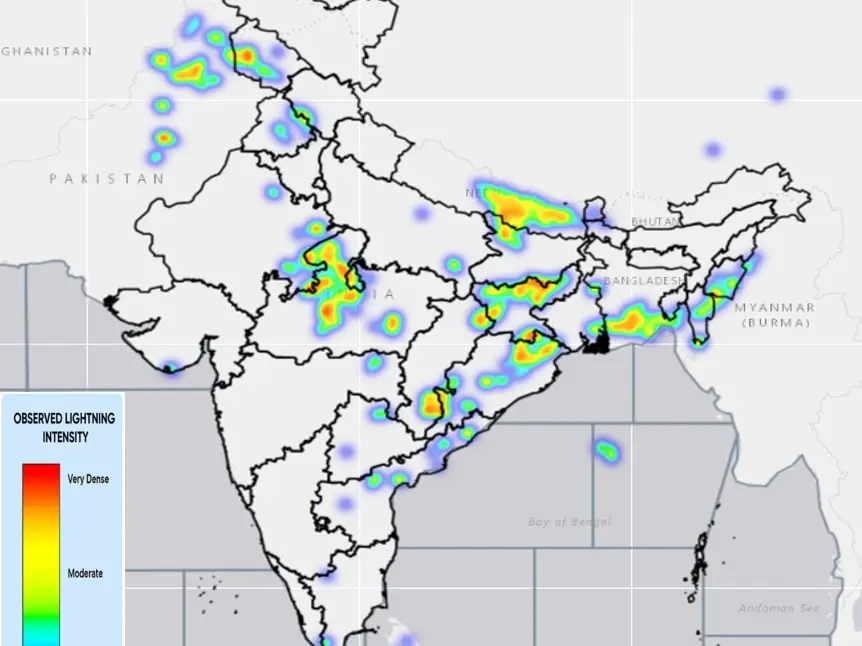
Image released by the Indian MeT Department Photograph: (X (@Indiametdept))
Western Disturbance brings dense clouds, rain, thunderstorms, and strong winds across North India; IMD warns of intense weather over the next few hours
India remained under a blanket of dense cloud cover on Friday (March 20) as satellite imagery revealed the widespread influence of an active Western disturbance affecting northern and central regions of the country. The images showed a thick cloud band stretching across North India, highlighting significant atmospheric instability and active weather systems dominating the region.
Western disturbance triggers widespread rain
According to the India Meteorological Department, the current weather pattern is being driven by a strong Western disturbance positioned over North Punjab and nearby areas. This system is interacting with cyclonic circulations over Haryana as well as parts of Madhya Pradesh and Uttar Pradesh. Supported by a well-defined trough line, these conditions have led to moderate to heavy rainfall across several parts of North India.
Additionally, another Western disturbance is expected to impact northwest India starting March 22, which may further alter weather patterns in the coming days. Although North India remains the most affected, satellite observations show cloud activity spreading across central and eastern regions, with rainfall expected to gradually shift eastward.
What satellite imagery shows?
Infrared satellite imagery indicates moderate to very intense convective activity across multiple regions. The IR-1 channel, used for monitoring cloud and surface temperatures, provides key insights: Bright white patches indicate high-altitude, cold cloud tops typically linked to strong storm activity; Darker regions reflect warmer surfaces or lower cloud formations. This technology plays a crucial role in tracking storm intensity, rainfall distribution, and atmospheric movement, even during nighttime.
Weather outlook for March 20
For North India, including Delhi-NCR, forecasts suggest:
- Predominantly cloudy skies throughout the day
- Light rain during the morning hours
- Light to moderate rainfall accompanied by thunderstorms later in the day
- Gusty winds reaching speeds of 30–40 kmph in the afternoon and evening
Trending Stories
)
)
&im=FitAndFill=(700,400))
)
)
)
)
)
)
&im=FitAndFill=(700,400))
&im=FitAndFill=(700,400))
)
)
)
)
)
)
&im=FitAndFill=(700,400))
&im=FitAndFill=(700,400))
)
)
&im=FitAndFill=(700,400))
)
)
)
)
)
Meteorologists warn that the next 6–8 hours are particularly critical, with moderate to heavy rainfall expected before conditions improve by evening.

