Opinion: Why this Kolaveri di, Mr Modi?


Modi
Modi, in one sweeping stroke, wanted to completely discredit the Congress. From the Partition to corruption, according to PM Modi, everything marks the failure of the Congress to stand as a plausible political alternative to the BJP.
As Prime Minister Modi stood up to speak on the motion of thanks to the President's address on the Budget, the nation, drawing from past precedents, was expecting the prime minister to discuss and reflect on the nation's economic goals, the path to be taken and the challenges involved in the process. But the prime minister was in no mood for a constructive speech. Rather, he chose to launch a frontal attack on the Congress party.
Modi's speech was akin to brutal bantering of an election campaign, where the sole goal usually is to tear apart the contesting candidate. But this was on the floor of the parliament and the occasion was rather a customary motion of thanks following one of the most important budgets of the recent years.
Why did the prime minister lose his cool? More importantly, why the entire speech targeted the Congress party by bringing in instances, such as Partition and the Kashmir, for which the blame game is going on for just too long. Hindsight is always 20-20. It is purely an exercise in rhetoric to say that Kashmir would have been all ours if Vallabh Bhai Patel had been the prime minister.

Advocates of strong nationalism, such as Prime Minister Modi, often like to keep faith on "blood and iron" policy of statesman, such as Bismarck. But the prime minister would do well to keep in mind that Bismarck succeeded in putting together a united Germany because of growing force of nationalism on the ground that favoured such a unification measure; the Prussian military could not have put together a bunch of recalcitrant states if they were unwilling. As a practitioner of politics, Modi would do well to ask himself, hand on heart, whether such willingness to join the Indian Union was visible among Kashmiris at the dawn of Indian independence.
Rather than playing the blame game with Congress over Kashmir, Prime Minister Modi would have done well to reflect on how it plans to resolve the Kashmir question. That would have constituted a constructive speech worthy of a statesman.
To blame Congress for the Partition is not new either. Partition historian Ayesha Jalal has shown through meticulous research, the Congress's responsibility in the Partition of India. Not agreeing to the Partition would have meant either a civil war or a weak central government. But this kind of academic debates was not what the nation was expecting. And, honestly speaking, Modi was not even logically analysing these issues or contextualising them within the current politics, he was slamming down the Congress for all our national ills.
)
Mushtaq Khan dies at 56: When Welcome actor opened up about his salary for iconic role Ballu
)
US Supreme Court backs Trump administration's use of SAVE database to check voter citizenship
)
Heart of the Beast review: Brad Pitt leads a gripping tale of survival and loyalty
)
Outrage erupts after 3-year-old is married to 60-year-old man in Pakistan, link to her sister's murder being probed
)
Pakistan deploys over 20,000 security personnel as PTI vows march for Imran Khan's release
)
Asian Games: Shooting spree continues as India win silver in women’s 50m rifle 3P team event
)
‘Not just a local tragedy’: Nepal PM Shah warns UN of growing climate threat, says Nepal floods were 'a warning to the world'
)
OpenAI AI Agents hacked 4 websites before Hugging Face, researchers reveal
)
Pentagon quietly adds 37 wounded troops to Iran war tally without explaining when or how
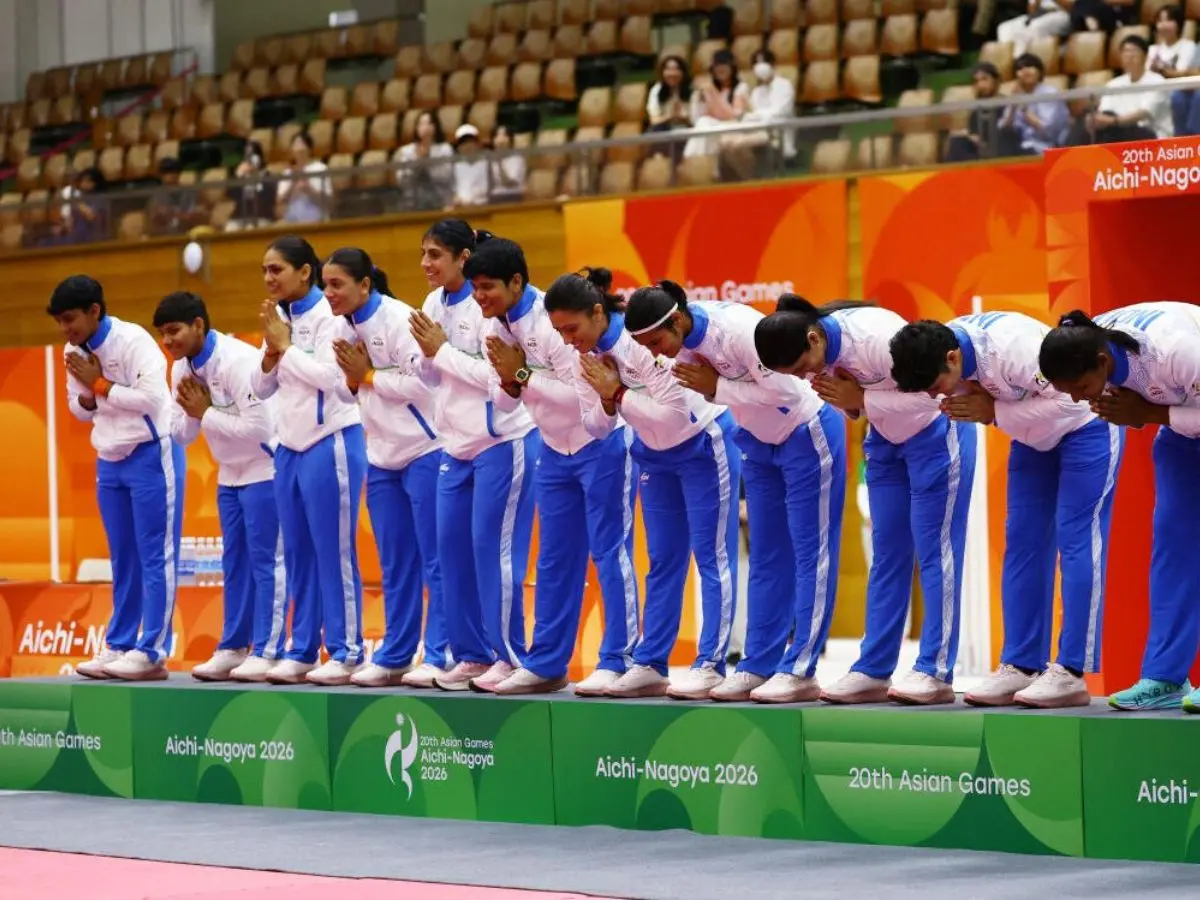)
Asian Games 2026: India women’s kabaddi team edge Iran 37-34 to clinch 3rd gold medal
)
Saudi Arabia still harbours intent to develop nuclear weapons, reveals US intelligence: Report
&im=FitAndFill=(700,400))
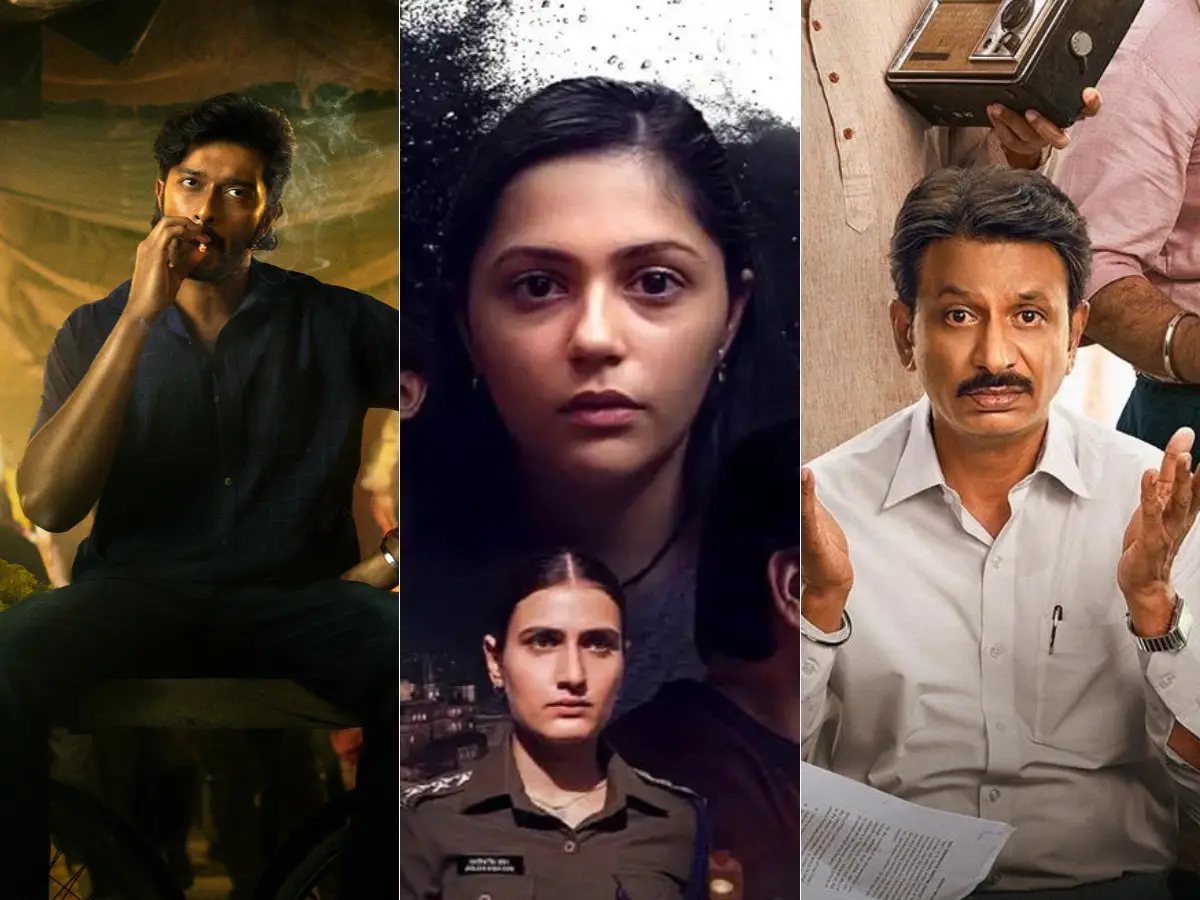
New Friday OTT releases (September 25, 2026): Don’t Be Shy, Hunkkaar: The Roar, Mango Pachcha- 6 movies and TV shows on Netflix, Prime Video and more
)
Yemen's war escalates: Saudi-backed leader calls for general mobilisation against the Houthis
)
‘Attack on Mecca a red line for Pakistan’: Shehbaz Sharif warns Houthis at UN
)
Tesla is preparing something big for Optimus: new Gen 3 models surface in app
)
Bias or safety concerns? Bengaluru CEO says firm will not hire men from UP, Bihar, Rajasthan, MP. Here's why
)
Did Hitler kill his niece Geli Raubal? Newly found records reopen a 95-year-old mystery
)
Indian diplomat Petal Gahlot raises deteriorating situation in Pakistan-occupied Kashmir in right of reply at UN
)
Nigeria Navy moves to boost oil security, tackle crude theft and infrastructure threats
)
Scientists detect first radio signals directly from faraway planet
)
‘It is all possible’: Putin weighs next steps on Ukraine talks, rules out Europe conflict
)
10,000 gather in support of 87-year-old forcefully evicted from home of 71 years
)
Trump rejects Iran's 7-day ceasefire proposal as US weighs renewed bombing after midterms: Report
)
Red Sea crisis: Houthis promise not to target European ships; UNSC condemns Saudi attacks
)
Gaza's war turned environmental damage into second crisis
)
Saudi oil exports surge despite Iran war
)
Trump-Xi summit wrap: Big pageantry, Iran talks, few major developments and more meetings planned
)
'Making history': Xi Jinping praises Trump as US-China leaders dine at White House
)
India's UN Envoy slams Pakistan: 'They claim security by day, terrorism by night'
)
Jay-Z rape case: Accuser says allegations were false, never met rapper
)
Myanmar training camp case: US national, 6 Ukrainians allowed to meet their families abroad
)
'FIRST LOOK from inside Noah’s Ark': Researchers share video from inside mysterious mound in Turkey
)
Cindy Crawford’s son Presley Gerber cremated as death probe continues
)
India's insurance regulator overhauls policies
)
WATCH | As Shehbaz Sharif claims Pakistan’s ‘victory’ during 2025 conflict, Indian diplomat R Srinivas laughs at UN
)
‘Goal is to win it’: Virat Kohli confirms 2027 ODI World Cup will be his final tournament for India
)
'A terrorist country is asking me that question?': Jaishankar hits back at Pakistani journalist at UN; flags attacks on commercial shipping
)
US court backs Pentagon's decision to exclude Anthropic over Claude AI restrictions
He wanted to blame Congress for all the ills of the nation-state. But the nation can turn back and ask him why is this blame game necessary because what we want, rather, is a constructive approach to finding solutions to fundamental problems of poverty, security, and corruption.
Maybe the fact that he did not have the answers or a roadmap for these issues that led Modi to take an offensive stance. After all, who does not know, offense is the best defense.
Modi has a lot to worry about. The Budget of 2018 has not pleased anybody. Even launching of the so-called world's largest healthcare system is raising concerns. Experts are pointing out that this not what an universal healthcare should look like because the government of India, in this case, will be spending public money to pay offinsurance agencies, both private and public.
There are doubts pertaining the provisions announced for the agricultural sector. Unemployment continues to be the Damocles' sword hanging over the current government.
On GST, launched with much fanfare, the Modi government has made several compromises. The demonetisation measures have received almost a wholesale flak from experts to the common man.
The sheen of the win in the Uttar Pradesh election has lost much of its lustre, particularly, after the Gujarat election. And new elections are coming up in the North-Eastern states of Assam, Meghalaya and Nagaland where BJP is treading very carefully. There are very crucial elections coming up in Karnataka, Jharkhand, Madhya Pradesh and Rajasthan.
Modi, in one sweeping stroke, wanted to completely discredit the Congress. From the Partition to corruption, according to PM Modi, everything marks the failure of the Congress to stand as a plausible political alternative to the BJP.
The vicious reaction of Modi is leading me to wonder if, after all, the 'lion chest' prime minister is unsettled by the challenges he foresees in the upcoming elections. Modi's dismissive attitude towards Rahul, calling him a dynast and, therefore, not a democrat, is actually a tale-telling sign of angst in the BJP camp. Contrary to their expectations, things are not moving as smoothly.
Modi's speech today at the Lower House of the Indian Parliament did not bear the mark of a confident leader. Rather, it appeared a masked attempt to find legitimacy through discrediting of the opposition party. The Indian electorates may find out the chink developing in the armour, Mr Modi.
(Disclaimer: The opinions expressed above are the personal views of the author and do not reflect the views of ZMCL)