No SIM, no towers: How LoRa radios are changing terror communication in Kashmir

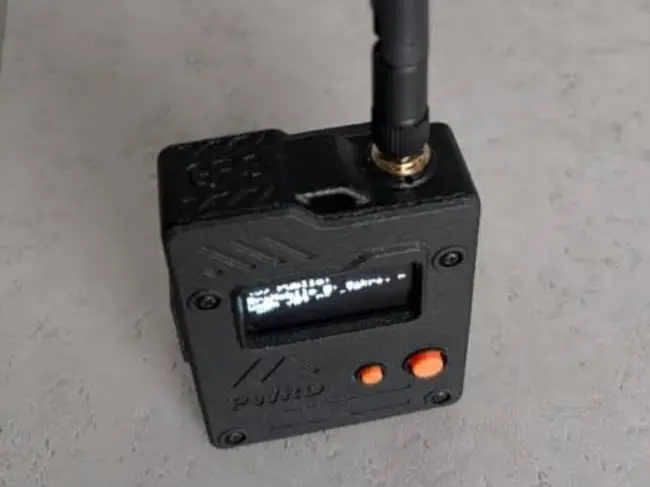&imwidth=600&imheight=450&format=webp&quality=medium "No SIM, no towers: How LoRa radios are changing terror communication in Kashmir")
Photograph: (WION)
The recovery of an encrypted, SIM-less LoRa radio from slain Lashkar-e-Taiba commander Hashim Moosa has raised fresh concerns for security forces over off-grid terror communications in Kashmir.
Security forces in Jammu and Kashmir are facing a new communications challenge after an encrypted, SIM-less LoRa radio was recovered from slain Lashkar-e-Taiba commander Hashim Moosa alias ‘Fauji’ following an encounter in central Kashmir's Budgam district.
The military-grade “LoRa Ultra” handset, found alongside an AK-47 and other material, is similar to encrypted LoRa devices recovered from locations linked to the Pahalgam attack module in the forests between Dachigam and Pahalgam.
Unlike conventional mobile phones, LoRa radios do not depend on cellular towers, SIM cards or Wi-Fi. The low-power devices can form mesh networks, enabling encrypted messages, GPS coordinates and SOS alerts to be relayed across difficult terrain.
Security officials describe the technology as a new form of “terror communication 2.0” because it can operate outside conventional telecom networks, leaving few of the digital traces normally available through mobile surveillance.
Forensic analysis has reportedly indicated that the devices were professionally manufactured and pre-encrypted, pointing to an organised supply chain. Their precise sourcing and extent of use remain under investigation.
Trending Stories
)
)
)
)
)
)
)
)
)
)
)
)
)
)
)
)
)
)
)
)
)
)
)
)
)
)
)
)
)
)
)
)
)
)
&im=FitAndFill=(700,400))
)
)
)
)
The technology has also forced security agencies to adapt their surveillance methods. RF spectrum scanners and direction-finding systems are being deployed to detect and locate low-power transmissions, while electronic countermeasures are being adjusted to target the frequencies used by the devices.
Officials believe the growing use of off-grid communications could significantly complicate intelligence gathering in Kashmir’s mountainous and forested areas, where conventional telecom-based surveillance has limitations.