Mumbai needs to stop growing towards the sea

Mumbai can lead the way in sustainable cities
On World Cities Day, opinion builders, policymakers and the city administrators need to focus on rehabilitation and reconstruction of informal settlements.
The metropolis of Mumbai is not only the financial capital of India it is also a reflection of India’s progress in the last 70 years of Independence. With a population of 18.41 million, the megalopolis ranks among the top 20 cities on the basis of GDP; annual gross domestic product of Mumbai exceeds $400 billion.
However, the flip side of the shimmering success is creaking infrastructure, overpopulation, unplanned growth, spreading urban sprawl and a general decay of quality of life.

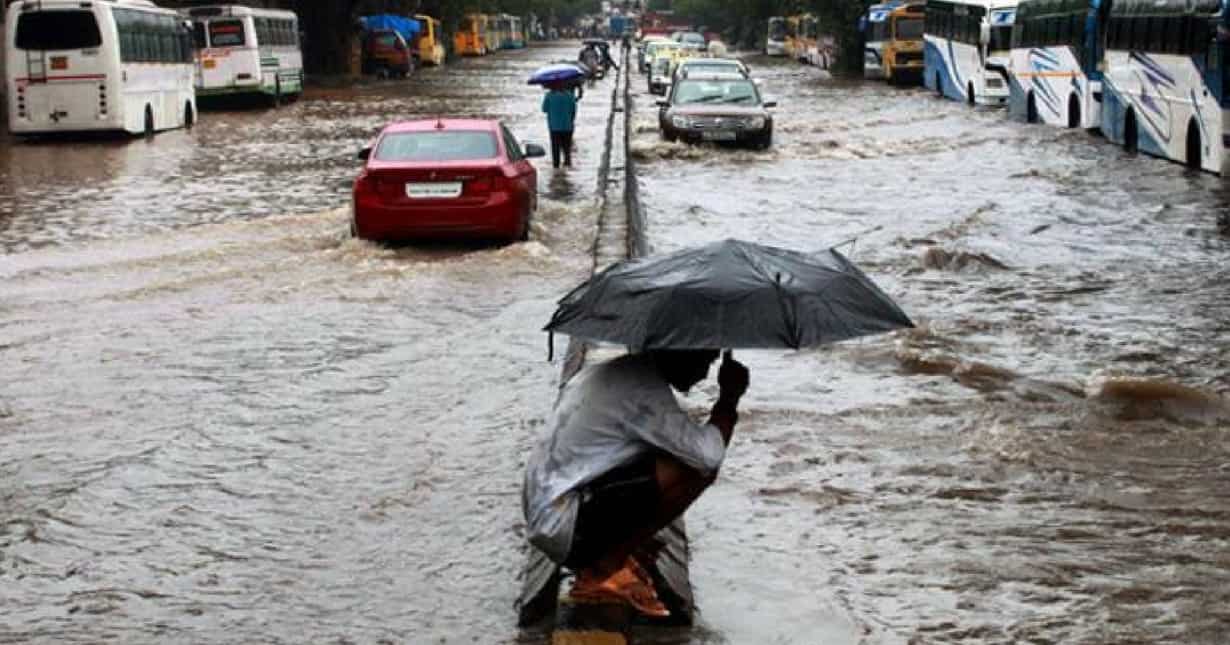
This weakness is aggravated during the monsoons, especially on days when there is an unusually heavy downpour. We all remember the floods of 2005 that took its toll on the people as well as the economy. Estimates suggest approximately 1000 people died and the city lost $100 million in business in just two days.
Since then Mumbai residents have witnessed flooding, waterlogging and building collapsing during the monsoons. The severity is nowhere near 2005 levels, still, it’s bad.
)
What’s in a name? Trump’s 'Lake America' move gets a tit-for-tat response from Canada
)
Outrage erupts after 3-year-old is married to 60-year-old man in Pakistan, link to her sister's murder being probed
)
Trump gifts Xi a bald eagle sculpture at White House dinner: Here’s what it symbolises
)
‘Not just a local tragedy’: Nepal PM Shah warns UN of growing climate threat, says Nepal floods were 'a warning to the world'
)
Farhan, who went viral for AK47 celebration vs India in Asia Cup, hopes to lead Pakistan beyond Asian Games
)
CNN, Politico and MS NOW back in White House after judge blocks Trump’s media ban
Don't Be Shy movie review: A frothy coming-of-age tale that is too shy to experiment
)
Park Ji Hyun makes history as first Korean actress nominated for International Emmy
)
Tesla is preparing something big for Optimus: new Gen 3 models surface in app
)
Bias or safety concerns? Bengaluru CEO says firm will not hire men from UP, Bihar, Rajasthan, MP. Here's why
)
Trump's welcome to Xi demonstrates 'attraction' to dictators: Chuck Schumer
)
Nations League: Germany draw on Klopp debut; Portugal, Norway win
)
WION Iconic Tourism Summit 2026: Union Minister Shekhawat on 'experiential travel', peace diplomacy
)
Scientists detect first radio signals directly from faraway planet
)
A seven-day roadmap? Iran proposes plan to end war, reopen Strait of Hormuz and resume nuclear talks
)
The Vvaan Review: This Ekta Kapoor's Tulsi Virani-coded world can't be saved by Sidharth Malhotra and Tamannaah Bhatia
)
China to test supersonic jet that moves at Mach 2, double the speed of sound
)
Xi Jinping's 'special plane' vs Trump's Air Force One: What's the difference?
)
UNGA 2026: Israeli PM attacks Britain, France for past colonialism
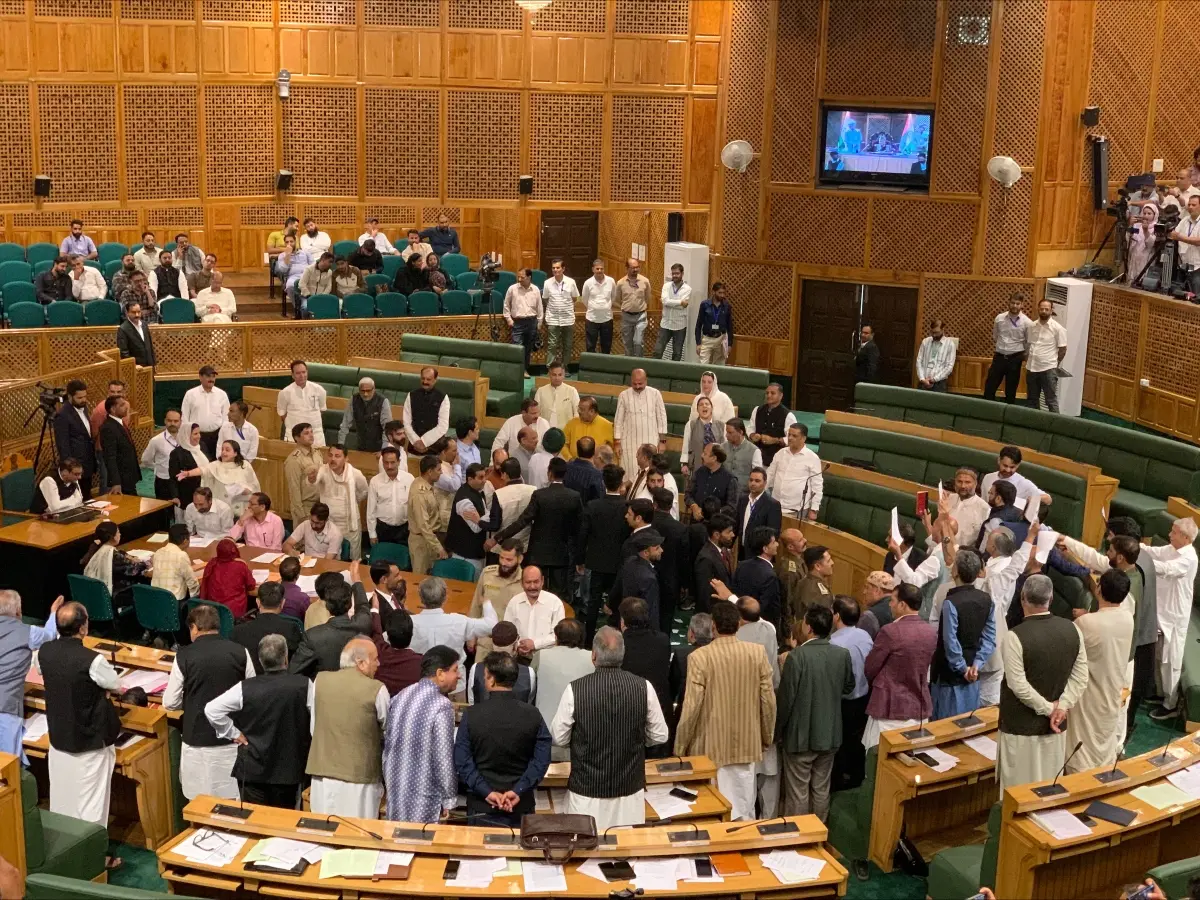)
Ruckus in J&K Assembly over statehood resolution; BJP leaders enter well of house
)
West Indies coach Sammy looking at India series as opportunity to finetune ahead of ODI World Cup 2027 qualifiers
)
‘We’ve never gotten along better’: Trump praises Xi, jokes about White House ballroom at high-stakes state dinner
)
Air India pilot suspended after failing pre-flight alcohol test on Zurich-Delhi route
)
Yemen called Trump for US military support in fight against Houthis: Official
)
Meet Adrian Abraham: 9-year-old Indian-origin guitar prodigy aiming for a Guinness World Record
)
US faces fresh cost crunch as mortgage rates hit 7%, oil tops $107 and gas prices surge
)
'Blockbuster' nor'easter develops an eye similar to hurricanes as warnings are issued
)
WATCH: Pak PM Shehbaz Sharif refuses to answer on Hafeez Sayeed, walks away
)
OpenAI is building AI to fight cyber threats: What GPT-6 Cyber means for security
)
'Making history': Xi Jinping praises Trump as US-China leaders dine at White House
)
'What kind of confession is this?': Pakistan PM Shehbaz Sharif’s 'terrorists would be roaming New York' remark goes viral, raises alarm online. Watch
&im=FitAndFill=(700,400))
Netanyahu at UN: Mass walkout, attack on Mamdani and Iran threats | In Pics
)
'We do not wish to continue. It's America that must choose': Iran president Pezeshkian calls on US to end war
)
Bollywood mourns Mushtaq Khan: Sunny Deol, Rajpal Yadav and others pay tribute
)
Myanmar training camp case: US national, 6 Ukrainians allowed to meet their families abroad
)
'FIRST LOOK from inside Noah’s Ark': Researchers share video from inside mysterious mound in Turkey
)
Israeli envoy to US Yechiel Leiter’s son critically injured in West Bank ramming attack
)
'Fund people, not bombs': Hundreds take to New York streets as Netanyahu delivers speech at UN; dozens arrested
)
Susan Sarandon and Hannah Einbinder detained by NYPD outside UN Headquarters
)
Mumbai is a prime example of a very 21st-century dilemma – how to keep the engine of development chugging along without hurting the environment in which it is functioning.
Surprisingly, the city’s geographical location and its eco-system provide a unique opportunity to create a model sustainable city that can act as a template for other large port cities to follow.
The narrow strip on which the megalopolis rests has 149 km of coastline and seven interconnected islands. It also boasts of 16 kilometers of beaches and four rivers Oshiwara, Mithi, Dahisar and Poisar which together have a length of more than 41 kilometres.
Incidentally, Mumbai is one of the few fortunate cities globally that has over 70 sq. km of creeks and mangroves. However, this rich ecosystem is besieged by unplanned development, very high rates of migration in the last 3 decades, rampant dumping of waste in the rivers and encroachment of beeches and coastline by real estate developers.
This has led to choking of rivers, their tributaries and other water channels. The building of residential and commercial properties in the catchment areas of the river and wetlands has further eroded the natural capacity of the terrain to deal with large flows of water.
During monsoons when water flows increases there is no natural or man-made capacity to provide it with an outlet or accommodate it. This results in water logging and flooding.
This state of infrastructure will make Mumbai increasingly vulnerable to disasters induced by extreme weather conditions that will increase in ferocity and regularity due to intensifying climate change.
The vulnerability will be more acuteas the city has persisted with ineffective land use planning and insufficient investment in infrastructure. The spread of informal settlements with poor quality housing and lack of disaster preparedness has gone on for long.
The good news is that there is enough resilience left in Mumbai’s geography, ecology and people to script a turnaround. This spirit was visible recently in the case of lawyer Afroz Shah who started cleaning the Versova beach and then was joined by various citizen groups.
He is not alone, residents of Bandra Band Stand forced Maharashtra Maritime Board to complete Bandra Bandstand Promenade repair work.
Yet these encouraging citizen interventions are not enough to turn a city’s fortunes. It needs an institutional push from the top which means sustained action by the government. Town planners in the state government and Brihan Mumbai Municipal Corporation (BMC) need to look at the sustainable development paradigm as the way forward.
It should be built on the 17 parameters of Sustainable Development Goals (SDGs) as envisaged by the United Nations. Among the goals, number 3 (good health & well being), 10 (reduced inequalities), 12 (responsible consumption & production), 14 (protecting life below water) and 15 (protecting life on land) can act as the basis for immediate action.
October 31st is designated as World Cities Day by the United Nations. In the 21st century, the importance of this day can’t be overemphasised. The opinion builders, policymakers and the city administrators can together take a pledge today to stop the city from expanding towards the sea through encroachment on its coasts and beeches.
It should also save its mangrove forests and revive them where they have been degraded. It should also start working to decongest the sever lines and internal drainage channels, especially the four rivers, to save itself from drowning during rains.
Rehabilitation and reconstruction of informal settlements need to be pursued on a mission mode for the long-term health and resilience of the city. Honest and sustained initiatives in these core areas would be the best way to commemorate the World Cities Day.
It is a long and difficult road but worth taking as the cost of not acting now will be far greater than the benefits of tough decisions taken today.