India monsoon update: Satellite image shows massive clouds moving towards India

&imwidth=600&imheight=450&format=webp&quality=medium "India monsoon update: Satellite image shows massive clouds moving towards India")
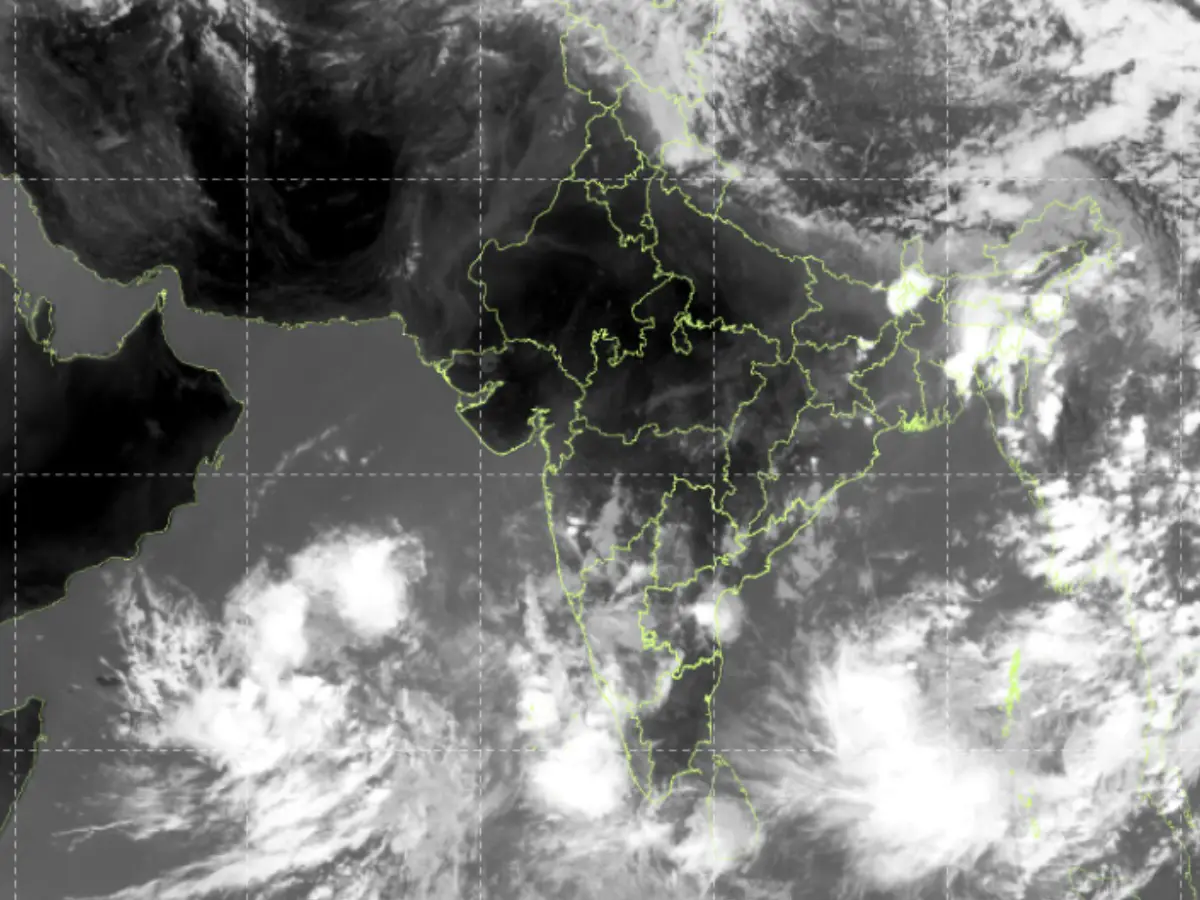
India Meteorological Department released this satellite image showing huge cloud surge over Arabian Sea and Bay of Bengal. Photograph: (India Meteorological Department)
Monsoon in India: Satellite images released on Friday show massive monsoon cloud systems rapidly building over the Arabian Sea and Bay of Bengal. Meteorologists said that this shows that the southwest monsoon is accelerating and could reach Kerala ahead of schedule.
Satellite images from the India Meteorological Department (IMD) show that huge monsoon cloud systems are rapidly building over the Arabian Sea and Bay of Bengal and moving towards the Indian coast. North and central India are currently under an intense heatwave, with even nighttime temperatures refusing to drop.
The IMD released an INSAT-3DS thermal infrared satellite image on Friday, which shows dense cloud bands stretching across the southern Arabian Sea, the Bay of Bengal and parts of the eastern Indian Ocean. Experts said that this shows that the southwest monsoon is fast building up as it moves towards Kerala.
Intense convective activity over both seas can be seen in the satellite image, besides thick cloud masses feeding moisture moving towards India. A dense cloud concentration is visible over southern Sri Lanka and the southeast Arabian Sea. Both these regions are crucial for the onset of the monsoon over Kerala.
Monsoon could reach India ahead of time
Meteorologists say that the extreme heating over landmass is also helping pull winds filled with moisture from the Indian Ocean and towards the continent. This is an important aspect of monsoon circulation.
Trending Stories
&imwidth=280&imheight=210&format=webp&quality=medium)
&imwidth=280&imheight=210&format=webp&quality=medium)
&imwidth=280&imheight=210&format=webp&quality=medium)
&imwidth=280&imheight=210&format=webp&quality=medium)
&imwidth=280&imheight=210&format=webp&quality=medium)
&imwidth=280&imheight=210&format=webp&quality=medium)
&imwidth=280&imheight=210&format=webp&quality=medium)
&imwidth=280&imheight=210&format=webp&quality=medium)
&imwidth=280&imheight=210&format=webp&quality=medium)
&im=FitAndFill=(700,400)&imwidth=280&imheight=210&format=webp&quality=medium)
&im=FitAndFill=(700,400)&imwidth=280&imheight=210&format=webp&quality=medium)
&imwidth=280&imheight=210&format=webp&quality=medium)
&imwidth=280&imheight=210&format=webp&quality=medium)
&imwidth=280&imheight=210&format=webp&quality=medium)
&imwidth=280&imheight=210&format=webp&quality=medium)
&imwidth=280&imheight=210&format=webp&quality=medium)
&imwidth=280&imheight=210&format=webp&quality=medium)
&imwidth=280&imheight=210&format=webp&quality=medium)
&imwidth=280&imheight=210&format=webp&quality=medium)
&imwidth=280&imheight=210&format=webp&quality=medium)
&imwidth=280&imheight=210&format=webp&quality=medium)
&imwidth=280&imheight=210&format=webp&quality=medium)
&imwidth=280&imheight=210&format=webp&quality=medium)
&imwidth=280&imheight=210&format=webp&quality=medium)
&imwidth=280&imheight=210&format=webp&quality=medium)
&imwidth=280&imheight=210&format=webp&quality=medium)
&imwidth=280&imheight=210&format=webp&quality=medium)
&imwidth=280&imheight=210&format=webp&quality=medium)
&imwidth=280&imheight=210&format=webp&quality=medium)
&imwidth=280&imheight=210&format=webp&quality=medium)
&imwidth=280&imheight=210&format=webp&quality=medium)
&imwidth=280&imheight=210&format=webp&quality=medium)
&imwidth=280&imheight=210&format=webp&quality=medium)
&imwidth=280&imheight=210&format=webp&quality=medium)
&imwidth=280&imheight=210&format=webp&quality=medium)
&im=FitAndFill=(700,400)&imwidth=280&imheight=210&format=webp&quality=medium)
&imwidth=280&imheight=210&format=webp&quality=medium)
&imwidth=280&imheight=210&format=webp&quality=medium)
&imwidth=280&imheight=210&format=webp&quality=medium)
Strong cloud surges over the Arabian Sea and active thunderstorm clusters over the Bay of Bengal are expected to strengthen further in the coming days. Thunderclouds are rapidly rising through the atmosphere, a precursor to widespread monsoon rainfall. If the pattern continues, the monsoon could reach Kerala ahead of schedule.
Heatwave in India
The update on the start of the monsoon season in India comes as major relief amidst extreme conditions. India is battling a harsh heatwave that has gripped major parts of the country. Temperatures across parts of Rajasthan, Uttar Pradesh, Bihar, Jharkhand, Chhattisgarh, Odisha and Vidarbha soared past 45 degrees Celsius. Several other regions, including Delhi, are witnessing temperatures above 42 degrees Celsius.
Heating across the Indo-Gangetic plains and central India has intensified because of northwesterly winds and clear skies. The dry conditions have added to the current situation. In urban cities, the Urban Heat Island effect is being experienced, where the hot wind is getting caught between structures because of asphalt and concrete.

