

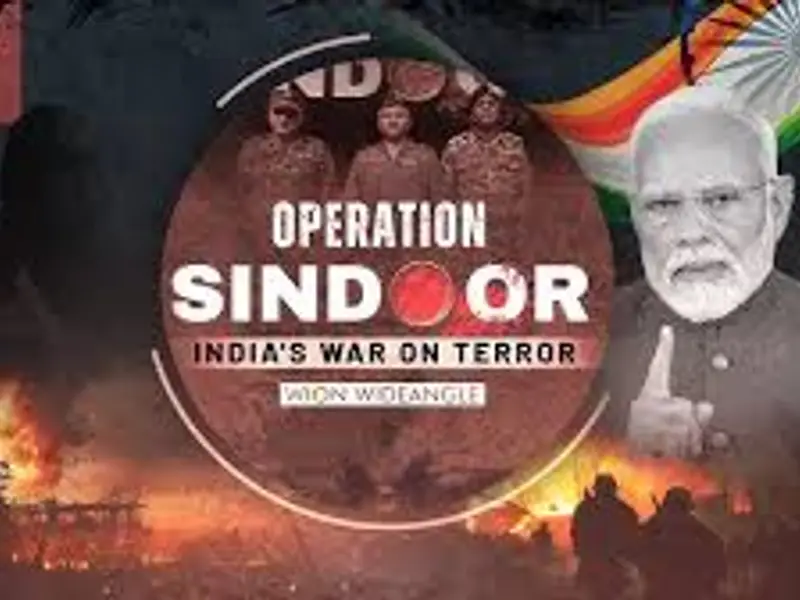
You have to listen carefully when Prime Minister Narendra Modi speaks, and I am not talking about his much-publicised 8 PM or 9 PM addresses to the nation or to his weekly Mann Ki Baat radio talk in which he speaks in softer tones that smack of classroom lectures. In an atmosphere of geopolitical stress, it is best to have an ear to the ground on what he tells his officials in private meetings.
It is clear that behind all the bluster and deserved cheerleading of the Army for Operation Sindoor that bludgeoned Pakistan’s air bases and terror camps, there is a quiet stock-taking that shows that this was not a conventional war victory moment but one that requires a steady cost-benefit analysis, to borrow a memorable phrase from project management. It is becoming increasingly clear that despite the claims of Home Minister Amit Shah that the world is in awe of India and Pakistan is living in fear, there is a case for a reality check on various fronts.
Modi himself seems to be well aware of this, though in the typical style of his Bharatiya Janata Party (BJP), bombastic claims of power are projected outwards. Quiet calculations take place behind the scenes, keeping in mind a desire for populist needs at home and a tightrope walking overseas.
A day after India’s Operation Sindoor on May 7, Modi chaired a high-level meeting with secretaries of various government departments while images and news, false and true, of India’s thundering achievements flooded the mainstream and social media alike. The media noise drowned murmurs of the closed-door meeting where the prime minister spoke of civil defence, operational continuity, and institutional resilience. Behind such bureaucratic expressions lie a grim truth that is trickling out slowly: the PM told tense bureaucrats to prepare for a “long haul” . That also explains India’s all-party outreach across the planet to build diplomatic strength. Modi also warned on attempts to sabotage Indian facilities through cyber-attacks on infrastructure and software that have become increasingly critical.
There’s more, if we only to care to acknowledge the interconnectedness of various aspects of geopolitical and geoeconomic engagements over the past decades. I would call it the 5T problem in which things seemingly not connected with each other in effect indeed are through a common thing call diplomacy. The five Ts are Terror, Territory, Trade, Technology, and last but not the least, Trump!
Morality and international postures linked to terror have been evidently stumped by bilateral interests and perspectives which perhaps explains how all the hard work done by India since the 26/11 attacks of 2008, and possibly earlier, does not wither the false-equivalence tag: one in which state-sponsored or blessed terror networks of Pakistan and the ruthless killing of innocents at Pahalgam in April that provoked Operation Sindoor are obfuscated in the catch-22 trap of India and Pakistan being dubbed as “nuclear armed rivals” at a flashpoint.
Trending Stories
&im=FitAndFill=(700,400)&imwidth=180&imheight=135&format=webp&quality=medium)
Navratri 2026: 9 days, 9 forms of Goddess Durga and 9 colours- Check the complete list
&imwidth=180&imheight=135&format=webp&quality=medium)
Trump claims ‘energy ceasefire’ between Russia and Ukraine; Zelensky says ‘news for me’
&im=FitAndFill=(700,400)&imwidth=180&imheight=135&format=webp&quality=medium)
Is sending robots to Mars easier than sending humans?
&imwidth=180&imheight=135&format=webp&quality=medium)
‘If Russia stops…’: Zelensky says Ukraine ready to halt oil refinery strikes on THIS condition
&imwidth=180&imheight=135&format=webp&quality=medium)
Amitabh Bachchan celebrates birthday with fans at Jalsa during Sunday darshan | Watch
&imwidth=180&imheight=135&format=webp&quality=medium)
1,500 drones illuminate Mumbai sky as Cordelia Cruises unveils second ship, Cordelia Sky
&imwidth=180&imheight=135&format=webp&quality=medium)
‘Please tell Putin...’: Zelensky says Ukraine will hold elections if Russia agrees to 60-day ceasefire
&imwidth=180&imheight=135&format=webp&quality=medium)
Delhi Sikh Gurudwara Committee files complaint against Kejriwal, AAP leaders for ‘violating sanctity’ of Bangla Sahib
&imwidth=180&imheight=135&format=webp&quality=medium)
CJI Surya Kant declines INDIA bloc leaders’ request for meeting ahead of march to SC, asks them to file petition
&imwidth=180&imheight=135&format=webp&quality=medium)
After crackdown on CJP, opposition to march to Supreme Court Monday over ‘vote chori', removal of CEC
&imwidth=180&imheight=135&format=webp&quality=medium)
One Indian killed in Riyadh airport attack; 11 others injured : MEA
&imwidth=180&imheight=135&format=webp&quality=medium)
Cordelia cruises unveils second ship | CEO Jurgen Bailom hails momentous occasion
&imwidth=180&imheight=135&format=webp&quality=medium)
Nathan Lyon completes 1,000 Test runs at No. 10 to script rare cricket feat
&imwidth=180&imheight=135&format=webp&quality=medium)
The Dirty Picture 2: Ektaa Kapoor confirms sequel to Vidya Balan's 2011 film
&imwidth=180&imheight=135&format=webp&quality=medium)
On cam: IndiGo flight en route to Chennai diverted to Hyderabad as power bank catches fire - Here’s what happened next
&imwidth=180&imheight=135&format=webp&quality=medium)
Cordelia cruises unveils second ship | drone formations depict Mumbai, India & the new ship
&imwidth=180&imheight=135&format=webp&quality=medium)
Nepal flash floods swallow homes and bridges a month after devastating disaster
&imwidth=180&imheight=135&format=webp&quality=medium)
'Ouch!!! That must hurt': Kangana Ranaut hails Kamal Haasan's sharp reply to Elon Musk over Starlink row
&imwidth=180&imheight=135&format=webp&quality=medium)
Sidhu Moose Wala’s younger brother wins hearts by recreating late singer’s signature move at Toronto Hologram Show
&imwidth=180&imheight=135&format=webp&quality=medium)
IND vs WI, 3rd T20I: Arshdeep, Abhishek star as India secure 14-run win over West Indies
&imwidth=180&imheight=135&format=webp&quality=medium)
IND vs WI, 3rd T20I: Abhishek Sharma smashes 18-ball fifty, sets record for fastest to 2,000 T20I runs
&imwidth=180&imheight=135&format=webp&quality=medium)
UK school ditches technology, shifts from screen to pen and paper for learning
&imwidth=180&imheight=135&format=webp&quality=medium)
Apple strikes deal with AI audio startup Huxe after shutdown, raising questions over future podcasts
&imwidth=180&imheight=135&format=webp&quality=medium)
Houthis claim Riyadh airport attacks, Aramco strikes; issue fresh warning to airlines, travellers and workers
&imwidth=180&imheight=135&format=webp&quality=medium)
Portugal Federation confirms Cristiano Ronaldo’s return to national team despite suspension
&imwidth=180&imheight=135&format=webp&quality=medium)
US taps strategic petroleum reserve, releasing 4 million barrels after hurricane isaias disruption
&imwidth=180&imheight=135&format=webp&quality=medium)
Anthropic AI safety test uncovers website exploits, unpaid database access and fake police tip
&imwidth=180&imheight=135&format=webp&quality=medium)
BTS’ RM raises privacy concerns over drones, lasers outside hotel amid Lima concert, urges fan respect
&imwidth=180&imheight=135&format=webp&quality=medium)
The street cannot govern India, but the government cannot ignore it either
&imwidth=180&imheight=135&format=webp&quality=medium)
3 students killed as allegedly drunk 19-year-old rams Mini Cooper into scooter
&imwidth=180&imheight=135&format=webp&quality=medium)
Nana Patekar's cause of death confirmed; here's what his postmortem report says
&imwidth=180&imheight=135&format=webp&quality=medium)
Microsoft CEO Satya Nadella says AI models need an ‘emergency brake’ to prevent loss of control
Events since Operation Sindoor show that things may not necessarily have changed significantly as the government might have wished. US goals to contain China and Trump’s own love for deal-making and self-praise have made him go soft on Pakistan, and the latest in this tale is a twist that suggests that the Trump family itself has business interests linked to World Liberty Financial, a crypto currency firm that is clawing into Pakistan.
Trump has also been open about his dislike for Apple manufacturing its famous iPhones in India, where his American populism buttresses his personal interests – and that is a threat for the much-touted “China Plus One” strategy in which India is a supposed investment beneficiary of US companies diversifying away from China. Only the naïve would believe that India’s diplomatic position in the aftermath of Operation Sindoor would not be a factor in forthcoming trade talks with the Trump administration.
Is the Modi government in a weaker position to negotiate? Only time will tell.
Officially, the territorial dispute between India and Pakistan over Kashmir is the core problem in bilateral relations but things have moved to a point where terror attacks by the same or similar jihadi networks happen anywhere on the planet, including the US, France, the UK and even Pakistan. Where and how does one police Pakistan’s support for terror networks? It is impossible to think of any credible supervision in the absence of some kind of international effort – and that involves diplomatic or trade costs for India, directly or indirectly.
Technology presents a new challenge where the digitalisation, miniaturisation and socialisation of technology have made conflict and espionage complicated. While Indian missiles effectively shot down swarms of Turkish-made drones in the visually evocative aftermath of Operation Sindoor, there are reports from Punjab of how Chinese drones are being used to drop narcotics and arms in Indian territory. If you link that to the arrest of Haryana YouTuber and travel blogger Jyoti Malhotra on charges of espionage or support for Pakistani spies, what you get is a quick-fix script for a Bollywood thriller that may be chillingly real. There is a new-age conflict in which easy communications and low-cost aerial vehicles can do much harm and keep border guards and domestic law enforcers equally awake. One columnist argues that India is better off investing in low-cost drones that are far more effective than the outrageously priced F35 fighter jets from the United States intended to form part of forthcoming trade talks.
Are we looking at a situation where there is an asymmetry between the state-of-the-art and the state of play?
Tongues are wagging on how good or not India’s French-made Rafale figher jets have been in Operation Sindoor. While officials, without quantifiying anything, shrug off collateral losses as par for the course in significant military operations, somewhere, someone has to keep scores on what worked – and did not.
At the ground level, there is the grim reality of religious tensions and social harmony. The Modi government deftly handled a potential Hindu-Muslim social discord in the aftermath of Operation Sindoor by projecting a Muslim woman, Colonel Sofia Qureshi, as a key army spokesperson. The positive outcome of that symbolic gesture is being undone by religiously coloured statements by the likes of Madhya Pradesh Minister Vijay Shah of the BJP, and the arrest by Haryana’s BJP government of Ashoka University professor Ali Khan Mahmudabad for making a pertinent remark about the government’s sincerity surrounding Col Qureshi’s role.
International diplomacy is no longer just between governments but involves the mainstream media, social media and the civil society at large. The all-party outreach by the Modi government is a good beginning, but a lot of plumbing needs to be done at home and abroad to ensure that the 5 Ts – terror, territory, technology, Trump, and trade, are harmonised to reduce the costs of Operation Sindoor and ensure long-term benefits. Taking all the five Ts is a bit like solving simultaneous equations in advanced algebra – and understanding their linkages is the first step.
