J&K records 34% rainfall deficit in March despite frequent western disturbances

&imwidth=600&imheight=450&format=webp&quality=medium "J&K records 34% rainfall deficit in March despite frequent western disturbances")
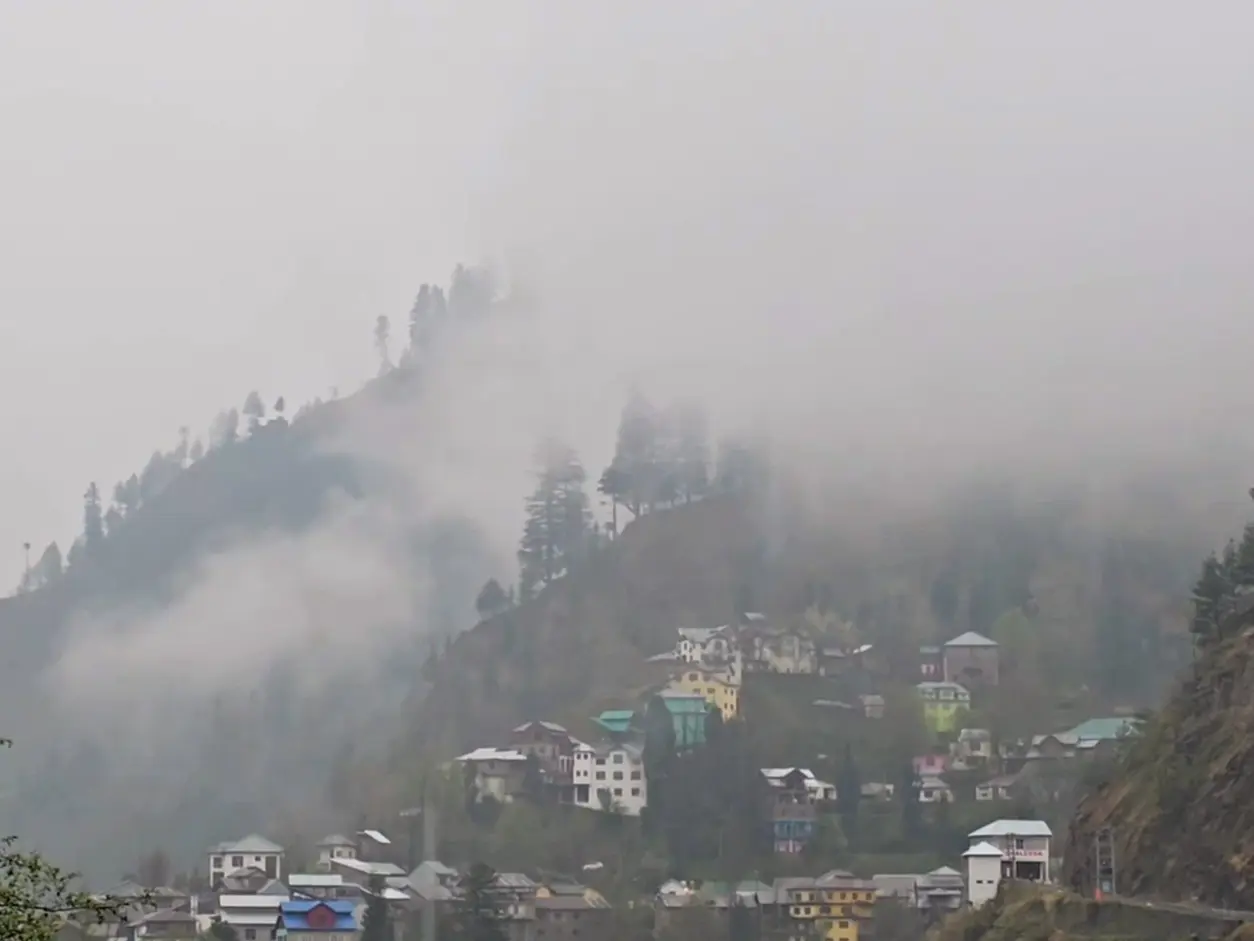
Dense fog engulfs the Bhalessa area, following a heavy rainfall in Doda, Jammu and Kashmir, on Sunday Photograph: (ANI)
According to meteorological data, the Union Territory received 100.7 mm of rainfall against the normal 152.9 mm, placing March firmly in the “deficient” category.
Jammu and Kashmir ended March 2026 on a markedly dry note, recording a significant 34% deficit in rainfall despite the passage of multiple active western disturbances during the month.
According to meteorological data, the Union Territory received 100.7 mm of rainfall against the normal 152.9 mm, placing March firmly in the “deficient” category.
The seasonal shortfall was evident across both capitals. Srinagar, the summer capital, recorded 88.5 mm of rainfall compared to its normal of 115.0 mm, a deficit of 23%. Jammu, the winter capital, experienced a steeper decline, receiving just 52.4 mm against the usual 92.3 mm—marking a 43% shortfall.
Across the Kashmir Valley, rainfall deficiencies were widespread. Districts such as Anantnag (-47%), Budgam (-44%), Bandipora (-35%), Pulwama (-25%), and Kupwara (-20%) all reported below normal precipitation. The situation was particularly difficult in Kulgam and Shopian, which recorded deficits of 61% and 74%, respectively, among the lowest in the region.
The Jammu division mirrored this trend, with several districts witnessing substantial rainfall shortages. Kathua (-62%), Udhampur (-51%), Doda (-52%), Ramban (-38%), Kishtwar (-37%), and Reasi (-36%) all reported significant deficits, underscoring a broader pattern of suppressed precipitation across the Union Territory.
Trending Stories
&imwidth=280&imheight=210&format=webp&quality=medium)
&imwidth=280&imheight=210&format=webp&quality=medium)
&imwidth=280&imheight=210&format=webp&quality=medium)
&im=FitAndFill=(700,400)&imwidth=280&imheight=210&format=webp&quality=medium)
&imwidth=280&imheight=210&format=webp&quality=medium)
&imwidth=280&imheight=210&format=webp&quality=medium)
&imwidth=280&imheight=210&format=webp&quality=medium)
&imwidth=280&imheight=210&format=webp&quality=medium)
&imwidth=280&imheight=210&format=webp&quality=medium)
&imwidth=280&imheight=210&format=webp&quality=medium)
&imwidth=280&imheight=210&format=webp&quality=medium)
&imwidth=280&imheight=210&format=webp&quality=medium)
&imwidth=280&imheight=210&format=webp&quality=medium)
&imwidth=280&imheight=210&format=webp&quality=medium)
&imwidth=280&imheight=210&format=webp&quality=medium)
&imwidth=280&imheight=210&format=webp&quality=medium)
&imwidth=280&imheight=210&format=webp&quality=medium)
&imwidth=280&imheight=210&format=webp&quality=medium)
&imwidth=280&imheight=210&format=webp&quality=medium)
&imwidth=280&imheight=210&format=webp&quality=medium)
&imwidth=280&imheight=210&format=webp&quality=medium)
&imwidth=280&imheight=210&format=webp&quality=medium)
&imwidth=280&imheight=210&format=webp&quality=medium)
&imwidth=280&imheight=210&format=webp&quality=medium)
&imwidth=280&imheight=210&format=webp&quality=medium)
&imwidth=280&imheight=210&format=webp&quality=medium)
&imwidth=280&imheight=210&format=webp&quality=medium)
&imwidth=280&imheight=210&format=webp&quality=medium)
&imwidth=280&imheight=210&format=webp&quality=medium)
&im=FitAndFill=(700,400)&imwidth=280&imheight=210&format=webp&quality=medium)
&imwidth=280&imheight=210&format=webp&quality=medium)
&imwidth=280&imheight=210&format=webp&quality=medium)
&imwidth=280&imheight=210&format=webp&quality=medium)
&im=FitAndFill=(700,400)&imwidth=280&imheight=210&format=webp&quality=medium)
&imwidth=280&imheight=210&format=webp&quality=medium)
However, the rainfall pattern was not uniformly dry. Poonch emerged as the wettest district, recording 207.3 mm of rainfall, 26% above normal, while Samba also registered excess rainfall at 39% above average. A few districts, including Baramulla (-13%), Rajouri (-7%), and Ganderbal (+10%), remained near normal levels.
Weather Expert Faizan Arif says that “while western disturbances were frequent this month, their effectiveness in producing rainfall was limited. Many systems were fast-moving, lacked sufficient moisture, or were not favourably aligned with local atmospheric conditions, factors that reduced their precipitation potential.”
As Jammu and Kashmir transitions into April, the rainfall deficit is expected to have implications for soil moisture, agriculture, and water availability, particularly in districts that recorded sharp shortfalls. Experts warn that continued dry conditions could impact crop cycles and increase dependence on irrigation in the coming weeks.