
&imwidth=800&imheight=600&format=webp&quality=medium "ISRO's PSLV to launch 16 satellites; 22hr countdown starts")
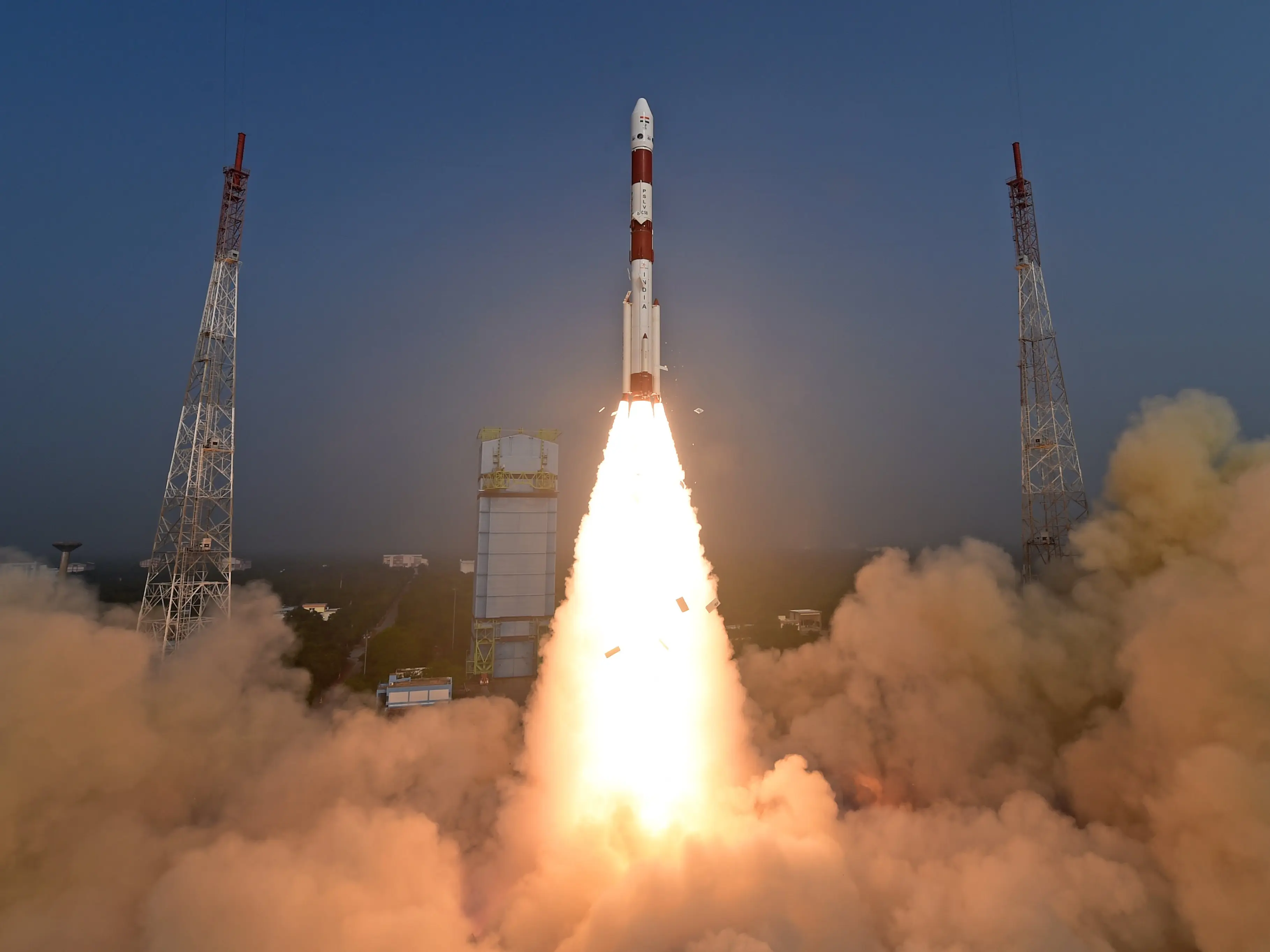
Indian Space agency ISRO has commenced a 22-hour countdown for its first launch mission of 2026, the 'PSLV-C62/EOS-N1'. The PSLV rocket, in its 64thflight is expected to liftoff from the first launchpad of Satish Dhawan Space Centre, Sriharikota at 10:18am IST, Monday, (12thJan).
Thecountdownis a well-planned technical process during which the final health checks of various systems of the rocket and satellite are carried out, and the liquid-fuel stages of the rocket are tanked up.
This flight marks PSLV's return to flight after a rare setback during the previous launch in May 2025. In May 2025, the PSLV rocket suffered a mid-flight failure. The PSLV's third stage malfunction led to the loss of the rocket and the EOS-09 radar imaging satellite. The May 2025 flight marked the third major failure of the PSLV in its 63 flights across 32 years.

The primary satellite of this mission is the 'EOS-N1' or 'Anvesha', an Earth Observation satellite built by India's Defence Research Development Organization(DRDO). This satellite is to be placed 511kms above the Earth. 'EOS-N1' is Hyperspectral imaging satellite, which means it can see much more than the human eye or a conventional optical-imaging satellite. As the surface of the Earth gets illuminated, different materials(soil, water, metal, vegetation) reflect light, across various wavelengths. A hyperspectral sensor can capture these reflections and identify how an object appears and what it is made of.
This technology has immense civilian and strategic applications, as it can scan the Earth based on unique light signatures. In simple terms, it can identify different materials based on their unique fingerprint(spectral signature).
Water quality, soil composition, crop health, are among the environmental aspects that can be studied using this technology. Military targets under camouflage can also be detected, based on the reflection from the material. It can also be used for supporting mining and exploration.
Trending Stories
)
The Paradise: Nani reacts to mixed reviews from critics and audience; ‘I have also learnt from the flaws’
)
OpenAI AI Agents hacked 4 websites before Hugging Face, researchers reveal
)
Bangkok declares flood disaster as heavy rain submerges roads and homes
)
Asian Games 2026: India face Afghanistan in quarterfinal on Sep 28; Pakistan clash with Hong Kong
)
'FIRST LOOK from inside Noah’s Ark': Researchers share video from inside mysterious mound in Turkey
)
‘It is all possible’: Putin weighs next steps on Ukraine talks, rules out Europe conflict
)
Global community 'absent' in Gulf crisis: Saudi at UN calls for freedom of navigation, pre war status for Hormuz
)
Manchester City found guilty: Premier League delivers its verdict on the FFP charges
)
Anthropic says Claude found a new gene-editing enzyme but science isn't confirmed
)
'What kind of confession is this?': Pakistan PM Shehbaz Sharif’s 'terrorists would be roaming New York' remark goes viral, raises alarm online. Watch
)
Death toll rises to 64 in Indonesia's Java Sea ferry incident; 71 still missing
)
Scientists detect first radio signals directly from faraway planet
)
Outrage erupts after 3-year-old is married to 60-year-old man in Pakistan, link to her sister's murder being probed
)
Nigeria Navy moves to boost oil security, tackle crude theft and infrastructure threats
)
US Supreme Court backs Trump administration's use of SAVE database to check voter citizenship
)
Gaza's war turned environmental damage into second crisis
)
Trump-Xi summit wrap: Big pageantry, Iran talks, few major developments and more meetings planned
)
WATCH | As Shehbaz Sharif claims Pakistan’s ‘victory’ during 2025 conflict, Indian diplomat R Srinivas laughs at UN
)
US court backs Pentagon's decision to exclude Anthropic over Claude AI restrictions
)
‘Attack on Mecca a red line for Pakistan’: Shehbaz Sharif warns Houthis at UN
)
‘Serial practitioner of terrorism’: Jaishankar calls out Pakistan’s ‘state-sponsored’ terror at UNGA
)
Trump rejects Iran's 7-day ceasefire proposal as US weighs renewed bombing after midterms: Report
)
Pakistan deploys over 20,000 security personnel as PTI vows march for Imran Khan's release
&im=FitAndFill=(700,400))
New Friday OTT releases (September 25, 2026): Don’t Be Shy, Hunkkaar: The Roar, Mango Pachcha- 6 movies and TV shows on Netflix, Prime Video and more
)
Donald Trump shares image of Xi's arrival in Washington, carries signs of AI
)
'Countries far from conflict are penalised': Jaishankar calls for Gulf peace, seafarer safety at UN
)
Did Hitler kill his niece Geli Raubal? Newly found records reopen a 95-year-old mystery
)
Prince Harry offers rare glimpse into Archie and Lilibet’s life after UK move
)
Indian diplomat Petal Gahlot raises deteriorating situation in Pakistan-occupied Kashmir in right of reply at UN
)
Farhan, who went viral for AK47 celebration vs India in Asia Cup, hopes to lead Pakistan beyond Asian Games
)
'A terrorist country is asking me that question?': Jaishankar hits back at Pakistani journalist at UN; flags attacks on commercial shipping
)
Hawaii braces for Hurricane Nolo: NOAA warns of flash flooding and mudslides
)
Mushtaq Khan dies at 56: When Welcome actor opened up about his salary for iconic role Ballu
)
Russia will achieve Ukraine war aims; Europe doing everything to block peace talks: Lavrov at UN
)
Cindy Crawford’s son Presley Gerber cremated as death probe continues
)
‘I rejected it’: Trump confirms turning down Iran’s proposal to reopen Hormuz, claims Tehran is losing ‘badly’
In addition to 'EOS-N1', there will be 15 co-passenger satellites aboard the PSLV. Seven satellites are from India, while two of them are from Europe, five of them are from Brazil, and one from Nepal. Many of these satellites are from academia or startups, and are meant to demonstrate unique experiments in space.
