India's sugar-linked stocks soar to 52-week highs even as govt inisists rising prices, shortage not linked to ethanol blending for E20 petrol

&imwidth=600&imheight=450&format=webp&quality=medium "India's sugar-linked stocks soar to 52-week highs even as govt inisists rising prices, shortage not linked to ethanol blending for E20 petrol")
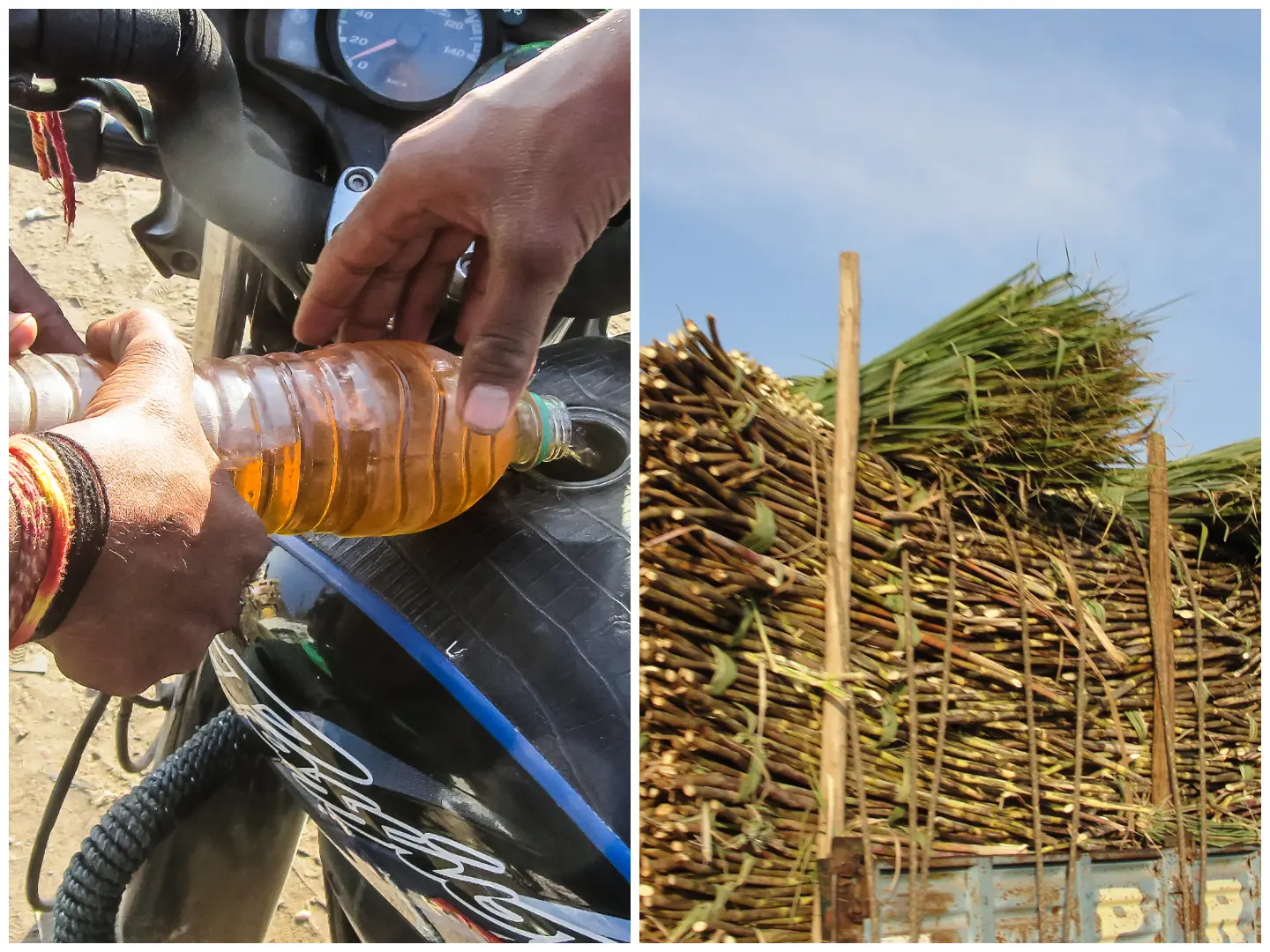
Petrol being filled in a bike tank and sugarcane truck are shown in this combo image Photograph: (Others)
India's sugar prices are rising amid festive demand and lower production. The political debate is continuing on whether the price rise has to do with E20 ethanol blending in petrol. The government is pushing back
A political debate is raging in India about the rise in sugar prices, which the government is attributing to festive demand and lower sugarcane yields, even as sugar-linked stocks hit 52-week highs on Monday (Aug 24). Opposition parties such as the Congress and the Aam Aadmi Party (AAP) have blamed the rise in sugar prices on the use of sugarcane-derived products to produce ethanol for blending in petrol. The E20 petrol programme, under which 20 per cent ethanol is blended with 80 per cent petrol, was a planned policy rollout rather than a direct consequence of fuel import disruptions. However, India's energy security concerns were complicated by the Iran-US war, the Russia-Ukraine war and disruptions to energy transhipments through the Strait of Hormuz. The situation is increasingly looking unsustainable, with the government stepping in to allow duty-free imports of sugar to address concerns over tight supplies.
Is the diversion of sugar for ethanol blending in petrol the real cause of sugar price hikes?
India does use sugar and sugarcane byproducts for its ethanol blending programme. Sugarcane-based feedstocks for ethanol include direct cane juice, syrup, and B-heavy and C-heavy molasses.
But recent reports say that other sources such as maize and surplus rice from the Food Corporation of India (FCI), as well as damaged foodgrains, account for the larger share of ethanol production. Around 32 per cent of the ethanol supplied to oil marketing companies for blending with petrol comes from sugarcane-based feedstocks, while the grain-based share is larger, at roughly 68 per cent.
Govt pushes back on claims linking ethanol blending with sugar price rise
Trending Stories
&imwidth=280&imheight=210&format=webp&quality=medium)
&im=FitAndFill=(700,400)&imwidth=280&imheight=210&format=webp&quality=medium)
&imwidth=280&imheight=210&format=webp&quality=medium)
&imwidth=280&imheight=210&format=webp&quality=medium)
&imwidth=280&imheight=210&format=webp&quality=medium)
&im=FitAndFill=(700,400)&imwidth=280&imheight=210&format=webp&quality=medium)
&imwidth=280&imheight=210&format=webp&quality=medium)
&imwidth=280&imheight=210&format=webp&quality=medium)
&imwidth=280&imheight=210&format=webp&quality=medium)
&imwidth=280&imheight=210&format=webp&quality=medium)
&imwidth=280&imheight=210&format=webp&quality=medium)
&imwidth=280&imheight=210&format=webp&quality=medium)
&imwidth=280&imheight=210&format=webp&quality=medium)
&imwidth=280&imheight=210&format=webp&quality=medium)
&imwidth=280&imheight=210&format=webp&quality=medium)
&imwidth=280&imheight=210&format=webp&quality=medium)
&imwidth=280&imheight=210&format=webp&quality=medium)
&imwidth=280&imheight=210&format=webp&quality=medium)
&imwidth=280&imheight=210&format=webp&quality=medium)
&imwidth=280&imheight=210&format=webp&quality=medium)
&imwidth=280&imheight=210&format=webp&quality=medium)
&imwidth=280&imheight=210&format=webp&quality=medium)
&imwidth=280&imheight=210&format=webp&quality=medium)
&imwidth=280&imheight=210&format=webp&quality=medium)
&im=FitAndFill=(700,400)&imwidth=280&imheight=210&format=webp&quality=medium)
&imwidth=280&imheight=210&format=webp&quality=medium)
&imwidth=280&imheight=210&format=webp&quality=medium)
&imwidth=280&imheight=210&format=webp&quality=medium)
&imwidth=280&imheight=210&format=webp&quality=medium)
&imwidth=280&imheight=210&format=webp&quality=medium)
&imwidth=280&imheight=210&format=webp&quality=medium)
&imwidth=280&imheight=210&format=webp&quality=medium)
&imwidth=280&imheight=210&format=webp&quality=medium)
&imwidth=280&imheight=210&format=webp&quality=medium)
&imwidth=280&imheight=210&format=webp&quality=medium)
India's Ministry of Consumer Affairs has repeatedly said it is incorrect to attribute the recent increase in sugar prices to the diversion of sugar for ethanol production. The share of sugar diverted for ethanol fell from 12 per cent in 2022-23 to 9 per cent in 2025-26, per the government. Nearly three-fourths of India's ethanol production now comes from grains, particularly maize.
The government insisted that lower-than-expected domestic production of sugar is to blame for the rising prices. Sugar production during the current season is expected to be around 30.6 million tonnes, against an initial estimate of around 34.3 million. Production was affected by Red Rot and Top Borer diseases in sugarcane, as well as waterlogging caused by excessive rainfall. Festive-season demand, tighter global supplies and speculation and hoarding are adding to the pressure.
International sugar prices have also risen by more than 16 per cent in recent months, adding to the pressure on domestic prices. The West Indian Sugar Mills Association (WISMA) and other industry representatives have said declining sugarcane output and stockpiling are contributing to the current crisis, rather than ethanol blending alone.'
Also read: E20 petrol row: Puri says only four contaminated samples found, Rahul Gandhi steps up attack
Nothing new: Sugar prices have always been politicised
With several politicians directly having stakes in the sugar industry, price fluctuations have always been a political issue. The AAP and Congress have seen an opportunity to accuse the government of diverting sugar towards ethanol for the E20 blending programme, arguing that this has reduced sugar availability and contributed to the spike.
It should be noted that, in the past few years, millions of tonnes of sugar have been diverted towards ethanol in the food-versus-fuel trade-off, in which it can be more profitable to use the commodity in the energy industry.
This season, around 3 million tonnes of sugar are estimated to have been diverted towards ethanol. But the brighter side for farmers and mills is that higher sugar prices can make sugar production more profitable. The government has also said that diverting surplus sugar towards ethanol has helped improve the financial health of sugar mills and facilitated timely payments to farmers. As of August 20, 97 per cent of sugarcane dues for the 2025-26 season had been paid.
The stock price spikes of sugar-linked firms
Sugar stocks rallied sharply on Monday, with several companies hitting their 52-week highs. Shares of Bajaj Hindusthan Sugar, Avadh Sugar & Energy, Dalmia Bharat Sugar and Industries, Dhampur Sugar Mills, Dwarikesh Sugar Industries, Magadh Sugar & Energy, Mawana Sugars, Ponni Sugars, Ugar Sugar Works and Uttam Sugar Mills all hit their respective 52-week highs. Some stocks rose by as much as 12 per cent in intraday trade, reflecting investor optimism over the sector's near-term outlook amid rising sugar prices and tighter domestic supplies.
The rally is supply-and-demand driven, particularly after the government tightened stockholding limits. Sugar mills may also shift their preference towards sugar production over ethanol as higher sugar prices improve returns.
The government has assured consumers that there are enough sugar stocks to meet domestic demand, yet it has also allowed duty-free imports of 1 million tonnes of raw sugar until October 31. The move highlights concerns over tight supplies ahead of the festive season.
The government has also taken measures such as imposing a 400-tonne stock limit on sugar dealers from August 1 to November 30, while bulk consumers will not be allowed to hold sugar stocks exceeding 15 days of consumption from September 1. These measures are aimed at preventing hoarding and artificial shortages.