

&imwidth=800&imheight=600&format=webp&quality=medium "India's fintech frontier is moving from transaction infrastructure to decision infrastructure")
For a decade, India's fintech story has had one headline number. In June 2026 alone, the country's Unified Payments Interface processed 22.72 billion transactions worth Rs28.92 lakh crore, according to data released by the National Payments Corporation of India (NPCI), capping a year in which UPI's annual transaction value crossed Rs314 lakh crore.
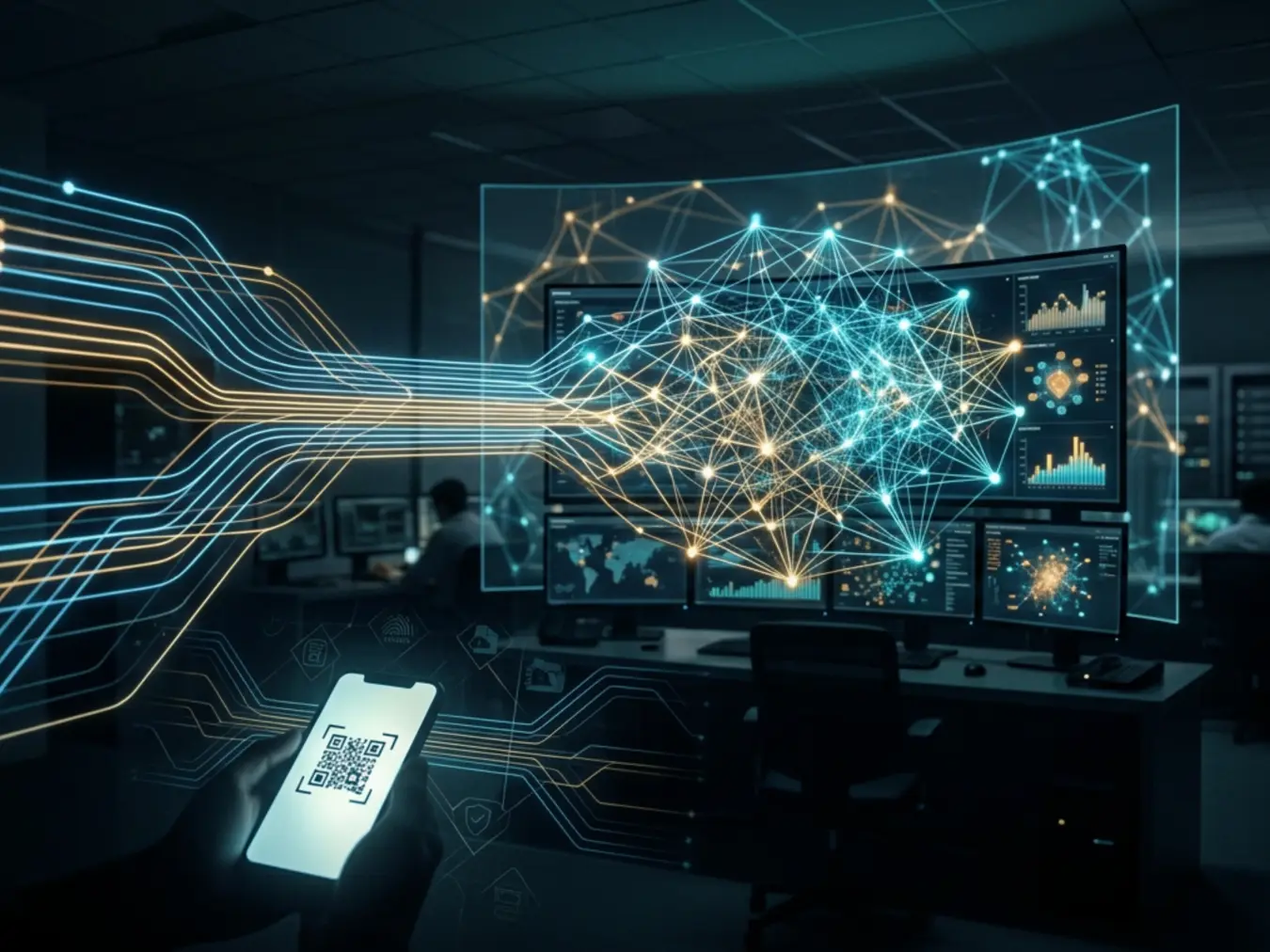
That number no longer defines where the money is going next. Payments, by most measures, are a solved problem in India. The harder and less visible question is what gets built on top of a payments rail that already works, and increasingly, the answer being tested by venture investors and founders is not another app, but intelligence layered onto the public infrastructure already in place.
The shift: From rails to reasoning
India's foundational digital infrastructure, UPI, Aadhaar, and the RBI-regulated Account Aggregator (AA) framework, is, in large part, already built. The AA ecosystem, which lets individuals and businesses share financial data across institutions with explicit consent, was granted a formal self-regulatory body on June 5 this year, when the Reserve Bank of India recognised industry alliance Sahamati as its SRO. The framework now spans 1,120 regulated entities and has enabled more than 294 million linked accounts and 450 million fulfilled consent requests, per Sahamati's disclosures accompanying the RBI order.
That scale of consented financial data flowing through a regulated architecture, close to 290 million data shares a month, is what venture investor Paramdeep Singh, founder of Long Tail Ventures, points to when arguing that India's fintech opportunity has moved from digitising transactions to digitising financial decision-making.
"The first wave digitised transactions," Singh said. "The next wave will digitise financial decision-making."
Trending Stories
&imwidth=180&imheight=135&format=webp&quality=medium)
'Hell of a beautiful a**': Trump compliments Nicki Minaj as rapper joins him in Michigan rally
&imwidth=180&imheight=135&format=webp&quality=medium)
Telangana unveils AI avatar of IT minister D Sridhar Babu at Hyderabad DevFest 2026
&imwidth=180&imheight=135&format=webp&quality=medium)
Who is Eyal Zamir, Israeli army chief, who reportedly clashed with Netanyahu over Iran?
&imwidth=180&imheight=135&format=webp&quality=medium)
US Midterms: Trump targets Norway over Nobel Peace Prize snub, likens Abdul El-Sayed to 9/11 hijackers
&imwidth=180&imheight=135&format=webp&quality=medium)
Fire breaks out at Delhi’s North Block, thick black smoke seen | VIDEO
&imwidth=180&imheight=135&format=webp&quality=medium)
US midterms 2026: Election workers face rising threats, vote-counting process under pressure
&im=FitAndFill=(700,400)&imwidth=180&imheight=135&format=webp&quality=medium)
Armoured vehicles vs main battle tanks: What is the real difference?
&imwidth=180&imheight=135&format=webp&quality=medium)
Pahalgam, Gulmarg record season’s first sub-zero temperatures as winter chill intensifies in Kashmir
&imwidth=180&imheight=135&format=webp&quality=medium)
IND vs NZ: Tilak Varma sets world record with most T20I catches in a year
&imwidth=180&imheight=135&format=webp&quality=medium)
FIR filed against opposition MPs for ‘trespassing’ amid Jamia Millia students’ protest
&imwidth=180&imheight=135&format=webp&quality=medium)
WATCH | Virat Kohli returns to training ahead of New Zealand ODI series
&imwidth=180&imheight=135&format=webp&quality=medium)
Can Putin cheat death? All about his daughter’s billion-dollar quest for immortality
&im=FitAndFill=(700,400)&imwidth=180&imheight=135&format=webp&quality=medium)
How do army night-vision systems see in almost complete darkness?
&imwidth=180&imheight=135&format=webp&quality=medium)
Daler Mehndi controversy: Mika Singh’s team confirms Subodh Uniyal’s apology
&imwidth=180&imheight=135&format=webp&quality=medium)
Netanyahu warns Israelis of ‘existential threat’ from Iran, posts AI image of nuclear strike
&imwidth=180&imheight=135&format=webp&quality=medium)
Brazil re-elects factory worker Lula for fourth term; Indian PM Modi congratulates 'dear friend'
&imwidth=180&imheight=135&format=webp&quality=medium)
Pakistan airline PIA unveils new crew uniforms, faces online criticism
&imwidth=180&imheight=135&format=webp&quality=medium)
‘That is a miss’: Ravi Ashwin questions Sooryavanshi’s demotion to No. 3 in 2nd T20I vs NZ
&im=FitAndFill=(700,400)&imwidth=180&imheight=135&format=webp&quality=medium)
Why does this fighter jet have a golden window that looks like alien technology?
&im=FitAndFill=(700,400)&imwidth=180&imheight=135&format=webp&quality=medium)
New OTT releases this week (October 26-November 1, 2026): Baththa, Akka, The One About Matthew Perry- 7 titles coming on Netflix, Prime Video and more
&imwidth=180&imheight=135&format=webp&quality=medium)
Elon Musk’s Grok releases first AI-generated Odyssey episode, months after promising ‘historically accurate’ full-length film
&imwidth=180&imheight=135&format=webp&quality=medium)
'Already tired of his 9-to-5': Baby born with a moustache becomes internet sensation, video goes viral | Watch
&imwidth=180&imheight=135&format=webp&quality=medium)
Rahul Gandhi’s convoy collides with ambulance on UP expressway | VIDEO
&imwidth=180&imheight=135&format=webp&quality=medium)
Serbia’s student-led movement defeats Vucic’s party after 14 years in power: Why it matters
&imwidth=180&imheight=135&format=webp&quality=medium)
'I promised Gautam & Kotak Sir that...': Tilak Varma opens up on match-winning mindset against NZ
&imwidth=180&imheight=135&format=webp&quality=medium)
‘Saddam Hussein opened a cheesecake factory’: Obama mocks Trump’s White House renovations; defends Abdul El-Sayed
&im=FitAndFill=(700,400)&imwidth=180&imheight=135&format=webp&quality=medium)
Why do some fighter jets have two engines while others use one?
&imwidth=180&imheight=135&format=webp&quality=medium)
Formula 1: Mercedes' Kimi Antonelli one race and ninth spot finish away from title after US Grand Prix win
&imwidth=180&imheight=135&format=webp&quality=medium)
Delhi's new entry rules for vehicles begin November 1. Here's all you need to know about the ban
&imwidth=180&imheight=135&format=webp&quality=medium)
'Clear overkill': Putin rejects claims Russia is behind mass protests in Europe
&imwidth=180&imheight=135&format=webp&quality=medium)
Clayface tops North American box office, Elizabeth Holmes documentary follows close behind
&imwidth=180&imheight=135&format=webp&quality=medium)
Nagpur man fails to pay rent, allegedly prints fake Rs 500 notes worth Rs 37 lakh
&imwidth=180&imheight=135&format=webp&quality=medium)
Why Europe’s protests are about more than austerity and rising costs
&imwidth=180&imheight=135&format=webp&quality=medium)
Donald Trump targets Bill Maher in lengthy post after White House dinner, says ‘Don’t call anymore’
His reading is that the market gap is no longer digital payments or digital identity, it is what gets built on top of rails that already work.
AI-native financial services
The first is underwriting, fraud detection, compliance, treasury management and financial advice becoming autonomous rather than merely digitised. This is where the AA framework's scale becomes structurally relevant: with the data bottleneck largely resolved, the constraint shifts to the intelligence layer processing it, a bet a growing number of India-focused funds are making.
The SME credit gap
The second is B2B financial infrastructure built for India's small and medium enterprises, working capital, cash-flow management, embedded credit and ERP-integrated finance. This is also the segment with the clearest documented shortfall. A recent report by the Small Industries Development Bank of India, produced with CRISIL Intelligence and drawn from a survey of more than 2,000 MSMEs across 19 sectors, put the sector's addressable credit gap at Rs30 lakh crore, around 24% of total debt demand of Rs92 lakh crore, with the shortfall running to 35% among women-owned enterprises. Singh's contention is that millions of SMEs continuing to digitise represent one of the country's largest untapped financial infrastructure opportunities, precisely because that gap has proven resistant to conventional lending models.
Cross-border rails
The third is cross-border payments and trade infrastructure, as India's public digital rails gain international traction. UPI is now live in eight countries, including France, Singapore and the UAE, with a fully operational two-way retail corridor with Nepal launched on June 6. The bet here is that start-ups building global-first infrastructure around India's DPI stack, rather than domestic-only products, stand to capture disproportionate value as that footprint expands.
A thesis, not a consensus
Taken together, the argument repositions competitive advantage in Indian fintech away from owning a payments rail, since UPI, Aadhaar and the AA framework already function as public goods, and towards trusted distribution, proprietary data and applied AI capability layered on top of them.
"The next generation of fintech leaders may not look like traditional fintechs," Singh said. "They will sit at the intersection of AI, commerce, enterprise software and financial infrastructure."
This is, at this stage, one investor's read on where capital is moving, not a market consensus. But it is anchored in verifiable shifts already underway, as a payments network processing tens of billions of transactions monthly, a data-sharing framework that has just acquired formal regulatory governance, and an SME credit gap measured in lakhs of crores that has so far outrun every wave of digitisation aimed at closing it.
Whether that gap closes through AI-native underwriting, or simply becomes a bigger number cited in next year's SIDBI report, is the question the thesis will face first.
