India's BrahMos gains traction: Why Indonesia is buying the Supersonic Missile

&imwidth=600&imheight=450&format=webp&quality=medium "India's BrahMos gains traction: Why Indonesia is buying the Supersonic Missile")
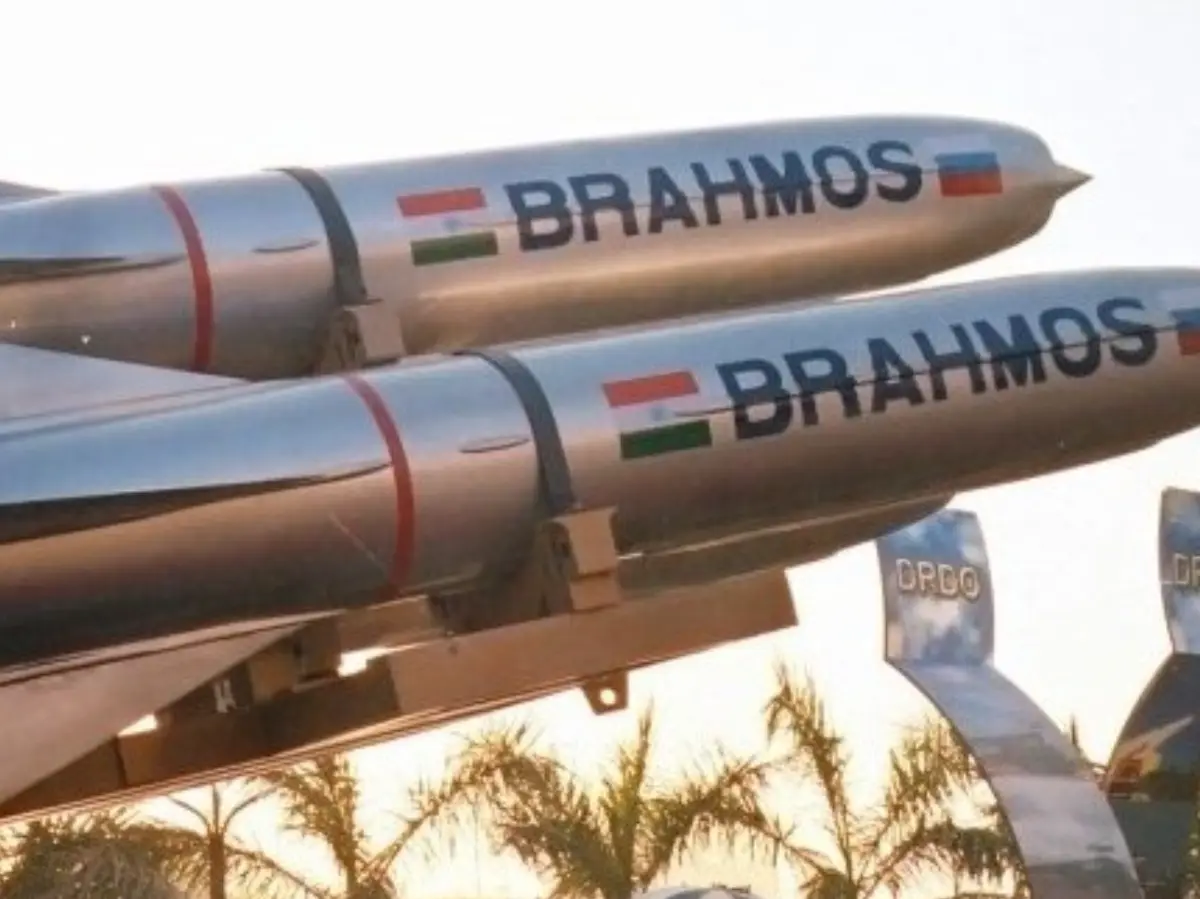
India's Supersonic Missile Photograph: (PTI)
Even India's Chief of Defence Staff Gen Anil Chauhan visited Indonesia recently, which shows that military ties between the two nations are getting stronger with each passing month.
India is about to make another big sale of its homegrown BrahMos supersonic missile, and this time the buyer is Indonesia. Defence sources have told ANI that India and Indonesia have finished almost all the paperwork and formalities for this deal. Now they are just waiting for Russia's approval before they can sign on the dotted line. This is not a small matter — it shows that India's defence industry is really growing and that weapons made in our own country are now being trusted by other nations.
The talks between India and Indonesia about BrahMos have been going on for quite some time. But things became more serious when top Indonesian political and military leaders came to New Delhi in January this year. They discussed this missile deal in great detail. Then, when President Prabowo Subianto visited India from January 23 to 26, it became clear that both countries wanted to work together more closely on defence matters. Even India's Chief of Defence Staff Gen Anil Chauhan visited Indonesia recently, which shows that military ties between the two nations are getting stronger with each passing month.
This is not the first time India has exported BrahMos missiles to another country. India had already signed a ₹3,500 crore deal with the Philippines and had delivered the missiles to them. That deal caught the attention of defence experts around the world because it showed that countries in Southeast Asia are now serious about protecting their waters and interests in the region. The Philippines needed these missiles to strengthen its position, and India was able to provide exactly what they wanted. Now Indonesia is following the same path.
But why is there so much interest in BrahMos? To understand that, you need to know what makes this missile so special. BrahMos is a supersonic cruise missile that was developed jointly by India and Russia. The name itself is a combination of two great rivers — the Brahmaputra in India and the Moskva in Russia. This missile is incredibly fast. It travels at a speed of around Mach 2.8 to 3.0, which means it can reach speeds of approximately 3,430 to 3,675 kilometres per hour. At that speed, it is very difficult for enemy defence systems to detect and stop it in time.
The export version of BrahMos has a range of about 290 kilometres. But the real strength of this missile is its versatility. It can be launched from different platforms — from land-based launchers, from ships, from submarines, and even from aircraft. This flexibility makes it a very attractive option for any country that wants to build a strong defence system. A missile that can be used in so many different ways gives military planners many options during a conflict or crisis situation.
India's recent military experience has also shown that BrahMos works very well in actual combat conditions. During the India-Pakistan clash in May this year, BrahMos missiles proved their real strength. This real-world performance has made other countries even more interested in buying this weapon system. When a missile performs well not just in tests but in actual conflict, it builds tremendous confidence among potential buyers.
Trending Stories
)
)
)
)
)
)
)
)
)
)
)
)
)
&im=FitAndFill=(700,400))
)
&im=FitAndFill=(700,400))
)
)
)
)
)
)
&im=FitAndFill=(700,400))
)
)
)
)
)
)
)
)
)
)
)
)
)
)
)
)
Indonesia's interest in BrahMos makes perfect strategic sense. Right now, Indonesia's Navy uses the Russian-made Yakhont missile system, but it is installed on only one frigate called KRI Oswald Siahaan. Yakhont is also a supersonic anti-ship missile, but it is not as advanced or flexible as BrahMos. BrahMos belongs to a newer generation of missiles and has a much more advanced guidance system. So even though Indonesia already has some supersonic missile capability, BrahMos will add and improve what Yakhont alone cannot provide.
Why does Indonesia need such powerful anti-ship missiles? The answer lies in geography and trade. Indonesia controls some of the most important sea routes in the world. Major choke points like the Malacca Strait, Sunda Strait, Lombok Strait, and Makassar Strait pass through Indonesian waters. These are not just important for Indonesia — they are vital for global trade. About 40 percent of the world's shipping passes through these sea routes. If these waters are not secure, it affects trade between Asia, Europe, Africa, and the Middle East.
These choke points are also very different in size. The Lombok Strait is just 18 kilometres wide at its narrowest point, while the Makassar Strait can be up to 300 kilometres wide. This means Indonesia needs weapons systems that can cover both narrow passages and wide stretches of water effectively. BrahMos, with its 290-kilometre range, can help fill the gaps in Indonesia's current anti-ship missile coverage at these strategic locations. By deploying BrahMos at key points, Indonesia can better protect its maritime territory and also ensure that these crucial global shipping lanes remain safe.
But this deal is not just about military hardware. There is a much deeper strategic calculation happening here. By choosing to buy BrahMos from India, Indonesia is trying to diversify its sources of weapons. For many years, countries in Southeast Asia have depended heavily on weapons from a few traditional suppliers. But today's world is full of geopolitical tensions, and depending too much on countries that are caught up in those tensions can create supply chain problems in the future. By adding India as a major defence supplier, Indonesia is reducing that risk.
There is another important angle to this deal — something called CAATSA. This is an American law that can impose sanctions on countries that buy certain weapons from Russia or China. Indonesia is worried about facing CAATSA sanctions if it continues to rely too much on Russian or Chinese military equipment. India has made it very clear that BrahMos is CAATSA-free because the main components and technology are now made inside India. This is not just a claim — it has been proven in practice. The Philippines is a close ally of the United States, and yet its BrahMos deal with India went through smoothly without any problems from Washington. This gives Indonesia confidence that buying BrahMos will not create diplomatic headaches with the United States.
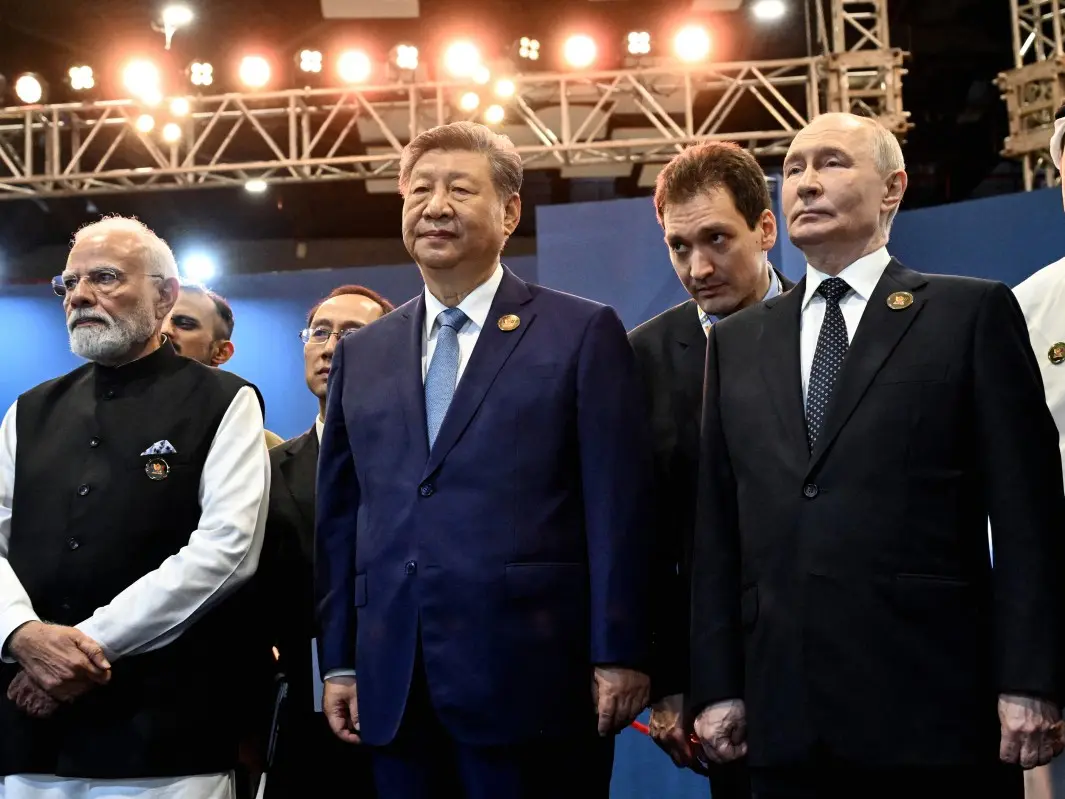
Indonesia became a member of BRICS on January 6 last year. BRICS now includes ten countries — Brazil, Russia, India, China, South Africa, Egypt, Ethiopia, Indonesia, Iran, and the UAE. Being part of BRICS gives Indonesia more options for economic and strategic partnerships. The BrahMos deal is one example of how Indonesia is using these new relationships to strengthen its defence capabilities while maintaining good relations with traditional partners like the United States.
For India, this deal means much more than just revenue from weapon sales. It is proof that India's defence industry has come of age. For decades, India was a buyer of weapons from other countries. Now India is becoming a seller. This is a huge shift. The success of BrahMos exports shows that India can design, manufacture, and sell sophisticated weapons systems that compete with the best in the world. Every time another country chooses BrahMos, it builds India's reputation as a reliable defence partner.
The BrahMos deal with Indonesia is also good for India's "Make in India" initiative. When weapons made in India are bought by other countries, it creates jobs here, builds technological capabilities, and brings in foreign exchange. It also encourages more investment in research and development. If Indian companies know that their products can be exported, they will invest more in creating new and better weapons systems.
As India and Indonesia wait for Russia's final approval, defence analysts around the world are watching closely. If this deal goes through, it will send a strong signal to other countries in Southeast Asia and beyond. It will show that India is a credible alternative source for advanced weapons systems. It will prove that countries no longer have to choose only between Western suppliers or Russia and China — there is now another option, and that option is India.
The BrahMos story is really the story of India's rise as a defence manufacturing power. And Indonesia's decision to buy this missile system shows that the world is taking notice.
